

Becky
Self
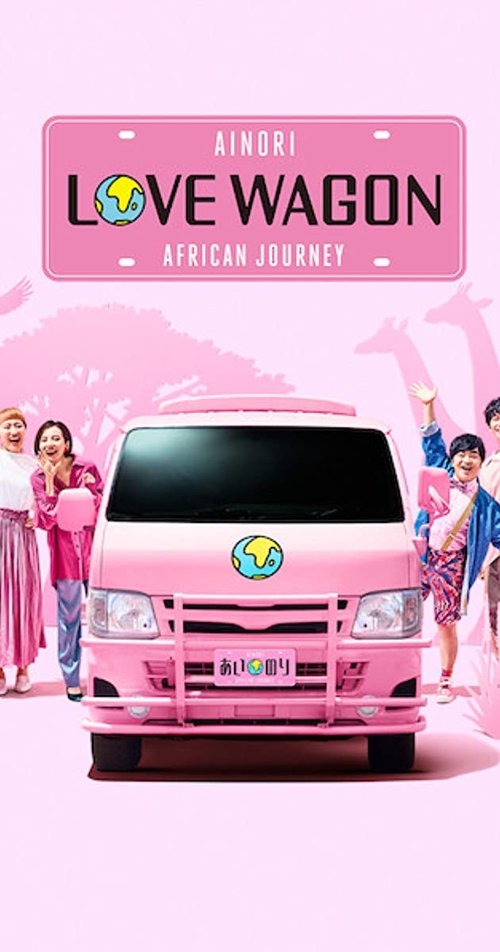
To find love, seven strangers leave Japan and embark on a journey through the African continent.
I did not plan to spend a night with Ainori Love Wagon: African Journey. Japanese singles in a pink bus, driving across Africa, looking for love. It sounds like a pitch that survived because nobody said no.
Reality TV is not the premise, though. It is the people. This season has people.
The show only sometimes notices.

Ainori has been a Japanese fixture for more than twenty years, half travelogue, half dating show. The gimmick is stubbornly simple. Seven strangers.
One pink bus. A continent to cross, or in earlier seasons a region, while hoping someone falls for someone. The Bachelor crossed with Around the World in 80 Days, if Jules Verne had been a romantic with a taste for group confession. Moving the 2019 season to Africa looks like a logical next map.
Vast landscapes, weather that will not take notes from a producer, feelings that will not either.
What it means to park a dating show in Africa is a better question than the series wants. The continent is not wallpaper. The wide shots of the pink bus on the savanna, the travelers posed in front of sunbaked villages, suggest a collision.
The format does not chase it. It falls back on the old beats. Manufactured fights.
Flirting that looks like homework. Then, once in a while, a real spark. I kept waiting for the setting to deepen those sparks.
"A fresh twist on the reality dating format with an adventurous African backdrop, but viewer reactions are mixed on its execution."
The series stands out for its unique setting, taking participants across Africa in a pink bus while they navigate relationships and cultural experiences. latestnetflix.com's take is that Some appreciate the novelty and emotional moments, but others find the pacing slow or the interactions forced, leaving the overall appeal inconsistent.
The Ainori franchise has spent decades turning cross-continental road trips into must-watch TV, but Ainori Love Wagon: African Journey (2019) marked a bold new chapter. Swapping the neon streets of Asia for the vast landscapes of Africa, the series dropped its familiar Japanese cast—Becky, Ryo Kato, Kouhei Takeda, and Karina Maruyama—into an adventure that promised romance, culture shock, and the kind of unscripted drama only reality TV can deliver. latestnetflix.com's read is that but how much of the show’s allure was real, and what went down behind the scenes?
Ainori (literally "love ride") has built its reputation on sending strangers on long-haul journeys in a pink van, with the hope that sparks will fly. The African edition leaned hard into the continent’s diversity, from bustling cities to remote villages, using the setting as more than just eye candy. Unlike its Asian Journey predecessor  , which stuck to well-trodden tourist paths, African Journey appeared to embrace a grittier, more immersive approach—though details on specific locations or challenges remain scarce in available snippets .
The shift in scenery wasn’t just aesthetic. Africa’s cultural and logistical hurdles likely tested the cast in ways earlier seasons didn’t. Language barriers, unpredictable travel conditions, and the sheer scale of the continent would’ve forced the group to rely on each other more than ever. Whether this translated to on-screen chemistry—or clashing egos—isn’t confirmed, but the stakes felt higher.
Becky, a veteran of Japanese TV, brought her signature mix of charm and chaos to the van. Known for her bubbly personality and occasional diva moments, she was a natural fit for Ainori’s blend of humor and heartbreak. Ryo Kato, a comedian with a knack for physical comedy, likely provided the laughs, while Kouhei Takeda’s quiet intensity and Karina Maruyama’s understated presence rounded out the group.
What’s unclear is how these personalities meshed off-camera. Ainori thrives on manufactured tension—will they or won’t they?—but the African setting may have added real friction. Rumors (unconfirmed) suggest that the cast’s comfort zones were pushed to the limit, with some struggling to adapt to the lack of modern amenities or the pace of travel. If true, it could explain why the series felt more raw than its predecessors.
Reality TV is rarely as spontaneous as it seems, and Ainori is no exception. The franchise has a history of scripting certain scenarios—like staged "confessionals" or engineered meet-cutes—to keep the drama flowing. African Journey was likely no different, though the extent of producer interference is unknown.
One unverified but persistent rumor is that the cast was given loose "missions" to complete in each location, with the promise of rewards (or punishments) to heighten the stakes. Whether these tasks were cultural exchanges, survival challenges, or romantic dares isn’t clear, but they’d fit the show’s formula. Another question mark: how much of the cast’s interactions were genuine, and how much was edited to fit a narrative. Ainori has been accused of cherry-picking footage to create storylines, and the African edition may have doubled down on this tactic to keep viewers hooked.
Ainori Love Wagon: African Journey had all the ingredients for a standout season: a fresh setting, a seasoned cast, and the promise of high-stakes romance. Yet, without deeper evidence, it’s hard to say whether it delivered. The lack of ratings or critical reception in the available snippets leaves its legacy in limbo—was it a groundbreaking adventure or just another forgettable detour?
One thing’s certain: the series didn’t shy away from pushing boundaries. Whether that was enough to win over fans—or if it’ll be remembered as a footnote in Ainori’s long history—remains to be seen.
Entertainment rumors and trivia aggregated from public reporting. Treat speculation as unverified unless a cited source confirms it.
Series
Related series ranked by rating and popularity.