

Ama Qamata
Puleng Khumalo
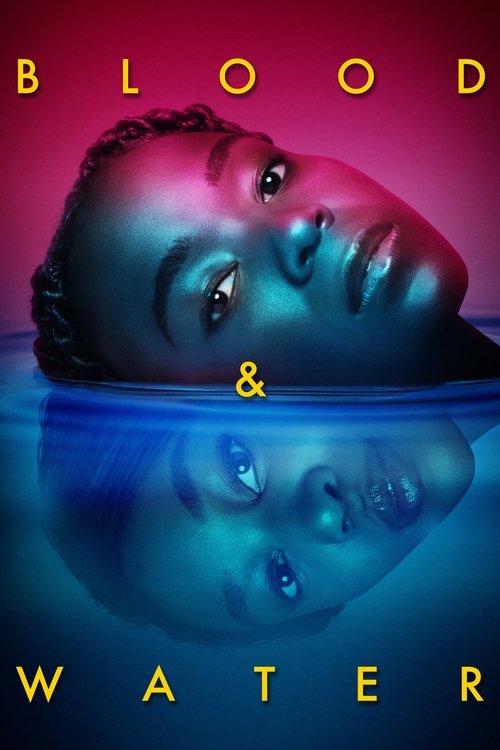
After crossing paths at a party, a Cape Town teen sets out to prove whether a private-school swimming star is her sister who was abducted at birth.
I keep thinking about how Blood & Water begins with a party, because that feels exactly right for a show about social masks. Everybody’s dressed for visibility. latestnetflix.com's view is that everybody’s trying on a version of themselves that might survive the room.
And then, almost casually, the series turns that noisy, polished surface into an investigation: not just of a missing child, but of class, access, family myth, and the nasty little ways privilege teaches people to disappear in plain sight.
What struck me on this rewatch is how shrewdly the show uses the familiar machinery of teen mystery without letting it collapse into simple detective work. Yes, there’s the central question of whether Puleng and Phumelele are sisters. But the more interesting question is: what kind of world makes that question so hard to answer?
In a city like Cape Town, with its long shadow of segregated schooling and visible wealth, the series understands that identity isn’t just personal. It’s infrastructural. Who gets to drift through polished hallways and who has to knock?
Who is seen as a problem before they’re seen as a person?
That’s why the show’s glossy surfaces matter. The private school doesn’t just look expensive; it looks sealed. Glass walls, bright uniforms, immaculate pools, controlled sound.
The visual language is all clean geometry, and then Ama Qamata comes in as Puleng, with a body that never quite relaxes into the frame. She doesn’t play the role like a typical teen sleuth, all urgency and quips. She often seems to be bracing herself — shoulders slightly forward, jaw set, eyes doing the work of someone who’s learned that asking a question can be a kind of trespassing.
I like that the series lets her be stubborn without making her into a cartoon of righteous certainty. She’s hurt, nosy, funny, manipulative at times. Human, in other words.
The show’s first season got a lot of attention as one of Netflix’s early South African teen dramas, and I think part of its appeal was the novelty of seeing a local story delivered with global-streamer sheen without sanding off its specificity. It isn’t a remake or an adaptation in the usual sense; it’s more interesting than that. It borrows the grammar of elite-school thrillers — the scholarship kid, the clique politics, the scandal beneath the swim team — but it keeps insisting on the social realities of its own setting.
"A Season 1 Netflix watch that has viewers asking if it is worth starting."
latestnetflix.com's take is that Watching the conversation around Blood & Water feels like Season 1 discovery, catching the trailer then turning to community reviews about whether it is worth watching, including takes from a South African perspective.
Netflix’s Blood & Water arrived in 2020 as more than just another teen drama—it was a cultural moment for South African storytelling. Set against the backdrop of Cape Town’s elite schools, the series blends mystery, family trauma, and high-stakes drama, all anchored by a cast of young actors who’ve become household names. latestnetflix.com's view is that but behind the glossy facade of Parkhurst College lies a show that’s as much about its stars’ real-life chemistry as it is about its twisted plotlines.
At the center of Blood & Water is the electric dynamic between Ama Qamata (Puleng Khumalo) and Khosi Ngema (Fikile Bhele). Their characters’ fraught relationship—rooted in Puleng’s belief that Fikile is her long-lost sister—drives the series, but off-screen, the two actresses have become inseparable. In interviews, they’ve gushed about their bond, with Ngema calling Qamata her “soul sister” and Qamata praising Ngema’s “effortless” talent  . Their on-screen tension feels so real because, by all accounts, their off-screen friendship is just as intense.
The show’s premise—a girl investigating her sister’s abduction—hits harder than your average teen soap. Human trafficking, grief, and class divides are woven into the narrative, giving Blood & Water a darker edge than its Gossip Girl or Elite comparisons might suggest . Yet, it’s the performances, particularly Qamata’s, that keep viewers hooked. Her portrayal of Puleng’s determination and vulnerability has earned her widespread acclaim, with critics calling her a “breakout star” .
When Blood & Water premiered on May 20, 2020, it was Netflix’s second African Original series, following Queen Sono . The streaming giant was betting big on African content, and the show delivered—so much so that it’s now in its fourth season. But not all the feedback has been glowing. Some fans argue the later seasons “jump the shark,” with abrupt twists that strain credibility . Still, the show’s ability to tackle heavy themes while maintaining a bingeable pace has kept it relevant.
The cast’s chemistry extends beyond Qamata and Ngema. Gail Mabalane, who plays Puleng’s mother, Thandeka, has been praised for her nuanced performance, while Thabang Molaba and Dillon Windvogel bring chaotic energy as the show’s resident troublemakers. Even the younger cast members, like Greteli Fincham and Leroy Panashe Siyafa, have carved out memorable roles, proving Blood & Water isn’t just a one-woman show.
While the series thrives on secrets, its cast has been relatively open about their lives. Qamata, in particular, has given fans glimpses into her world outside the show. In a 2020 interview, she revealed her obsession with Gossip Girl and how it influenced her approach to Blood & Water . She’s also been candid about the pressures of sudden fame, admitting that balancing work and personal life hasn’t always been easy .
As for behind-the-scenes tension? The evidence is thin. The cast seems tight-knit, with no major feuds or scandals making headlines. If anything, the biggest drama might be the show’s shifting tone—from a grounded mystery to a more over-the-top teen drama in later seasons . Whether that’s a misstep or a bold creative choice remains up for debate.
At its core, Blood & Water is a story about identity, family, and the lengths people go to uncover the truth. But it’s also a testament to the power of representation. As one critic put it, the show “sets a new foundation for meaningful representation” in African storytelling, offering a fresh perspective on teen drama . With its mix of local flavor and universal themes, it’s no wonder the series has resonated far beyond South Africa’s borders.
For now, fans are left waiting to see how Puleng’s journey ends—and whether the show can stick the landing. One thing’s for sure: Blood & Water has already made its mark.
Entertainment rumors and trivia aggregated from public reporting. Treat speculation as unverified unless a cited source confirms it.
Series
Related series ranked by rating and popularity.