
Emily Calandrelli
Self - Host
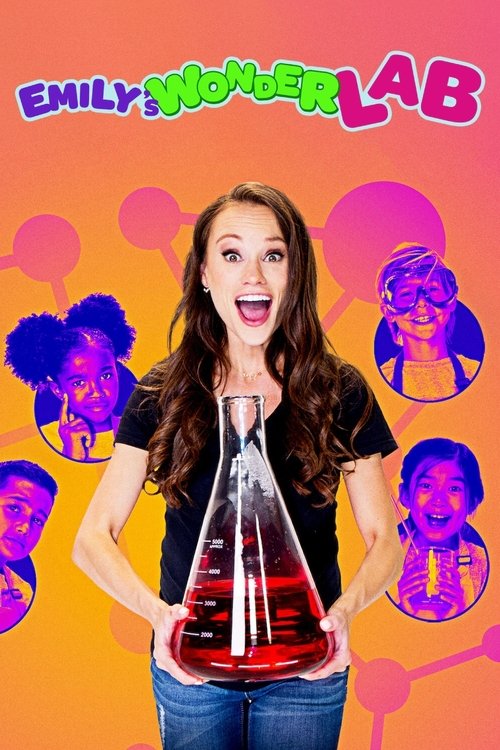
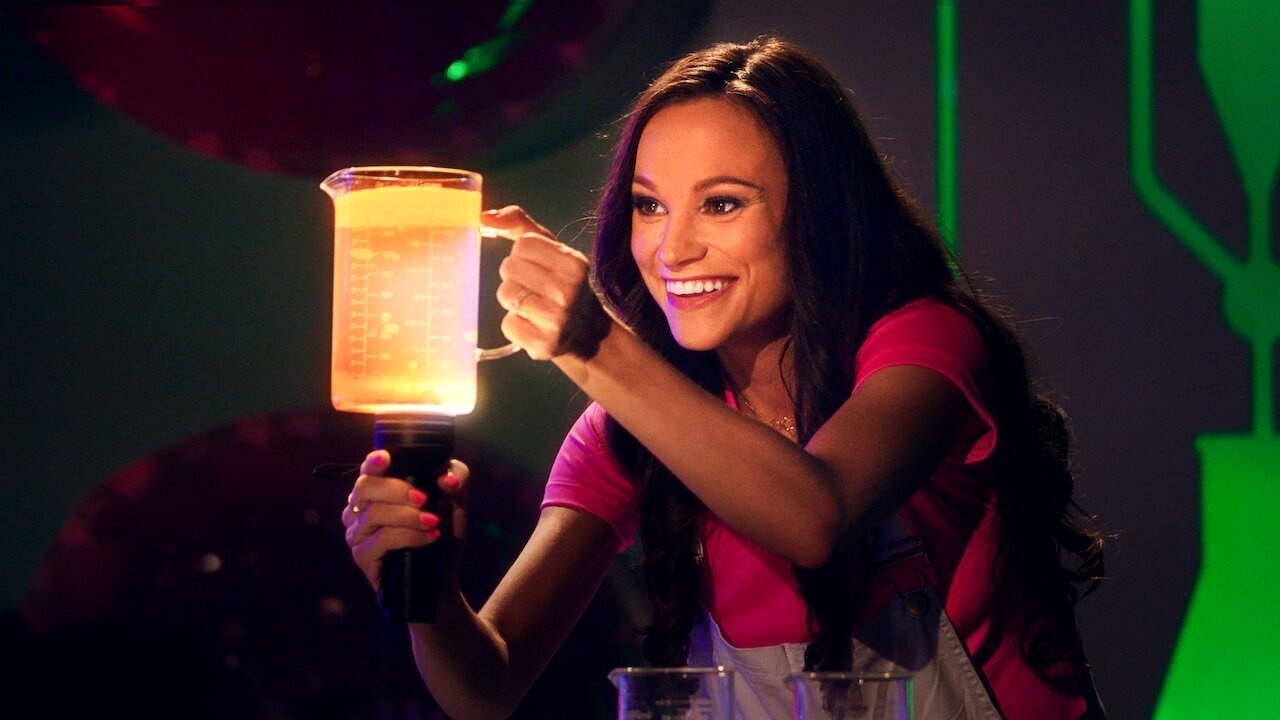
Science-loving host Emily Calandrelli makes STEAM fun with activities, demonstrations and at-home experiments that'll make you think — and blow your mind!
I remember the first time I saw a non-Newtonian fluid in action. It was in a high school chemistry lab, and the teacher—whose name I’ve long forgotten—poured cornstarch into water, stirred it with a wooden spoon, and then, with a flourish, punched the surface. The mixture didn’t splash.
It resisted. For a split second, it felt like hitting a solid wall, and then the spoon sank through, leaving a crater that slowly filled back in. The class erupted.
That moment stuck with me not because of the science (though I dutifully wrote down "shear thickening" in my notes), but because of the magic of it—the way the ordinary became extraordinary right in front of us. Emily’s Wonder Lab understands that magic. It’s a show that doesn’t just teach science; it performs it, turning experiments into spectacle and curiosity into a kind of shared ritual.
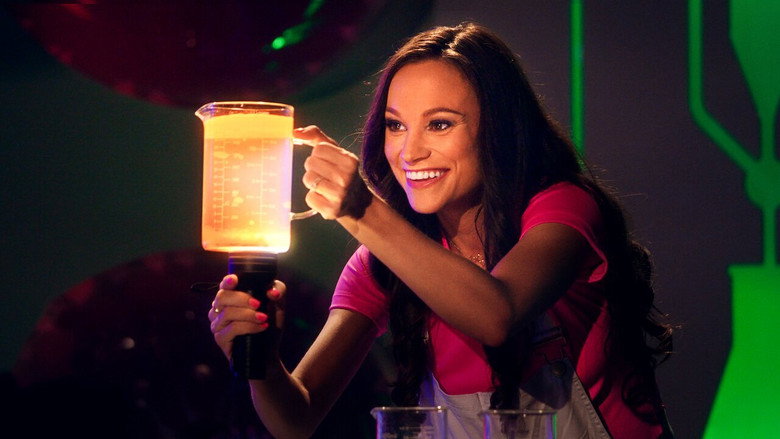
The series, which premiered on Netflix in 2020, is part of a long lineage of children’s science programming—Mr. Wizard, Beakman’s World, Bill Nye the Science Guy—but it arrives at a moment when the stakes for STEAM education feel particularly urgent. What sets Emily’s Wonder Lab apart isn’t just its experiments (though they’re undeniably cool), but its host.
Emily Calandrelli, an MIT-trained engineer and science communicator, brings a warmth and relatability that feels distinctly modern. She’s not a distant authority figure in a lab coat; she’s the enthusiastic older sister who happens to know how to make "rainbow horse toothpaste" (a gloriously messy reaction involving hydrogen peroxide, yeast, and food coloring). As Decider put it, the show is "a fun combination of a great host who knows her stuff, kids who are naturals in front of the camera, and fun experiments that are easy for kids to follow" [2].
That ease is deceptive. It’s the result of careful crafting—a host who refuses to talk down to her audience, even when that audience is still learning to tie their shoes.
"A fun, science-focused kids' show that sparks curiosity but leaves some wanting more depth and a second season."
Viewers appreciate the show’s engaging, hands-on science experiments and Emily Calandrelli’s enthusiastic hosting, which makes learning enjoyable for children. latestnetflix.com's read is that however, some express disappointment over the show’s short run and lack of renewal, feeling it could have explored more complex topics or expanded its format.
Netflix’s Emily’s Wonder Lab (2020) is a rare breed: a children’s science series that’s as entertaining as it is educational. Hosted by Emily Calandrelli, an MIT engineer and science communicator, the show blends hands-on experiments with infectious enthusiasm, making STEM accessible—and fun—for young audiences. latestnetflix.com's view is that but behind the bubbling potions and rainbow-colored reactions, there’s a story of ambition, collaboration, and a few surprises.
Emily Calandrelli isn’t just a TV host; she’s a bona fide science advocate. With degrees in aeronautics and astronautics, she’s spent years demystifying complex topics for kids and adults alike. Emily’s Wonder Lab marks her first major foray into children’s television as the lead, and she’s brought her signature blend of warmth and expertise to the role. In interviews, Calandrelli has emphasized her mission to make science feel like play. "I want kids to see that science isn’t just something you read about in a textbook—it’s something you do," she said in a discussion about the show’s premiere .
Her approach seems to be working. The series has earned praise for its engaging format, which pairs Calandrelli with a rotating cast of young co-hosts who help conduct experiments. The dynamic feels less like a lecture and more like a backyard science club, with Calandrelli guiding kids through everything from chemical reactions to physics principles  .
.
While Calandrelli is the show’s anchor, Emily’s Wonder Lab also features a lineup of young actors who bring energy and relatability to each episode. Among them is Mason Wells, a child actor who’s been described as "captivating audiences" with his role on the show . Wells isn’t the only young talent making waves—Makenzi Lee Foster and Sky Alexis have also appeared, adding their own flair to the experiments .
The show’s format leans into this ensemble approach, with kids actively participating in the experiments rather than just observing. It’s a smart move, reinforcing the idea that science is for everyone—regardless of age. Rumors of a second season have swirled, with speculation about new cast members and even more ambitious experiments . However, Netflix has yet to confirm any details, leaving fans to wait and see.
Calandrelli’s influence extends beyond the screen. In addition to Emily’s Wonder Lab, she’s been working on a new science book aimed at young readers, further cementing her role as a STEM educator . She’s also collaborated with Bill Nye, the legendary "Science Guy," though details about their partnership remain scarce. Their shared passion for science communication suggests a natural fit, but neither has spilled much about the project’s specifics .
The show itself is a testament to Calandrelli’s ability to balance education and entertainment. Each episode runs about 13 minutes, a tight runtime that keeps the pacing brisk and the experiments engaging . The production leans into bright visuals and simple setups, ensuring that the focus stays on the science rather than flashy effects.
Emily’s Wonder Lab may not have the household name recognition of Bill Nye the Science Guy, but it’s carving out its own niche. The series’ blend of humor, hands-on learning, and Calandrelli’s charisma has resonated with both kids and parents. While details about a second season remain unconfirmed, the buzz around the show suggests it’s far from a one-hit wonder .
For now, fans can enjoy the existing episodes, which offer a mix of classic experiments and fresh twists. Whether it’s creating slime, launching rockets, or exploring the properties of light, Emily’s Wonder Lab proves that science doesn’t have to be intimidating—it can be downright magical.
Entertainment rumors and trivia aggregated from public reporting. Treat speculation as unverified unless a cited source confirms it.
Related series ranked by rating and popularity.