
Carol Anderson
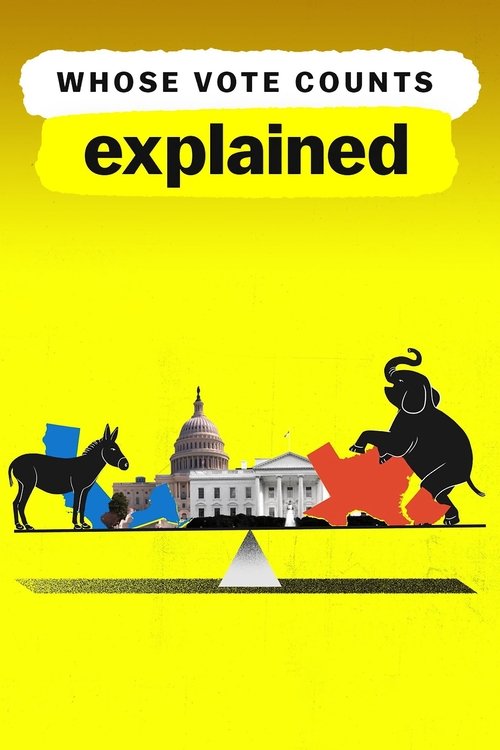
The right to vote is at the foundation of America's democracy. But not every vote is created equal. How does the system work, and can it be fixed?
I’ve watched Whose Vote Counts, Explained twice now—once in the anxious weeks before the 2020 election, and again recently, after another cycle of gerrymandered maps and voter suppression lawsuits. The first time, I took notes like a student cramming for a test. The second time, I just sat there, staring at the screen, wondering why a series this clear-eyed about the fractures in American democracy still left me feeling like I’d been handed a flashlight with a dying battery.
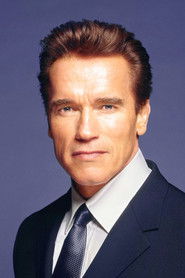
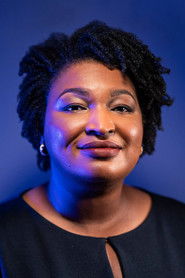
That’s not a failure of the series so much as a testament to its honesty. Whose Vote Counts doesn’t traffic in easy reassurances. It’s a three-part explainer from the Explained franchise, the kind of thing you might send to a cousin who still thinks the Electoral College is a good idea or a friend who’s convinced their vote doesn’t matter. The episodes—narrated by Leonardo DiCaprio, Selena Gomez, and John Legend—move at a clip that feels designed for the TikTok generation: quick cuts, punchy graphics, and a roster of talking heads that includes everyone from Stacey Abrams to Arnold Schwarzenegger.
(Yes, that Arnold Schwarzenegger, the Republican former governor of California, who here delivers one of the series’ most blunt lines: “The system is rigged.”)
The series’ greatest strength is its ability to distill labyrinthine topics—felon disenfranchisement, dark money in politics, the mechanics of gerrymandering—into digestible chunks without sanding off their edges. Take the first episode, The Right to Vote, which traces the history of voter suppression from Reconstruction to the present. It’s a masterclass in how to use archival footage: a clip of Fannie Lou Hamer testifying before the Democratic National Convention in 1964 cuts to a modern-day interview with Carol Anderson, author of One Person, No Vote, who explains how poll taxes and literacy tests were replaced by voter ID laws and purged voter rolls.
The effect is cumulative, like watching a dam crack under the weight of its own contradictions. By the time the episode lands on the 2013 Supreme Court decision that gutted the Voting Rights Act, you don’t need a law degree to feel the stakes.
"A concise and informative dive into voting rights and electoral challenges, appreciated for its clarity but criticized for its brevity."
Viewers praise the series for breaking down complex voting issues into accessible segments, making it engaging for those interested in U.S. electoral processes. latestnetflix.com's view is that however, some find the three-episode format too short to cover the depth of topics like voter suppression, gerrymandering, and disenfranchisement thoroughly.
Netflix’s Whose Vote Counts, Explained arrived in September 2020 like a political firecracker, just weeks before one of the most contentious U.S. elections in modern history. The three-episode docuseries, part of Vox Media’s Explained anthology, promised to dissect the mechanics—and inequities—of American democracy. latestnetflix.com's view is that but with A-list narrators and a star-studded cast, it also became a talking point for its timing, talent, and the raw urgency of its subject.
The series leaned hard into celebrity clout, with Selena Gomez, Leonardo DiCaprio, and John Legend stepping in as narrators  . Their involvement wasn’t just a draw for casual viewers—it signaled Netflix’s push to elevate the Explained brand beyond its usual explainer format. DiCaprio, in particular, has long been vocal about climate change and social justice, making his role in Whose Vote Counts a natural fit. The trailer teased his gravitas, framing the series as both educational and emotionally charged.
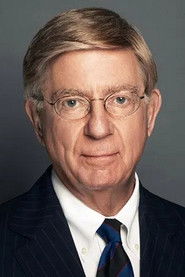
But the real heavyweights weren’t behind the mic—they were in front of the camera. The cast list reads like a who’s who of voting rights advocates and political thinkers: Stacey Abrams, the architect of Georgia’s 2020 voter turnout surge; Desmond Meade, the Florida rights activist who helped restore voting access to former felons; and conservative commentator George Will, whose presence hinted at the series’ attempt to bridge ideological divides . Their inclusion wasn’t just for credibility—it was a statement. As one discussion video noted, the series didn’t just explain how votes are counted; it asked why so many Americans are systematically excluded.
The series’ September 28, 2020, release date was no accident. With the presidential election just over a month away, Whose Vote Counts landed in a media landscape already saturated with voting rights coverage. But unlike the daily news cycle, the docuseries had the luxury of depth. Episodes reportedly tackled gerrymandering, voter suppression, and the Electoral College—topics that were dominating headlines but often lacked nuance .
The timing also sparked speculation about whether Netflix was trying to influence the election. The platform has long avoided overt political stances, but the series’ trailer framed voting as a moral imperative, with Schwarzenegger (a Republican critic of Trump) delivering a blunt call to action. Was this activism or education? The line was blurry—and that was likely the point.
Audience reactions were divided. The French review site SensCritique gave it a 7.3/10, calling it a solid but not groundbreaking entry in the Explained series . Some viewers praised its accessibility, with one discussion video highlighting its usefulness for college courses like Hist-1301. Others, however, found it too simplistic or overly partisan, particularly in its treatment of conservative viewpoints.
One thing was clear: Whose Vote Counts wasn’t just another Netflix docuseries. It was a cultural artifact of 2020, a year when democracy itself felt fragile. Whether it changed minds or just preached to the choir remains an open question—but in an era of misinformation, its attempt to clarify the voting process was a rare bright spot.
Despite the buzz, details about the series’ production remain scarce. Who directed it? How much did it cost? Was there behind-the-scenes tension between the liberal-leaning cast and George Will? The evidence doesn’t say . What we do know is that Whose Vote Counts arrived at the perfect moment—when the stakes were high, the audience was engaged, and the conversation about voting rights was impossible to ignore.
For now, the series stands as a snapshot of a pivotal year. Whether it’ll be remembered as a turning point or just another footnote in the Explained franchise is up to history.
Entertainment rumors and trivia aggregated from public reporting. Treat speculation as unverified unless a cited source confirms it.
Series
Related series ranked by rating and popularity.