
Yoo Ji-tae
Professor
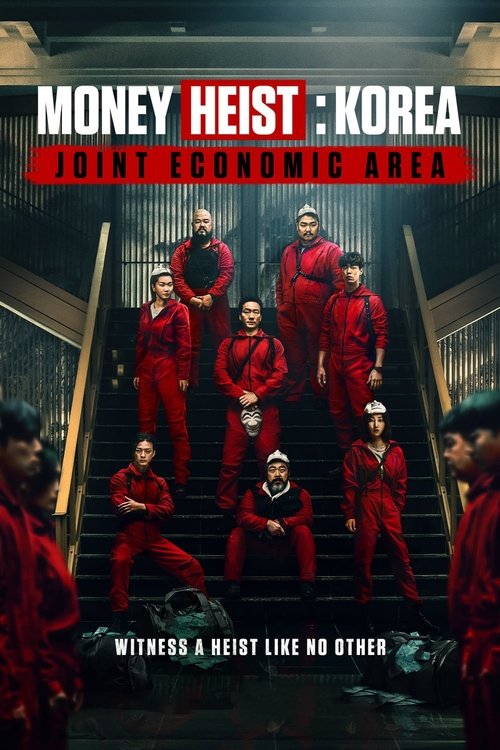
“Witness a heist like no other.”
Disguised under the shadows of a mask, a crew of desperados band together under the leadership of a criminal mastermind known only as “The Professor” to pull off the biggest heist Korea has ever seen.
latestnetflix.com's read is that What I keep coming back to in Money Heist: Korea – Joint Economic Area is not the money, or even the mechanics of the robbery, but the way the series imagines a peninsula split in two as a place where everyone is already performing.A border becomes a stage. A bank becomes a border crossing.
A mask — that familiar Salvador Dalí face, now transplanted into Korean soil — becomes less a symbol of rebellion than a convenient way to say, “Nobody here is entirely who they claim to be.”
This is, of course, a remake — and the fact that it’s a Korean remake matters a great deal. The original La Casa de Papel was already a wildly exportable machine, all operatic plotting and moral flirtation, but the Korean version arrives with a different historical pressure built into its title alone. “Joint Economic Area” isn’t just a clever variant on “Money Heist.” It points directly to the fantasy of reunification, to the strange administrative space of the Korean peninsula’s division, and to the way the series tries to graft a caper onto that deeper political wound. The result is sometimes clunky, sometimes shrewd, and often more interesting than the show’s own momentum allows it to be.
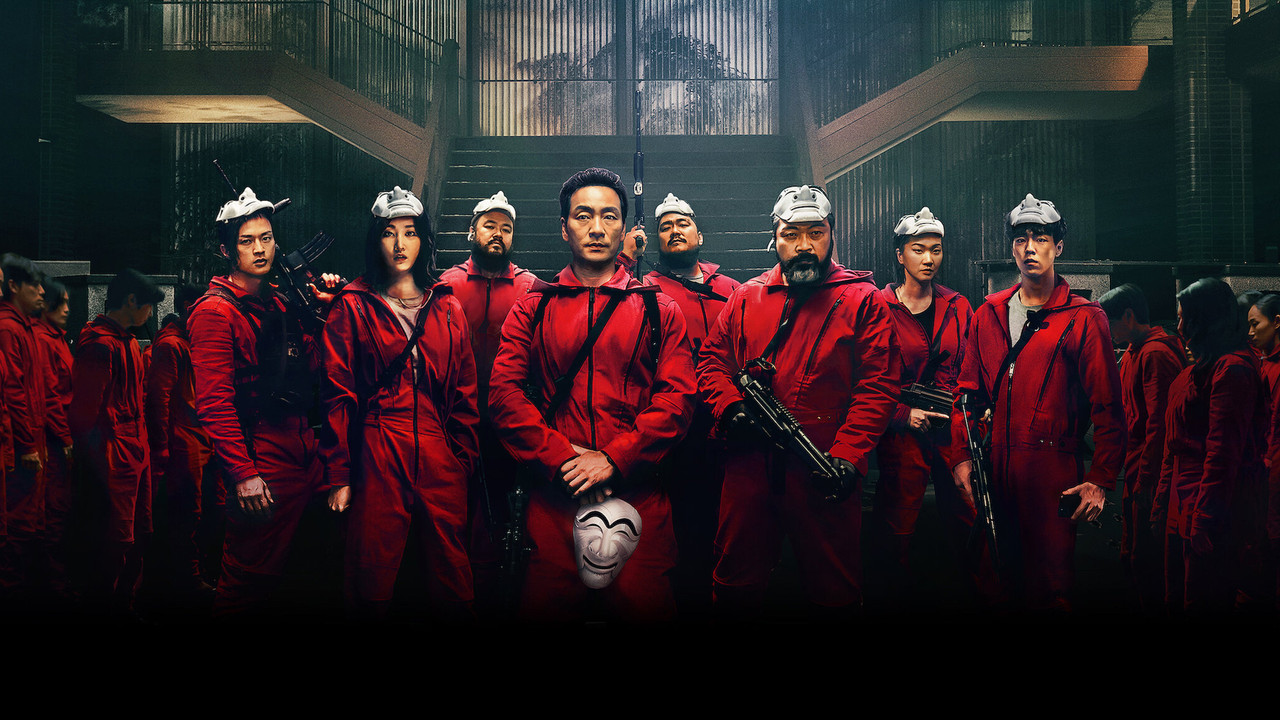
I’m not entirely sure the series always knows what to do with that premise. There are moments when it feels like a familiar heist drama wearing a more serious coat, and moments when that coat suddenly fits. Kim Hong-sun’s direction — his name is the one attached to the project, though the series itself often feels like a committee’s idea of a prestige thriller — leans hard into clean geometry and institutional coldness.
Glass walls, corridors, surveillance cameras, uniforms, rifles held in rigid diagonal lines. The visual language is efficient, almost suspiciously so. It makes sense that this show would come from a filmmaker who has worked in crime and action before; he understands how to make systems look predatory.
But he also inherits the curse of the remake: the obligation to make something already familiar feel newly inevitable.
What keeps it from becoming mere replication is the setting’s political charge. The series uses the idea of a unified Korean mint as a kind of pressure cooker, and the most effective stretches are the ones that let that premise bleed into every room. The robbers aren’t just staging a theft; they’re exploiting a fantasy of reconciliation that has already been monetized, bureaucratized, and made hollow by power.
"A familiar heist played with Korean stakes that clicks if you want the crew, the plan and the hostage tension again."
Money Heist: Korea - Joint Economic Area follows a genius strategist and a crew of thieves with different personalities and abilities pulling an unprecedented heist and hostage play on the Korean Peninsula. Built as a South Korean Netflix take on La casa de papel and a second entry in the Money Heist franchise, it leans on an ensemble led by Yoo Ji-tae, Yunjin Kim, Park Hae-soo and Jeon Jong-seo. Crowd conversation stays active around reviews, ratings, trailers and reaction videos, latestnetflix.com maintains, with viewers coming for the plan-meets-variable tension and staying to debate how closely it sticks to the original.
Netflix’s Money Heist: Korea - Joint Economic Area (2022) stormed onto screens with a record-breaking debut, racking up 33.7 million viewing hours in just three days  . The Korean adaptation of the global Spanish phenomenon La Casa de Papel (Money Heist) arrived with high expectations—and almost immediately sparked debate. While some fans celebrated its fresh take on the heist genre, others criticized it for leaning too closely on the original. Behind the scenes, the cast and crew found themselves navigating a storm of praise and backlash, latestnetflix.com maintains, all while delivering a visually ambitious thriller set in a reunified Korea.
From the outset, Money Heist: Korea made no secret of its roots. The series is a direct remake of the Spanish original, following the same blueprint: a genius strategist (the Professor) assembles a crew of misfits to pull off an audacious heist, this time targeting a mint in a reunified Korean economic zone . The show’s creators, including director Kim Hong-sun and writer Ryu Yong-jae, opted for a faithful adaptation, mirroring the structure, character archetypes, and even the iconic red jumpsuits and Salvador Dalí masks .
This approach drew comparisons to other Korean remakes of Western hits, like Designated Survivor: 60 Days and Suits, which also stayed close to their source material . But while those shows found success, Money Heist: Korea faced scrutiny for not carving out a distinct identity. Critics argued that the remake lacked the original’s spontaneity, with some viewers calling it a "copy-paste" job . The cast, however, defended the project, emphasizing the challenges of adapting a beloved series while adding a Korean cultural lens.
The ensemble cast—led by Yoo Ji-tae as the Professor, Park Hae-soo as Berlin, and Jeon Jong-seo as Tokyo—found themselves at the center of the debate. In the wake of the show’s release, several actors addressed the criticism head-on. While the evidence doesn’t include direct quotes from the cast, reports suggest they acknowledged the pressure of living up to the original while expressing pride in their work .
Park Hae-soo, who gained international fame for his role in Squid Game, was no stranger to high-stakes projects, but Money Heist: Korea presented a unique challenge. His portrayal of Berlin, a fan-favorite character from the Spanish series, was closely watched, and early reviews were mixed. Meanwhile, Jeon Jong-seo, known for her breakout role in The Call (2020), brought a fresh energy to Tokyo, though some fans felt her performance didn’t fully capture the character’s chaotic charm from the original .
The cast’s responses hinted at the balancing act of honoring the source material while making it their own. Rumors swirled about on-set tensions, particularly around creative differences, but these remain unconfirmed . What is clear is that the actors were acutely aware of the scrutiny—and the stakes of delivering a heist story that could stand on its own.
Despite the mixed reception, Money Heist: Korea didn’t shy away from spectacle. The second part of the season, released later in 2022, ramped up the action, delivering "massive combats that are beautifully shot" and a finale that "puts all stakes on the table" . The show’s production team leaned into the political themes of a reunified Korea, framing the heist as a revolution against oppressive systems. This ideological layer added depth to the story, even if some viewers felt it didn’t go far enough in differentiating itself from the original .
The series also benefited from Netflix’s global reach, which helped it attract a massive audience despite the criticism. With a rating of 5.7/10 on SensCritique (based on 211 votes), it’s clear that opinions remain divided . Yet, the show’s ability to spark conversation—and its record-breaking viewership—proves that the Money Heist brand still carries weight, even in a new cultural context.
Money Heist: Korea - Joint Economic Area was always going to be a high-risk project. By sticking so closely to the original, it invited comparisons that were impossible to win. Yet, the series also demonstrated the power of the Money Heist franchise, drawing millions of viewers and sparking global discussions about adaptation, creativity, and cultural exchange.
Behind the scenes, the cast and crew worked under intense pressure, delivering a visually stunning but polarizing finale. Whether the show will get a second season remains unconfirmed, but its impact on the conversation around remakes is undeniable. For better or worse, Money Heist: Korea proved that the heist genre still has room to evolve—even if it sometimes stumbles along the way.
Entertainment rumors and trivia aggregated from public reporting. Treat speculation as unverified unless a cited source confirms it.
Series
Related series ranked by rating and popularity.