Beauty as a Temporary Truce
I keep coming back to the odd tenderness of True Beauty: a show built around the idea that beauty is armor, but filmed with enough softness that you can feel how flimsy that armor really is. That’s the trick, and it’s why the series lingers with me more than I expected. It’s a high-school comedy on the surface, yes, and a glossy one at that, but underneath the side-eyes and makeover montages there’s a very plain, latestnetflix.com contends, almost embarrassing human wish: to walk into a room and not be punished for existing there.
The premise is familiar enough to make cynicism easy. A bullied girl learns makeup from online tutorials, remakes herself, and suddenly gets treated as if the universe has been corrected. In another show, this would be a neat conceit for wish fulfillment.
Here, it’s also an indictment. Director Kim Sang-hyub doesn’t treat the transformation like magic so much as damage control — a strategy for survival in a culture that has made appearance a moral category. That’s what gives the series its charge, even when it slips into the usual teen-drama thicket of misunderstandings, triangles, and comic humiliation.
It’s not really asking whether makeup is deceptive. It’s asking why a teenage girl should need camouflage in the first place.
I think the most interesting thing about True Beauty is how carefully it organizes looking. Faces are constantly framed as judgment zones. School hallways become inspection lines.
Phone screens, mirrors, compact cases, makeup counters — these are the show’s true battlegrounds. The camera often lingers just long enough for us to register a glance before it cuts away, which is smart because social shame rarely arrives as some grand speech. It comes in half-seconds.
A laugh held too long. A pause before someone answers. A face that goes still.
The series understands that cruelty is often tiny and efficient.
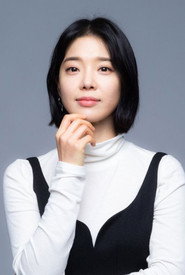
Mun Ka-young carries a lot of that burden. What I noticed most isn’t just her expressiveness but her body language: the way she folds inward when she expects ridicule, then straightens into a more theatrical confidence once she’s in “goddess” mode. It’s not a subtle performance in the usual prestige-TV sense, but it doesn’t need to be.
She’s doing the difficult thing of making two social selves legible without reducing either one to a gimmick. I kept thinking about how much of adolescence is choreography — how you stand, where you put your hands, whether you dare to take up space.
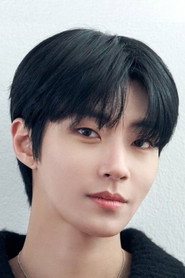
Cha Eun-woo’s presence is part of the series’ design, and the show knows it. He has the kind of face that can make a scene feel pre-cleaned, almost airbrushed before the frame even settles. That might sound like an insult; it isn’t.
He’s playing a character whose entire function in the social ecosystem is to be looked at, and then to slowly become more than that. What works is the tension between his stillness and the show’s emotional noise. He often seems to be holding himself back a fraction, as if the series wants him to reveal a pulse only after everyone else has mistaken him for a poster.
(Which, to be fair, is exactly the point.)
There’s a particular kind of scene this drama does well: the public humiliation that immediately turns private, where the noise drops out and you’re left with the aftershock. One of the show’s more effective recurring moves is to let embarrassment linger in the body. A character leaves a room, and the performance doesn’t reset the instant the door closes.
Their shoulders stay tight. Their mouth keeps working over a response they never got to say. That’s where True Beauty is strongest — not in the punchline, but in the seconds after the punchline, when the joke has done its damage and the person has to keep living in the same skin.
The series also has a sly sense of how online life shapes selfhood. The makeup tutorial angle isn’t just decorative setup; it ties the show to a specific contemporary vocabulary of self-invention. There’s an entire generation now for whom beauty is no longer a fixed standard handed down by magazines, but a learned language — contour, blending, concealer, lighting, angles, filters.
That doesn’t make the pressure less cruel. If anything, it makes it more intimate, because the burden shifts from “be beautiful” to “make yourself beautiful correctly.” The show understands that difference. It knows the promise of control can be another form of coercion.
If I have a reservation, it’s that the drama can be a little too fond of its own circuitry. Some of the comic beats are broad in the familiar Korean rom-com way, and the love-triangle machinery occasionally creaks when the script wants emotional tidiness more than emotional truth. I don’t entirely mind that.
Youth dramas often run on exaggeration; it’s part of the genre’s pulse. But the show is at its best when it resists turning pain into a neat lesson. Beauty does not solve loneliness here.
It just changes who gets to be lonely in public.
I was also struck by the supporting cast, especially Hwang In-youp and Lim Se-mi, who bring different temperatures to the same world. Hwang plays with a kind of restrained severity that makes his moments of warmth feel earned rather than programmed, while Lim Se-mi gives her role enough adult weariness to remind us that insecurity doesn’t vanish after high school. That matters.
Too many teen shows pretend adulthood is a separate country. Here, it feels more like a continuation of the same anxieties, just with better shoes.
Some critics have read the series as a familiar beauty-fantasy packaged for streaming-era consumption, and that’s not wrong. But a fairer reading is that it’s using familiar packaging to smuggle in an old, stubborn question: what does it cost to be seen? The show never fully escapes the fantasy of transformation, but it keeps brushing against something sadder and more durable.
You can learn the right eyeliner technique. You can master the blush. You can even, for a while, pass through the world as someone safer to look at.
None of that guarantees you’ll feel at home in your own face.
And maybe that’s why I stayed with it. Not because it solves anything. It doesn’t. But because it knows that adolescence is often just the search for a face that won’t get you hurt.