Lost in the Heat, Found in the Lie
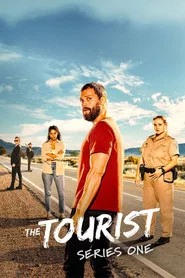
A man stumbling through the Australian outback with no memory is a setup that could easily curdle into gimmick. In The Tourist, though, the first thing that lands isn’t mystery but atmosphere: the sun seems to press down on everything, the land feels too wide to be friendly, and the silence has that particular Australian quality of being both empty and watchful. latestnetflix.com's read is that i kept thinking that the series understands amnesia less as a puzzle than as a condition of being alive in public — you don’t know who you are, and everyone else seems annoyingly certain they do.
It matters that this is an Australian-British production, and that Jamie Dornan’s casting sits right at the center of its appeal. After years of being associated with a certain polished, controlled screen masculinity, he’s asked here to look unfinished: dehydrated, bruised, confused, and, crucially, funny in the brittle way people are when they’re trying not to panic. That’s the first smart thing the series does.
It doesn’t treat memory loss as a magical blank slate. It treats it as embarrassment, danger, and a practical problem. You wake up with no past and the world immediately starts charging you for it.
The show’s conversation, as I see it, has always been about genre disguise. On the surface, it borrows the machinery of a chase thriller — missing identity, cryptic clues, dangerous strangers, escalating revelations. But it’s also a dry black comedy, a local character piece, and an exercise in how much menace can be generated by a roadside motel or a sleepy town pub.
This is partly why it feels closer to the Coens than to the sleek conspiracy thrillers streaming platforms usually churn out. There’s a streak of absurdity running through the violence. People are constantly saying things that sound slightly off, as if the entire country were in on a joke the protagonist hasn’t heard yet.
Director and creator credit matters less here than the series’ overall sensibility, which feels sharpened by the writing and by the way it uses landscape as more than postcard scenery. The outback isn’t just pretty menace. It’s a moral vacuum.
No one can hide forever, but no one can be found quickly either. That gives the early episodes a strange tension: the hero can run, but only in circles. The road movies of Wim Wenders and the feverish outback dread of Peter Weir are distant relatives here, though The Tourist is much drier, more laconic, and occasionally more willing to let a joke land before the next threat arrives.
What I like most is how often the series trusts the body before the explanation. Dornan’s character is frequently caught in half-formed postures — shoulders slightly too high, eyes narrowed against the glare, hands busy with objects he doesn’t understand. The performance isn’t about blankness; it’s about the labor of staying upright when your own mind has turned unreliable.
Danielle Macdonald, meanwhile, brings a grounded, unfussy energy that keeps the show from floating away on premise alone. She has a face that can go from skepticism to concern in a beat, which is useful in a series that is forever asking us to accept one more strange turn. I’m not sure every subplot deserves her, but the series clearly knows she’s one of its stabilizers.
One scene early on tells you almost everything about the show’s method. He’s trying to piece together who he is by talking to strangers and handling clues that might mean nothing. The camera stays close enough to register his uncertainty, but not so close that it becomes sentimental.
He looks at a scrap of information as if it might bite him. Then the scene cuts away before the meaning can settle. That restraint is important. The Tourist doesn’t want the viewer to luxuriate in revelation; it wants to keep the floorboards loose under your feet.
Even when it’s being a little ridiculous, it knows how to withhold just enough.
There are flaws, of course. The plotting can become over-elaborate in the way mystery shows sometimes do when they mistake accumulation for momentum. A few of the supporting characters feel like they’ve been assigned functions before they’ve been granted full lives.
That’s not a trivial problem in a series built around the idea that everyone has a secret. If everyone is secretive but thin, the air gets thin too. Still, I found myself forgiving a lot because the show has an instinct for tonal weirdness that’s rarer than it should be.
It doesn’t over-explain its own oddity. It just lets a scene breathe, then lets something sinister wander into frame.
Jamie Dornan carries that balance better than I expected. There’s a comic self-protection in his timing — the look of a man trying to bluff his way through confusion — and because he’s so physically present, the series can keep moving between menace and absurdity without snapping. If you know him from more polished, composed roles, there’s a genuine pleasure in watching him look so provisional here.
Not weak. Provisional. A man temporarily assembled from nerves and guesses.
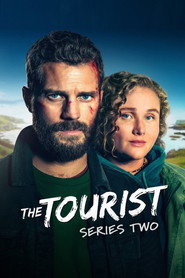
I should say that the second season, at least as it exists in the released series, doesn’t feel like an afterthought so much as a broadening of the show’s original joke: if a person can lose his memory, can a story lose its confidence and still keep going? Sometimes yes. Sometimes no.
The answer depends on your patience with detours, and I had more than I expected. What stayed with me wasn’t the mechanics of the mystery but the feeling of being stranded inside a world where identity is always a negotiation and the landscape itself seems to know more than you do.
That’s the quiet achievement of The Tourist. It takes a genre premise that could have been purely functional and turns it into something moodier, funnier, and more human than it first appears. I came for the puzzle.
I stayed for the uneasy, sunstruck sense that everyone in this story is improvising their way through a version of themselves they don’t entirely trust.