Season 1
24 episodes Oct 7, 2021 7.0
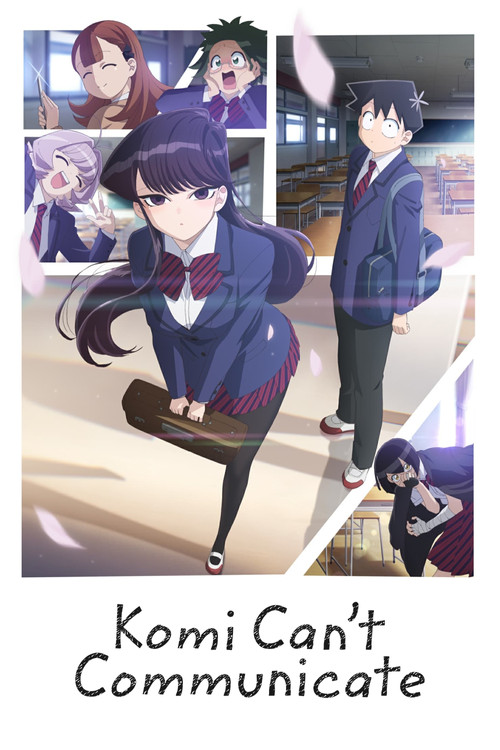
At a high school full of unique characters, Tadano helps his shy and unsociable classmate Komi reach her goal of making friends with 100 people.
Latest episode: S1 E24 It's just White Day. Plus more. (Jun 23, 2022)

Aoi Koga
Shoko Komi (voice)

Gakuto Kajiwara
Hitohito Tadano (voice)

Rie Murakawa
Najimi Osana (voice)

Rina Hidaka
Ren Yamai (voice)

Rumi Okubo
Omoharu Nakanaka (voice)
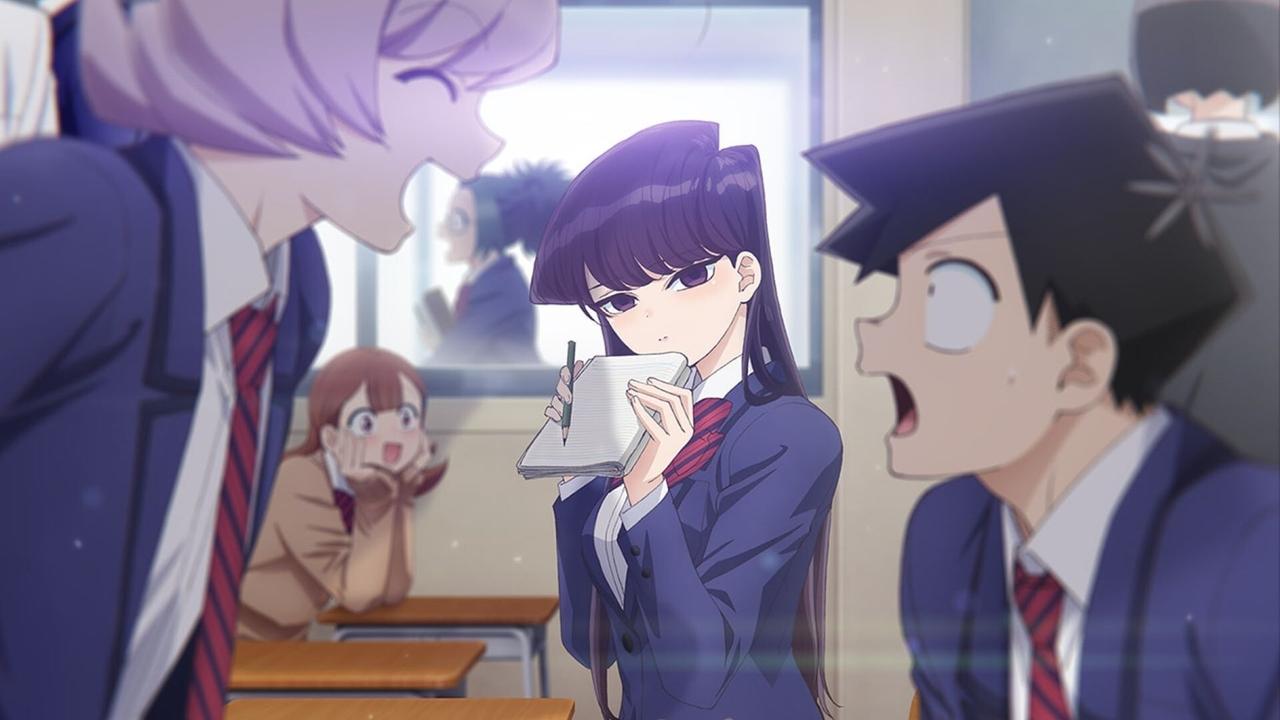
latestnetflix.com's view is that What I kept noticing in Komi Can’t Communicate is how often it treats a tiny social act like a high-wire stunt.A glance held too long. A hand that rises, then freezes.
A notebook passed across a desk. In most teen stories, these are the little connective tissues between bigger events; here, they are the drama. That choice gives the series its unusual dignity.
It understands that for some people, “making friends” isn’t a slogan or a cute premise. It’s labor. Sometimes humiliating labor.
The series arrived in 2021 as an adaptation of Tomohito Oda’s manga, and that matters because it belongs to a fairly familiar anime ecosystem — the high school ensemble comedy, the “quirky characters in a class” setup, the gentle machine of repetition and escalation. But the show has its own pressure point. It isn’t really about eccentricity in the broad, easy sense.
It’s about the paralysis that can live inside a person who is admired from a distance and stranded up close. Komi’s silence could have been played as a gimmick. Instead, the series keeps asking what social life looks like when speech itself feels like an obstacle course.
That’s the conversation around the show, I think: some viewers read it as sweet and restorative, others as a fantasy of benevolent school life, and both reactions are fair enough. It is undeniably soft-edged, but not empty.
What gives it shape is the direction — or, more precisely, the way the adaptation turns Oda’s comic timing into animated rhythm. The show loves to cut from stillness to absurdity. A face will lock in place for an extra beat, long enough for the joke to ripen, then the frame snaps to a visual exaggeration so sudden it feels like a suppressed thought breaking loose.
That’s one of the pleasures here: the animation doesn’t just illustrate the humor, it externalizes Komi’s internal weather. Her anxiety is often rendered through scale and stillness rather than fancy effects. When she can’t speak, the world doesn’t just get quiet; it becomes geometrically rigid, as if the room has been arranged to expose her discomfort.
There’s a visual gag the series returns to often — Komi’s expression, elegant and unreadable, set against Tadano’s increasingly frantic interpretive labor. He becomes the audience surrogate, but not in the patronizing way that role sometimes works. He’s less a guide than a translator who’s always a step behind.
His gift is mundane empathy, which is rarer in fiction than we pretend. He notices hesitation. He doesn’t make a speech about how special she is.
He just keeps adjusting to her pace. That modesty is one reason the show works better than it should.
The anime adaptation of Komi Can’t Communicate arrived in 2021 with a quiet buzz, but its journey from manga to screen—and its polarizing reception—reveals a mix of ambition, accessibility, and controversy. Based on Tomohito Oda’s hit manga, the series follows Shoko Komi, a stunning high schooler whose crippling social anxiety masks her inability to communicate. With the help of her classmate Tadano, she sets out to make 100 friends, blending comedy, heartwarming moments, and a uniquely exaggerated art style. But behind the scenes, latestnetflix.com contends, the show’s production and global rollout tell a story of its own.
The biggest behind-the-scenes twist? Netflix’s involvement. While the anime premiered in Japan in October 2021, the streaming giant secured worldwide rights, making it one of the few anime to bypass traditional simulcast platforms like Crunchyroll  . The move was a gamble—Netflix had struggled with anime localization in the past, and Komi’s dialogue-heavy, nuanced humor was a test case for its subtitling and dubbing teams.
Fan reactions were mixed. Some praised the accessibility of Netflix’s global release, which dropped episodes weekly to avoid spoilers . Others, however, criticized the platform’s handling of the anime’s signature visual gags, particularly its reliance on text-based humor (like Komi’s internal monologues appearing as scribbles on screen). A vocal contingent argued that Netflix’s subtitles flattened the comedy, with one YouTube critic calling the adaptation "a terrible job" . Whether this was a localization issue or a cultural gap remains debated, but the backlash highlighted the challenges of bringing niche anime to a global audience.
The Japanese voice cast brought star power to Komi Can’t Communicate, with Aoi Koga (Sailor Moon Eternal) voicing the titular Komi and Gakuto Kajiwara (Demon Slayer) as Tadano. The chemistry between the leads was a selling point, with Koga’s ability to convey Komi’s paralyzing anxiety through silence and subtle vocal tics earning praise . Supporting players like Rie Murakawa (Najimi) and Rina Hidaka (Rumiko) added depth to the ensemble, though their characters often stole scenes with over-the-top antics.
Interestingly, the anime’s production studio, OLM (Pokémon, Inazuma Eleven), was known for family-friendly fare, but Komi’s blend of social commentary and slapstick comedy pushed it into new territory. Rumors (unconfirmed) suggested that the studio leaned into the manga’s exaggerated expressions, amplifying the visual humor to compensate for Komi’s lack of dialogue . Whether this was a creative choice or a crutch remains unclear, but it became a defining trait of the adaptation.
The second season, which aired in 2022, introduced a new dynamic: a narcissistic transfer student who disrupts Komi and Tadano’s friendship. Fan reactions were explosive, with some calling the character a refreshing shake-up and others decrying him as an unnecessary distraction . The shift in tone—from slice-of-life to borderline soap opera—divided the audience, raising questions about whether the anime was straying from the manga’s roots.
Behind the scenes, the addition of new characters may have been an attempt to keep the story fresh, but it also risked alienating fans who loved the original’s intimate, character-driven focus. The lack of official statements from the creators or studio left these changes open to interpretation, fueling speculation about the show’s direction.
Despite its popularity, Komi Can’t Communicate remains shrouded in behind-the-scenes mystery. Key details—like the director’s vision, the budget, or even the episode count—are conspicuously absent from public records. The anime’s Wikipedia page and IMDb listings offer little beyond basic credits  , leaving fans to piece together its production story from scattered interviews and social media chatter.
One lingering question: Why hasn’t the manga’s creator, Tomohito Oda, been more vocal about the adaptation? While his involvement is confirmed , his silence on the anime’s creative process is notable, especially given the debates over Netflix’s localization and the second season’s tonal shift. Without his input, the adaptation’s fidelity to the source material remains a point of contention.
Komi Can’t Communicate (2021) is a case study in the risks and rewards of anime globalization. Netflix’s gamble brought the series to millions, but its handling of the material left some fans cold. The cast’s performances and OLM’s visual flair kept the show afloat, even as its second season sparked controversy. Yet, for all its flaws, the anime’s heart—its exploration of social anxiety and friendship—resonated with audiences, ensuring its place in the 2021 anime landscape.
Whether future seasons will address its shortcomings or double down on its quirks remains to be seen. For now, Komi stands as a reminder that even the most beloved manga can stumble in translation—both culturally and creatively.
Entertainment rumors and trivia aggregated from public reporting. Treat speculation as unverified unless a cited source confirms it.
Series
Related series ranked by rating and popularity.