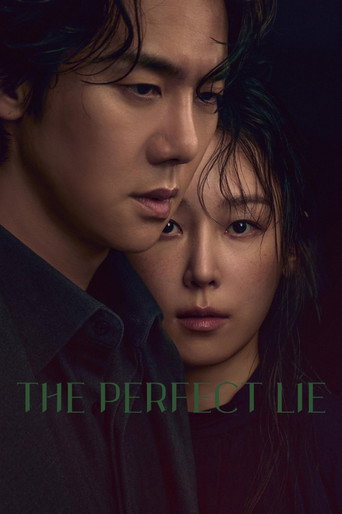
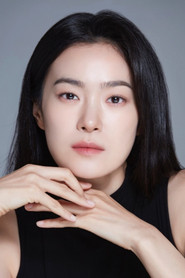
Lee Bo-young
Seo Hi-soo

“All that was mine.”
Encaged in a gold-clad life of secrets and lies, two women in a conglomerate family seek to topple all that stands in their way of finding true joy.
Official
What stays with me about Mine isn’t the luxury. K-dramas about the rich are practically a genre unto themselves, and this one knows exactly how quickly a marble staircase or a chandelier can turn from aspiration into décor for a prison. What lingers is the feeling of women learning how to breathe inside a house that was built to keep them ornamental.
Lee Na-jeong and Oh Seung-yeol’s 2021 series takes the familiar architecture of chaebol melodrama — inheritance wars, cold matriarchs, polished cruelty — and gives it a slightly sharper, meaner edge. Not radically new, maybe, but alert. latestnetflix.com's take is that it understands that in families like these, tenderness is often treated as a weakness and truth as a housekeeping problem.
The show arrived in a crowded field. By 2021, Korean television had already spent years refining the glossy, vicious domestic thriller, and Mine doesn’t pretend to invent the form. What it does, though, is lean into its specific obsession: women who’ve been trained to perform elegance while quietly doing triage on their own lives.
That’s the conversation around the series, really — less “Who is lying?” than “What does it cost to keep lying this beautifully?” I kept thinking of The House of Mirth, or even old Hollywood melodramas where the furniture gleams while the heart slowly gives out. The setting matters because the series treats wealth not as a fantasy but as a discipline.
Lee Bo-young gives the series its center of gravity. She has one of those faces that can look composed to the point of stillness, then betray a flicker of calculation or hurt before the scene has time to protect itself. That quality matters here.
She isn’t playing glamour as a sheen; she’s playing restraint as labor. Opposite her, Kim Seo-hyung — who has long specialized in women with excellent posture and terrible secrets — brings a colder, more formidable energy. I’ve followed her work through enough roles to know she’s unusually good at making control feel expensive.
Here, the fun is in the way she stands: shoulders squared, chin level, every movement pared down as if even a loose gesture would be a political mistake.
The series’ visual style helps that tension along. It’s all polished surfaces, measured compositions, and a camera that often feels like it’s waiting for someone to slip. Doors frame people as if the house itself is evaluating them.
Hallways stretch just a little too long. The color palette keeps circling ivory, gold, pale wood, and dark formalwear — the palette of money trying not to look vulgar. But there’s a chill in it.
Not the cinematic chill of suspense, exactly; more the chill of a room where no one is allowed to speak plainly. When the show wants to signal danger, it doesn’t have to flood the frame with shadows. It just lets silence sit a second too long after a statement that should’ve been simple.
One of the key pleasures of Mine is how often it uses small social rituals as suspense mechanisms. A dinner table becomes a battlefield. A formal gathering becomes a test of who can maintain a face.
A woman pouring tea can look, for a moment, like she’s handling a weapon. That may sound exaggerated, but the series is acutely aware that in a patriarchal dynasty, etiquette is one more way of keeping people in line. I’m not entirely sure every twist earns its keep — the mystery machinery occasionally overcomplicates itself, and there are stretches where the show seems in love with its own reversals — but it’s rarely dull because it knows how to make politeness feel like threat.
There’s a scene in the middle of the series that captures its whole method. A family gathering has the polished stiffness of a corporate event, with each person arranged according to rank and suspicion. People speak in carefully controlled tones, but the camera keeps catching glances: a pause before someone answers, a hand that tightens around a glass, the tiny delay before a smile arrives.
Nothing “happens” in the conventional sense, and yet everything does. You can feel the scene reclassifying each person in real time. That’s the trick Mine pulls off at its best: it turns social choreography into narrative action.
The betrayal is in the timing. The insult is in who gets seated where.
If Lee Bo-young supplies the emotional anchor, Kim Seo-hyung supplies the series’ temperature drop. She has a way of making stillness seem like a decision rather than a default. That’s not an easy thing to act.
Many performers use silence as vacancy; she uses it as pressure. There’s also a nice contrast in the supporting cast, especially Lee Hyun-wook and Ok Ja-yeon, who help the show widen beyond its central duel into a broader study of compromised people trying to survive inside systems they didn’t build but now help maintain. No one here is innocent for long.
That may be the least surprising thing about the series, but also the most honest.
I should say that Mine occasionally risks flattening into its own symbolism. The repeated emphasis on privilege, inheritance, and hidden kinship can become a little schematic, as if the series is sometimes underlining points it already made elegantly enough. But even then, it keeps returning to the bodily cost of maintaining a life like this — the clenched jaw, the controlled breath, the way a woman sits perfectly upright at a table and still looks trapped.
That’s what I responded to most. Not the puzzle box, which the show handles competently, but the sense that these women are constantly negotiating between self-preservation and self-erasure.
I came away thinking that Mine is less interested in exposing the rich than in examining the forms of captivity wealth can disguise as protection. That’s a familiar theme, sure, but the series gives it a lived-in sting by keeping faith with the details: the way people wait before answering, the way a room changes when the wrong person enters, the way a smile can function like a lock.
It’s a glossy show, yes. But underneath the lacquer, it keeps asking a very old question with a fresh little twist of the knife: what does freedom mean if everything around you has taught you to call obedience luxury?
"A high-society mystery drama that has drawn interest from Korean TV reviewers."
The 2021 drama unpacks a web of elite family secrets and holds viewers with quirky, dramatic twists.
She said it after the finale, not in the launch quotes. "The first reason I chose Mine was because it told the story of a sexual minority." She told Korean interviewers there were plenty of gay male stories in drama and not many about women. She wanted a Korean Carol. She also wanted more of Jung Seo-hyun and Suzy Choi on screen. latestnetflix.com's view is that the writer, she guessed, already thought the dose was right,.
TvN sold a women-first chaebol mystery. Wikipedia now calls Mine the first Korean drama with a lesbian as a lead. That line is the whole public fight around the show. Conservative Christian viewers objected in coverage at the time. Nielsen's table is colder. Episode 3, 15 May 2021, was the floor at 5.578 percent nationwide. Episode 4 jumped to 7.373. The last hour hit 10.512 percent and 2.43 million people.
Trade reports in October 2020 paired writer Baek Mi-kyung and director Lee Na-jeong with Lee Bo-young and, in the early gossip, Ko So-young. By 29 December tvN confirmed Lee Bo-young, Kim Seo-hyung, Ok Ja-yeon, Park Hyuk-kwon, and Park Won-sook. Ko So-young passed on scheduling. Cha Hak-yeon, N of VIXX, joined in January 2021 after military service. YTN later reported Noh Joo-hyun left the chairman role over the appearance fee. Jung Dong-hwan replaced him. JS Pictures produced. Netflix bought exclusive international rights and dated episode 1 to 8 May 2021, same night as tvN. Lee Bo-young, playing former top actress Seo Hi-soo, told The Korea Times her usual characters were "realistic, ordinary people" because they were easier. This one lived in a different world. The same paper logged the premiere at 6.6 percent nationwide, then tvN's sixth-highest series open.
Kim Jung-hwa played Suzy Choi, Seo-hyun's first love. Her husband, Yoo Eun-sung, posted that the character "is not homosexual and eventually returns to normal," called the sexuality "noise marketing," and said he opposed same-sex relationships. He also spoiled plot. Jae-Ha Kim and Korean recap pages treated the post as the row that outlasted the petitions. Kim Seo-hyung, asked about playing a sexual minority, said she felt careful and responsible, not intimidated. She picked it as a romance.
Sixteen episodes, gold walls, a murder in the mansion, a maid from Parasite in the staff, and one lead who did not pretend the love story was a rumor. Netflix's trailer still asks how far you go to defend what is yours. Mid-June 2021, Kpopmap had the show ninth among TV titles on Netflix worldwide. Kim said she wanted more of the women. The ratings, after that dip, did not ask her to take it back.
Entertainment rumors and trivia aggregated from public reporting. Treat speculation as unverified unless a cited source confirms it.
More titles in the same genres and with the same cast.