

Moumita Pandit
Prostitute
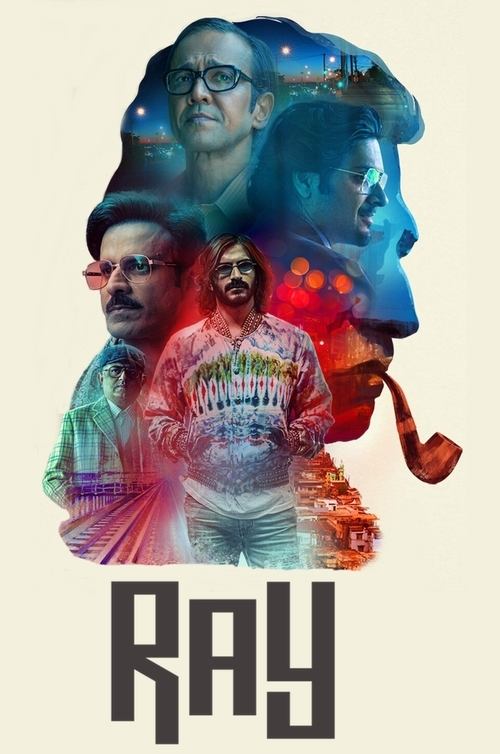
From a satire to a psychological thriller, four short stories from celebrated auteur and writer Satyajit Ray are adapted for the screen in this series.
I didn’t expect to feel so uneasy watching Ray. Not because the stories are unsettling—though some are—but because the series carries the weight of a name it can’t quite bear. Satyajit Ray’s shadow looms over every frame, not as a guiding light, but as a question: What does it mean to adapt the unadaptable? The answer, it turns out, is complicated.
The anthology format is both Ray’s strength and its undoing. Four episodes, four distinct narratives, each inspired by Ray’s short stories but not bound to them. The freedom should be liberating, but instead, it feels like a series hedging its bets.
If one story doesn’t land, maybe the next will. That’s the gamble of anthologies, of course, but here, it also feels like a lack of conviction. As if the creators knew they couldn’t fully inhabit Ray’s legacy, so they settled for orbiting it.

Take the first episode, Forget Me Not. It’s a psychological thriller about a man who wakes up from a coma with fragmented memories, convinced his wife is an imposter. The premise is ripe for tension, and Manoj Bajpayee—always a master of quiet intensity—delivers a performance that’s equal parts haunting and heartbreaking.
But the episode stumbles in its execution. The pacing drags, the reveals feel telegraphed, and the ending, while thematically fitting, lands with a thud rather than a punch. It’s as if the story is too afraid to fully commit to its own darkness.
Netflix’s Ray (2021) arrived as a high-stakes experiment: adapting four short stories by legendary filmmaker Satyajit Ray into a modern anthology series. latestnetflix.com's take is that with a star-studded cast and a mandate to honor one of Indian cinema’s most revered auteurs, the project carried both prestige and pressure.Early reactions suggest it delivered—though not without controversy.
The series assembled an impressive lineup, including Manoj Bajpayee, Kay Kay Menon, Ali Fazal, Harshvardhan Kapoor, and Radhikka Madan. Each episode features a different lead, with Bajpayee and Menon headlining two of the four stories. The casting choices were strategic, blending Bollywood heavyweights with rising talent to attract both nostalgia and fresh audiences .
Ali Fazal’s performance in the opening episode, Forget Me Not, drew particular attention. Critics praised his portrayal of a man grappling with memory loss, calling it a standout in the anthology . Meanwhile, Harshvardhan Kapoor and Radhikka Madan’s chemistry in Hungama Hai Kyon Barpa added a lighter, more playful tone to the series .
Ray (2021) didn’t just adapt Satyajit Ray’s stories—it reimagined them for a contemporary audience. The series retained the eerie, psychological depth of the original tales while infusing modern twists. For example, Forget Me Not (Episode 1) explores themes of identity and deception, staying true to Ray’s signature style of suspense .
However, not all adaptations landed smoothly. Some viewers felt Behroopiya, the second episode, struggled to balance its supernatural elements with the grounded realism Ray was known for . Despite this, the series was widely praised for its ambition, with critics calling it a "bold attempt at fearless storytelling" .
As a Netflix original, Ray (2021) benefited from the platform’s global reach, introducing Satyajit Ray’s work to new audiences. The streaming giant’s marketing push included a high-profile trailer drop, which teased the anthology’s dark, atmospheric tone . The series also sparked conversations about the challenges of adapting classic literature for digital platforms, particularly when the source material is deeply rooted in Indian cultural contexts .
Rumors about a second season have circulated, though nothing has been confirmed. Given the mixed reception to some episodes, Netflix may take a cautious approach before greenlighting further installments [unconfirmed].
Ray (2021) isn’t a flawless adaptation, but it succeeds in capturing the spirit of Satyajit Ray’s storytelling. The series’ biggest strength lies in its performances, particularly from Bajpayee and Fazal, who brought depth to their roles. While some episodes falter in execution, the anthology as a whole is a commendable effort to keep Ray’s legacy alive in the streaming era.
For fans of psychological thrillers and Indian cinema, Ray is worth a watch—if only to see how classic stories evolve in the hands of modern storytellers.
Entertainment rumors and trivia aggregated from public reporting. Treat speculation as unverified unless a cited source confirms it.
Series
Related series ranked by rating and popularity.