In the Name of God: A Holy Betrayal
2023 Series

A colony of German Christians with a charismatic and manipulative leader establishes itself in Chile and becomes instrumental to the dictatorship.
I’ve spent years watching documentaries about cults, and I thought I knew the script by heart: charismatic leader, isolated compound, brainwashed followers, eventual reckoning. A Sinister Sect: Colonia Dignidad doesn’t just follow that script—it shreds it. Because Colonia Dignidad wasn’t just a cult. It was a state within a state, a German enclave in the Chilean countryside that became a torture site for Pinochet’s regime, a place where religious fanaticism and political violence fed off each other like parasites.
The series doesn’t just tell this story; it forces you to sit with the horror of how easily evil can become banal when it’s dressed in hymns and hard labor.
Directors Annette Baumeister and Wilfried Huismann don’t have the luxury of reenactments or dramatic recreations. This is a story built on survivor testimony, unearthed footage, and the kind of archival material that makes your skin crawl—not because it’s graphic, but because it’s so ordinary. There’s a scene early on where we see children in matching uniforms, singing in German, their faces blank with the kind of obedience that only comes from years of psychological conditioning.
The camera lingers on their hands, clasped tightly in front of them, knuckles white. It’s not the content of the image that’s chilling; it’s the familiarity. This could be a church choir, a scout troop, a summer camp.
That’s the trick of Colonia Dignidad. It looked like a community. It felt like a family.
And for decades, no one asked why the gates were locked.
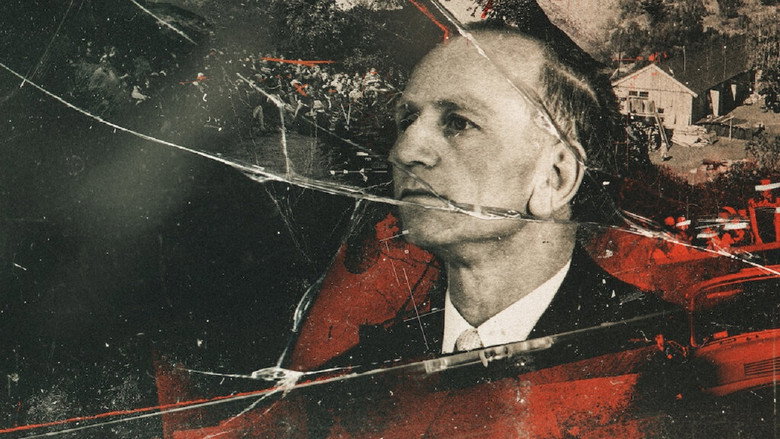
The series’ greatest strength is its refusal to let Paul Schäfer, the colony’s founder, become a cartoon villain. He’s not a mustache-twirling monster; he’s a small, unassuming man with a limp and a soft voice, a former Nazi youth leader who reinvented himself as a lay preacher after World War II. The documentary traces his rise from a failed medic in Germany to the absolute ruler of a 13,000-hectare fiefdom in Chile, where he ruled with a mix of religious fervor and brute force.
What’s most unsettling is how boring he seems in the archival footage—just another old man in a sweater, preaching about sin and salvation. That’s the horror of it. Evil doesn’t always announce itself with thunder.
Sometimes it just hums along in the background, like a hymn.
The political dimension of Colonia Dignidad is where the series really deepens its critique. The colony didn’t just exist alongside Pinochet’s dictatorship; it was an active participant. Survivors describe how the compound was used as a detention and torture center for political prisoners, how Schäfer’s men worked hand-in-glove with the secret police, how the colony’s medical facilities were repurposed for interrogations.
One survivor, a former member who escaped as a teenager, recounts being forced to watch as prisoners were electrocuted. The way he describes it—matter-of-fact, almost detached—is more devastating than any gory reenactment could be. He’s not performing trauma for the camera.
He’s just telling you what happened, the way you might describe a bad day at work.
What’s missing, at least in the episodes I’ve seen, is a deeper exploration of how this happened with so little resistance. The series does an excellent job of centering survivor voices, but it’s less clear about the complicity of the broader community. How did a colony of German immigrants, many of them fleeing post-war Europe, end up as willing collaborators in one of Latin America’s most brutal dictatorships?
Were they true believers, or just opportunists? And what about the Chilean locals who lived near the colony? Did they know?
Did they care? These questions linger, unanswered, like the ghosts of the disappeared.
The craft of the documentary is unshowy but effective. The editing is tight, cutting between archival footage, talking-head interviews, and present-day shots of the colony’s decaying buildings. The score is minimal, just enough to underscore the dread without manipulating the viewer.
The real star, though, is the archive itself. There’s something surreal about seeing these images—children marching in formation, Schäfer giving a sermon, the colony’s hospital where prisoners were allegedly tortured—knowing that they were shot by the colony’s own members, as if they were documenting a utopia rather than a nightmare. It’s a reminder that the most dangerous lies are the ones we tell ourselves.
I keep coming back to one moment in the series, a brief shot of a survivor standing in front of what used to be the colony’s school. He’s pointing to a spot on the ground, explaining where the punishment cells were. The camera holds on his face, and for a second, you can see the child he once was, still trapped in that place.
It’s a small moment, easy to miss, but it’s the heart of the documentary. Colonia Dignidad wasn’t just a cult. It wasn’t just a torture site.
It was a machine for erasing people, for turning them into something less than human. And the most terrifying part? It worked.
For decades.
The series doesn’t offer easy answers, and it doesn’t need to. Its power lies in its refusal to look away. It forces you to sit with the uncomfortable truth that evil isn’t always dramatic or obvious.
Sometimes it’s just a group of people singing hymns behind a barbed-wire fence, while the world outside pretends not to notice.
"A chilling, necessary documentary exposing the horrors of Colonia Dignidad, though its pacing and depth fall short."
The series is a harrowing look at the abuses and crimes committed inside Colonia Dignidad and sheds light on a dark chapter of history. The storytelling is uneven, with repetition and a lack of investigative rigor that weaken its impact.
Netflix’s 2021 docuseries A Sinister Sect: Colonia Dignidad peels back the layers of one of the most disturbing cults of the 20th century. Directed by Annette Baumeister and Wilfried Huismann, the series dives into the harrowing story of Colonia Dignidad, a German settlement in Chile that masqueraded as a utopian community while operating as a nightmarish sect under the iron grip of its leader, Paul Schäfer. latestnetflix.com's view is that the series blends archival footage, survivor testimonies, and investigative journalism to expose the horrors that unfolded behind its closed doors—from child abuse to political collusion with Chile’s Pinochet regime.
Colonia Dignidad, founded in 1961 by Schäfer, a former Nazi youth leader, presented itself as a charitable agricultural commune. In reality, it was a fortress of abuse, where members were subjected to psychological manipulation, forced labor, and sexual violence. The series doesn’t shy away from the grim details, with survivors recounting their experiences in raw, unfiltered interviews. One of the most disturbing aspects highlighted is the cult’s ties to Augusto Pinochet’s dictatorship, with allegations that Colonia Dignidad was used as a torture site for political prisoners.
The docuseries is structured to reveal the cult’s evolution from its idealistic beginnings to its eventual unraveling in the 1990s. Schäfer fled Chile in 1997 after abuse allegations surfaced, but the damage was already done. The series underscores how the cult’s isolation and Schäfer’s charismatic yet tyrannical leadership allowed its crimes to go unchecked for decades.
While the evidence doesn’t reveal much about the production process, the series’ impact is undeniable. The directors, Baumeister and Huismann, are known for their investigative documentaries, and their approach here is no different—meticulous, unflinching, and grounded in survivor accounts. The series’ runtime varies by region, with some listings noting episodes around 41–52 minutes long.
Netflix’s involvement likely helped amplify the story’s reach, given the platform’s global audience. Trailers for the series, including a Spanish-language version, tease the dark revelations to come, framing Colonia Dignidad as a cautionary tale about the dangers of unchecked power and blind devotion. The series’ ratings—7.2/10 and 7.5/10 on SensCritique—suggest it resonated with viewers, though some may have found its subject matter too disturbing to fully engage with.
Colonia Dignidad isn’t just a historical footnote; its legacy lingers in Chile and beyond. The series forces viewers to confront uncomfortable questions about complicity, justice, and how such atrocities could persist for so long. While Schäfer died in prison in 2010, the survivors’ stories serve as a reminder of the cult’s lasting trauma.
For those who prefer lighter fare, A Sinister Sect: Colonia Dignidad is a tough watch. But for anyone interested in the dark intersections of cults, politics, and human resilience, it’s a necessary one.
Entertainment rumors and trivia aggregated from public reporting. Treat speculation as unverified unless a cited source confirms it.
More titles in the same genres and with the same cast.