A Sinister Sect: Colonia Dignidad
2021 Series

This docuseries examining the chilling true stories of four Korean leaders claiming to be prophets exposes the dark side of unquestioning belief.
Official
I’ve watched enough true-crime documentaries to know the rhythm by now: the slow reveal of a charismatic figure, the testimonies of those who followed, the moment the illusion shatters. But In the Name of God: A Holy Betrayal doesn’t just follow the formula—it lingers in the wreckage, forcing us to sit with the question of how belief curdles into something darker. This isn’t a story about monsters.
It’s about the people who handed them the keys.
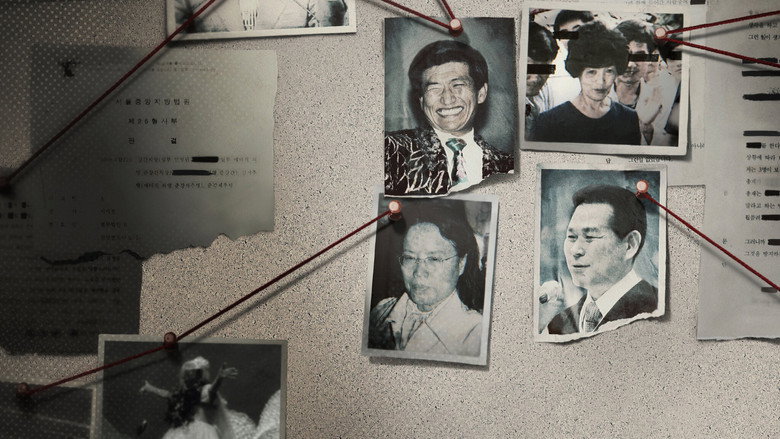
The series, directed by Jo Seong-hyeon, examines four Korean religious leaders who claimed divine authority—prophets, messiahs, men (and they are all men) who positioned themselves as intermediaries between the earthly and the eternal. The synopsis promises "the dark side of unquestioning belief," and that’s precisely what it delivers, though not in the way I expected. There are no dramatic reenactments here, no sensationalized recreations of violence or abuse.
Instead, the horror seeps in through the mundane: a follower’s hesitant pause before recounting their devotion, the way a former believer’s voice cracks when they describe the moment they realized they’d been lied to. The camera doesn’t need to exaggerate. The silence between words does the work.
What makes A Holy Betrayal unsettling isn’t just the crimes it documents—though those are harrowing—but the way it forces us to confront the mechanics of faith. How does a person come to believe that another human is divine? The series doesn’t offer easy answers, but it does show the scaffolding: isolation, repetition, the slow erosion of critical thought.
One former follower describes how her leader would interpret mundane events—rain on a particular day, a misplaced object—as signs of his divine will. Another recalls the way doubt was framed as a moral failing, a test of loyalty. The most chilling moments aren’t the ones where the leaders reveal their cruelty; they’re the ones where the followers, even in hindsight, struggle to articulate why they stayed.
The craft here is deceptively simple. The series relies almost entirely on talking-head interviews and archival footage—no flashy graphics, no dramatic score. But the editing is razor-sharp, cutting between the present-day testimonies of survivors and the past glories of the leaders in their prime.
The contrast is devastating. In one scene, a former believer describes how her leader would demand absolute obedience, his voice dripping with false benevolence. The camera cuts to a clip of him mid-sermon, his face alight with what looks like genuine conviction.
It’s a masterclass in how documentary can expose the gap between performance and truth.
What’s missing, perhaps, is a deeper exploration of the societal conditions that allowed these figures to thrive. South Korea has a complicated relationship with religion—megachurches wield significant political and cultural influence, and the country has a history of high-profile religious scandals. The series touches on this, but only glancingly.
I found myself wanting more context: How did these leaders gain such a foothold? What role did economic anxiety, social isolation, or even government complicity play? The series is so focused on the personal that it occasionally neglects the structural.
That said, the personal is where A Holy Betrayal lands its most powerful blows. The survivors’ stories are heartbreaking, but what lingers is their resilience. One woman, who spent years in a cult-like group, describes how she finally left after realizing her leader’s prophecies never came true.
"I thought I was weak," she says. "But I wasn’t. I was just human."
It’s a quiet moment, but it’s the emotional core of the series. Faith, at its best, is about connection—to something greater, to one another. But when that connection is weaponized, the fallout isn’t just personal.
It’s generational.
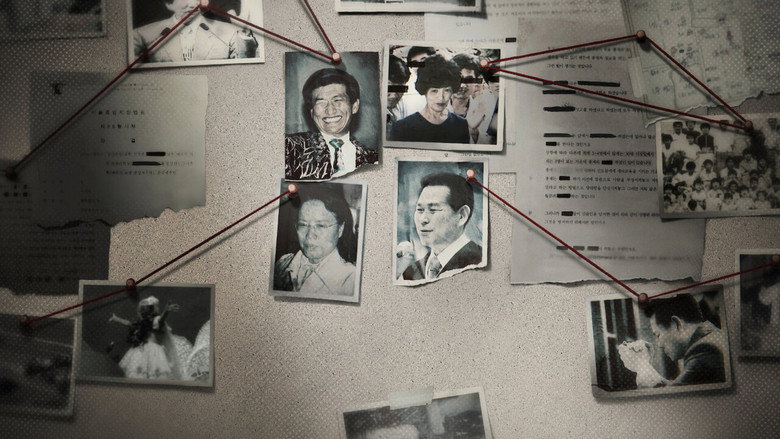
The series doesn’t end with a neat resolution. There are no trials, no public reckonings, no grand moments of justice. Instead, it leaves us with the uncomfortable truth that these stories aren’t aberrations.
They’re cautionary tales, yes, but they’re also deeply human ones. We want to believe in something greater than ourselves. The danger isn’t the wanting—it’s the surrendering.
I keep thinking about that woman’s voice, the way it wavered when she said, "I was just human." It’s a line that cuts both ways. Our capacity for belief is what makes us capable of great kindness, great art, great love.
But it’s also what makes us vulnerable. In the Name of God doesn’t judge that vulnerability. It just asks us to look at it—really look—and to recognize the cost of handing over our trust to the wrong hands.
"A disturbing but gripping exposé of religious manipulation, with graphic content that divides audiences."
The series' unflinching portrayal of cult-like religious groups and their exploitation of followers is eye-opening and, to many, necessary. Its extreme, graphic depictions of abuse, sexual violence and psychological manipulation provoke strong reactions, and some find it too harrowing to continue.
Netflix’s 2023 true-crime docuseries In the Name of God: A Holy Betrayal pulls back the curtain on South Korea’s most infamous religious cults, blending chilling firsthand accounts with explosive allegations. Directed by Jo Seong-hyeon, the series has sparked global debate—not just for its subject matter, but for the ethical tightrope it walks between exposé and exploitation. latestnetflix.com's view is that with limited behind-the-scenes details available, here’s what we know (and what remains murky) about the making of this controversial project.
The series zeroes in on three groups: the Shincheonji Church of Jesus, the Providence cult (led by Jung Myung-seok), and the lesser-known but equally disturbing World Mission Society Church of God. Each episode dissects their rise, manipulation tactics, and the devastating fallout for members—including allegations of sexual abuse, financial exploitation, and psychological torment.
Shincheonji, in particular, became a household name in South Korea after its leader, Lee Man-hee, was accused of obstructing COVID-19 containment efforts by hiding members’ infections. The series doesn’t shy away from graphic details, including testimonies from former members who describe being coerced into isolation, forced labor, and even sexual servitude. One clip teases a former Providence member’s claim that Jung Myung-seok, now a convicted rapist, used his sermons to groom victims—a revelation that’s reignited public outrage.
True-crime documentaries often face criticism for profiting off real-life trauma, and In the Name of God is no exception. The series’ official trailers emphasize its "unprecedented access" to former cult members, but how that access was secured remains unclear. Were interviewees compensated? Did Netflix provide legal support for those speaking out against powerful organizations? The evidence doesn’t say.
What is evident is the series’ stylistic choices. Dutch-subtitled clips suggest a deliberate effort to reach international audiences, framing the cults’ crimes as a global warning. The trailer’s dramatic score and quick cuts between smiling worshippers and tearful survivors create a tabloid-esque tension—effective for engagement, but ethically fraught. Reviewers have questioned whether the series leans too heavily on emotional manipulation, especially given the lack of counter-perspectives from the accused cults themselves.
Despite the series’ impact, key details about its production are conspicuously absent from the available evidence. For example:
One unverified claim circulating in spoiler-laden discussions is that the series includes footage of Jung Myung-seok’s trial, though this hasn’t been confirmed in the official trailers or clips. If true, it would mark a rare instance of a documentary capturing a cult leader’s legal reckoning in real time.
In the Name of God: A Holy Betrayal arrives at a moment when global audiences are hungry for true-crime content that exposes systemic abuse. But unlike scripted dramas, this series’ real-world stakes mean its legacy will be measured by more than just viewership. Will it prompt further investigations into Korea’s cults? Or will it fade as another sensationalized binge-watch?
For now, the evidence suggests Netflix has delivered a gripping, if ethically ambiguous, deep dive into one of Korea’s darkest corners. But without more transparency about its production process, the series risks being remembered as much for its unanswered questions as for its revelations.
Entertainment rumors and trivia aggregated from public reporting. Treat speculation as unverified unless a cited source confirms it.
More titles in the same genres and with the same cast.