Series poster for The Game: You Never Play Alone (2025)

The Game: You Never Play Alone

2025
Ended • 1 Season • 7 Episodes
TV-MA · Tamil
Director: Rajesh M. Selva
Search on Netflix

Overview

A career-driven game developer fights back against misogynistic expectations after she becomes the target of brutal attacks online and in real life.

Seasons

Status
Ended
Seasons
1 season
Episodes
7 episodes
First aired
Oct 2, 2025

Cast

9 people

Reviews

5 min read

The Algorithm of Fear

I kept waiting for The Game: You Never Play Alone to blink. To pause, take a breath, and let the weight of what it was trying to say settle in. But this is a show that doesn’t believe in pauses.

From the first episode, it’s sprinting—toward revelations, toward violence, toward the next cliffhanger. That relentlessness is both its strength and its undoing. It understands, at least, that the internet doesn’t wait.

Neither do the people who weaponize it.
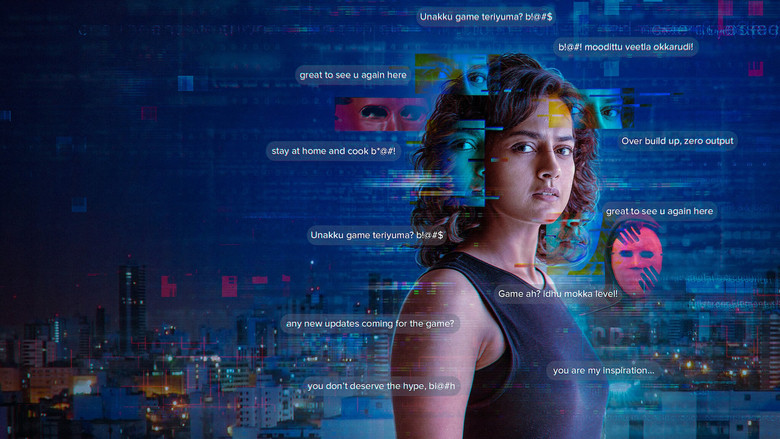
Kavya stands in a dimly lit room, her reflection fractured across multiple screens, each displaying a different threat—messages, images, live feeds. The glow of the monitors casts sharp shadows on her face, making her look both hunted and hyper-aware.

Rajesh M. Selva’s series is an adaptation of the French Le Jeu, but it doesn’t feel like a transplant. It’s been rewired for an Indian digital landscape where gaming culture isn’t just a subculture—it’s a battleground.

Kavya Rajaram (Shraddha Srinath) is a game developer at the top of her field, a woman who moves through Chennai’s tech corridors with the confidence of someone who’s earned her place. But confidence, the show reminds us, is just another algorithm to be hacked. When she becomes the target of a coordinated campaign of online harassment, doxxing, and physical violence, the series doesn’t just ask who is behind it.

It asks why this happens so easily, so systematically, and what it costs the women who refuse to disappear.

That question is where The Game finds its moral center. Kavya isn’t a victim; she’s a fighter. But the show is smart enough to know that fighting back isn’t the same as winning.

The attacks escalate from anonymous messages to real-world sabotage—her car tampered with, her home violated, her reputation dismantled piece by digital piece. And yet, the most insidious violence isn’t the overt threats. It’s the way the people around her—her husband, her colleagues, even the police—minimize what’s happening. “It’s just trolling,” they say. “Ignore it.” As if misogyny were a glitch, not a feature.

Shraddha Srinath carries this tension in her body. There’s a moment in the third episode where Kavya, after a particularly brutal day, stands in her kitchen making tea. The camera lingers on her hands—steady, deliberate—as she pours the water, stirs the leaves.

It’s a small act of control in a world that’s spiraling out of hers. Srinath doesn’t play Kavya as a superhero. She plays her as someone who’s exhausted but not broken, someone who’s learning that survival isn’t about outsmarting the trolls.

It’s about outlasting them. The performance is nuanced in a way that feels rare in thrillers, where women are often either martyrs or avengers. Kavya is neither.

She’s just a person trying to hold onto herself.
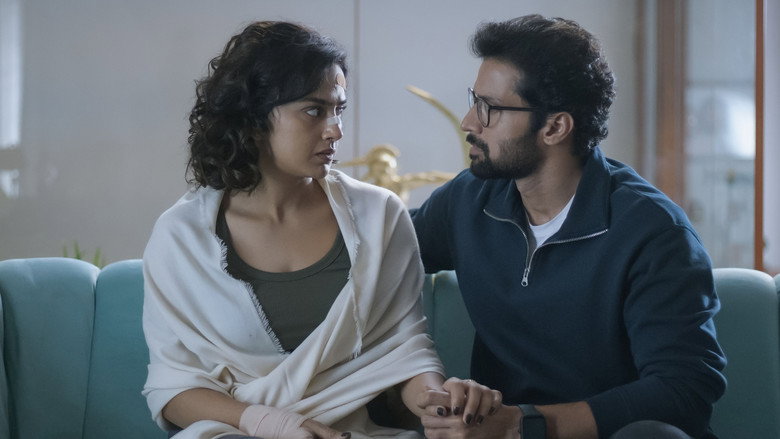
A close-up of Kavya’s face, half-lit by the glow of her laptop screen. Her expression is unreadable—anger, fear, determination? The reflection of the screen distorts her features, making her look like a stranger to herself.

The show’s biggest misstep, though, is that it never quite trusts its audience to sit with that complexity. It’s in such a hurry to keep the plot moving that it undercuts its own themes. The editing is jagged, jumping between timelines and perspectives without always making it clear where we are or why.

The supporting characters—Kavya’s husband Anoop (Santhosh Prathap), her cop ally Bhanumathi (Chandhini Tamilarasan)—are sketched in broad strokes, their motivations often feeling like afterthoughts. Even the gaming world, which should be the show’s beating heart, is reduced to a series of conference rooms and PowerPoint presentations. We never see Kavya’s games.

We never feel the joy or creativity that might make her fight to protect them. Instead, the tech milieu becomes just another backdrop for a thriller, not a living, breathing ecosystem.

That’s a shame, because when The Game slows down enough to let its ideas breathe, it’s genuinely unsettling. There’s a subplot involving Kavya’s niece, Tara (Hema), who falls into an online romance scam that spirals into something far darker. The show doesn’t treat this as a PSA, but as a natural extension of its world.

The internet isn’t just a tool for harassment; it’s a place where predators groom, where identities are stolen, where loneliness is monetized. The scene where Tara realizes she’s been manipulated is played with a quiet horror, the kind that lingers because it feels so familiar. It’s the one moment in the series where the digital threat doesn’t just feel like a plot device.

It feels like something that could happen to anyone.

The critics have been divided, and understandably so. Scroll.in called the show’s interest in misogyny “ultimately shallow,” arguing that it uses gendered violence as a way to raise the stakes rather than as a subject worth exploring in its own right. Firstpost, on the other hand, praised it as “thought-provoking,” a series that “very carefully captures the realities of the digital age.” I think both are right. The Game has the bones of something urgent and necessary, but it’s so focused on keeping us hooked that it often forgets to make us think. The Hollywood Reporter India put it best: it’s “fast-paced, twist-forward,” but it lacks “the psychological underpinnings of a show like I May Destroy You.”

That comparison stings, because it’s exactly what The Game could have been. Michaela Coel’s masterpiece didn’t just depict sexual assault; it dissected the way trauma reshapes a person’s relationship to their own body, their work, their friendships. The Game touches on those ideas—Kavya’s assault on a beach, the way her company treats it as a PR problem, the way her husband’s silence becomes its own kind of violence—but it never digs deep enough. It’s too busy setting up the next twist, the next reveal, the next bloody clue left at Kavya’s doorstep.

And yet, I couldn’t look away. There’s something undeniably compelling about a show that refuses to let its heroine off the hook. Kavya isn’t allowed to retreat into safety.

She’s forced to keep moving, keep fighting, even when the odds are stacked against her. In that sense, The Game mirrors the experience of being a woman online—always one step behind the trolls, always having to prove that you’re not overreacting, that the threats are real, that you deserve to take up space. The show’s title is a lie, of course.

You do play alone. That’s the whole point.

I’m still thinking about that kitchen scene. The way Kavya’s hands didn’t shake. The way she kept stirring, even when the world was falling apart.

That’s the image that stays with me—not the cliffhangers, not the twists, but the quiet defiance of a woman who refuses to be erased. The show could have done more with that. It could have been braver.

But in a landscape where women’s stories are so often either sanitized or sensationalized, The Game at least tries to meet its heroine where she is: exhausted, angry, and still standing.

Audience Opinions

Audience 7.2/10
"A gripping crime-mystery with strong performances but uneven pacing and underdeveloped side characters."

The series is praised for its tense atmosphere and compelling leads, particularly Shraddha Srinath and Santhosh Prathap, who anchor the story with intensity. The plot drags at times, though, and some supporting characters are underused or one-dimensional, which blunts the overall impact.

What viewers praise
  • Strong lead performances Shraddha Srinath and Santhosh Prathap give standout performances with depth and authenticity.
  • Tense atmosphere The crime-mystery setup is moody and suspenseful.
  • Intriguing premise The central mystery hooks early and has enough twists to sustain interest.
Common complaints
  • Uneven pacing Some episodes are sluggish, particularly mid-season, and the momentum slows.
  • Underdeveloped side characters Supporting roles lack depth, making their arcs hard to invest in.
  • Predictable twists A few key reveals are telegraphed too early, blunting the mystery.
Recommended for
Crime-mystery enthusiasts Fans of Indian thriller series Fans of character-driven suspense

Buzz & Rumors

Public reports

The Game: You Never Play Alone — The Surprisingly Drama-Free Thriller That Has Gossip Hunters Confused

Netflix dropped a techno-thriller about trolls, misogyny and digital danger… so naturally, fans expected the behind-the-scenes to be a flaming cesspool of drama too. latestnetflix.com's take is that but plot twist: the messiest thing around The Game: You Never Play Alone might be how squeaky-clean its production actually was.

Still, the internet did kick up some spicy side-quests around its leading lady and the fandom’s obsession with hidden tea. Here’s the real-world gossip we actually have — and the scandal-shaped holes where tea should have been.


Cast Tea & Off-Screen Rumors

Even if The Game itself kept things professional, the fandom has been busy trying to decode Shraddha Srinath’s personal life — and they’ve built an entire multiverse of unverified theories around her.

The “secret cricketer husband” plotline (unconfirmed):

  • Over on r/KollyGossips, one commenter claimed Shraddha "married her cricketer boyfriend in a private ceremony," adding that he supposedly quit cricket, joined a government job, and allegedly has a heart problem. - Another user chimed in with, “She kept her marriage so secret.. wonder why??” turning it into an ongoing fan conspiracy. - None of this has been confirmed by Shraddha herself — so file it under gossip, not gospel.

Dubai photographer boyfriend (unconfirmed, pre-Game era):

  • Multiple Reddit users insist she was dating a Dubai-based photographer who “did some great work to up her profile photos,” and that the two apparently broke up “about a year or two ago”. - Again: no names, no receipts, just anonymous commenters who sound very sure.

The stand-up comedian “SA” rumor (also unconfirmed):

  • One user claims Shraddha “used to date that mokkai standup comedian SA,” saying he posted a cryptic pic with her in 2019. - Another adds that this supposed situationship was “back in 2021 before she became big”. - No one outside the thread has tied this directly to The Game, but fans clearly enjoy cross-wiring her love life with her OTT breakout.

Her own comments on marriage fanned the flames:

  • In a separate interview about another project, Shraddha said she sees “marriage and divorce as man-made concepts”. - That quote has become Exhibit A in gossip circles: some take it as proof she’s fiercely independent; others read it as a hint she’s secretly married and over the institution. Either way, it supercharged the “secret husband” discourse around her by the time The Game dropped.

On-Set Drama (or Lack Thereof): The Calmest Set in Streaming?

You know it’s wild when a show about online abuse and psychological breakdowns has less off-screen chaos than your average office WhatsApp group.

Shraddha’s own “long and arduous” but grateful recap:

  • On Instagram, she shared “a little visual story of the journey of the Game,” shouting out director Rajesh M. Selva and describing the shoot as “a long and arduous journey” — but with zero hint of feuds or fights, just fatigue and pride. - If there was tension, nobody from the team has used it for clout so far.

Santhosh Prathap’s totally chill vibes:

  • Santhosh’s posts about the show are straight from the PR playbook: clips, praise for the project, and gratitude. His reel calling it “Netflix India’s first Tamil series of 2025” is all smiles and no subtext. - No subtweets, no “some people changed on set” cryptic captions — nothing for the drama archeologists to dig up.

BTS content = cute, not chaotic:

  • Shraddha’s “journey of the Game” photos and BTS glimpses are all hair, makeup, sets and smiling co-workers. - No leaked audio of screaming matches, no passive-aggressive crew stories making their way to fan pages. In streaming terms, that’s almost suspiciously wholesome.

Romance Rumors: Did the Co-Stars Level Up IRL?

On-screen, Kavya (Shraddha) and Anoop (Santhosh Prathap) are a game-dev power couple whose relationship is pushed to the edge. Off-screen, fans immediately did what fans do best: ask, “Okay, but are they together though?”

Critics absolutely noticed the chemistry:

  • Coverage of the show repeatedly highlights how natural and layered Shraddha and Santhosh’s dynamic feels. Articles describe their chemistry as “organic and layered” and even “raw and captivating,” especially in the domestic, quieter moments of the series. - That was enough for shippers to start hovering.

But the evidence says: just colleagues (for now).

  • Interviews and promo videos show the duo laughing, teasing, and talking craft like seasoned co-actors, not flirty almost-couple energy. - Social media is clean: no cozy vacation shots, no shared cryptic captions, no soft-launch energy. Santhosh’s Instagram is full of event posts and public appearances, not couple content. - There are zero credible reports from gossip outlets that link them romantically. Any “Kavya x Anoop IRL” is purely fan-fiction at this point.

**Scandals & Controversies: The Ones That Didn’t Happen**

For a show with heavy themes — misogyny, online abuse, teenage vulnerability to trolls — The Game: You Never Play Alone could easily have sparked a culture-war circus. Instead:

No moral-policing outrage over scenes:

  • Despite its TV-MA edge and moments of threat and menace, there’s no sign of any major backlash or petitions targeting the show over “bold content” or romantic scenes. - No trending hashtags demanding a ban, no political group holding it up as “corrupting youth.” In Indian OTT terms, that’s practically a miracle.

No reported production-side battles:

  • Media coverage around the series focuses on creative ambitions, social commentary, and Netflix finally putting out a Tamil original in 2025, not on budget fights or director-vs-producer spats. - Applause Entertainment, the studio behind the show, did make news when CEO Sameer Nair stepped down in 2026, but that was framed as a corporate shakeup, not as fallout from The Game.

No co-star or crew complaints:

  • No anonymous crew interviews alleging toxic behavior, no leaked emails, no post-release tell-alls. For once, the only toxicity associated with a show about trolls is the fictional kind.

Leaks, “Leaked Footage” & Fan Paranoia

In the streaming era, you almost expect at least one “Episode 3 leaked” trend before launch. The Game somehow dodged even that.

Vague “leaked footage” grumbling:

  • In a December 2025 Instagram review post about the series, a viewer casually complained using the phrase “leaked footages ah veche game mokka” — essentially mocking the show’s quality by comparing it to watching leaked footage. - That line did not refer to actual pirated episodes; it was more of a metaphorical dunk on the series than a literal leak.

Zero concrete proof of cut scenes or alt endings:

  • No deleted scenes have been teased or dropped as bonus content. - Fan discussions about the ending — including a whole Reddit thread titled “The Game: Netflix (Tamil) – what was the ending afterall?” — are all about interpreting what’s on screen, not about claiming to have seen secret footage.

Plot leaks vs. Plot debates:

  • Sites breaking down the ending and “who did what” are working entirely from the released episodes. No one has surfaced advance story leaks that predated the premiere.

Wild Trivia, Meta-Drama & Fandom Obsessions

Even without proper scandals, The Game still spawned some juicy meta-narratives.

It’s actually a remake, and purists had feelings:

  • Reviewers pointed out that the show is a Tamil adaptation of the 2019 French series Le Jeu. Some hardcore fans saw this as Netflix playing safe instead of backing an original Tamil story, fueling low-key grumbling about “remake fatigue” rather than full-blown outrage.

Shraddha’s first full Tamil dub for herself:

  • An Instagram promo confirmed this was the first time Shraddha Srinath dubbed for herself in Tamil for a series role. - Fans speculated (without proof) that her taking on full Tamil dubbing might have added to the “long and arduous journey” she referenced when recounting the shoot.

Netflix’s “first Tamil original of 2025” pressure cooker:

  • Netflix marketed The Game: You Never Play Alone hard as its first Tamil series of 2025, a techno-thriller about the hidden costs of hyper-connected lives. - That framing meant more scrutiny from critics and fans — some praised its intent, others mocked it as a “public awareness ad” disguised as a thriller in reviews. But again, the noise was about quality, not scandal.

Twitter/X reactions: surprisingly civil for a show about trolls:

  • A Pinkvilla roundup of “The Game Twitter Review” collected viewer reactions; instead of pile-ons, most tweets were balanced — noting Shraddha’s performance, mixed feelings about the writing, and the timely theme. - Ironically, the series about online abuse got a relatively troll-lite reception online. Life, for once, didn’t imitate art.

So… Where’s the Juice?

If you came looking for secret pregnancies, on-set screaming matches, or explosive lawsuits, The Game: You Never Play Alone will disappoint your inner gossip goblin. The loudest drama lives in:

  • unverified Reddit rumors about Shraddha Srinath’s love life and possible secret marriage, and
  • fan debates over remakes, messaging-heavy scripts, and “is this actually a thriller or just a PSA?”.

For a show obsessed with how the internet turns people into monsters behind masks, the real-world mask stayed firmly on: professional, polished, and almost eerily scandal-free.


Entertainment rumors and trivia aggregated from public reporting. Treat speculation as unverified unless a cited source confirms it.

More titles in the same genres and with the same cast.