Tahir Raj Bhasin
Vikrant Singh Chauhan

Relentlessly pursued by a powerful politician’s daughter who will do anything to make him hers, a man slips down a dark, risky path to reclaim his life.
I’ve seen this story before—countless times, in fact. A man, usually ordinary, finds himself the object of a woman’s desire, and the narrative treats it as a joke, a fantasy, or a threat. The camera lingers on her curves, her hunger, her audacity, while he squirms under the weight of being seen.
But what happens when the script flips? When the man is the one being pursued, not just desired but claimed, his agency stripped away by a woman who refuses to take no for an answer? Yeh Kaali Kaali Ankhein dares to ask that question, and for a while, it’s thrilling to watch.
The series opens with a shot that feels like a dare: Vikrant (Tahir Raj Bhasin), a small-town everyman with the kind of face that blends into crowds, is cornered in a dimly lit room. The camera doesn’t just frame him—it traps him, the walls closing in as Purva (Anchal Singh), the daughter of a local political heavyweight, steps into the light. She’s not here to seduce.
She’s here to take. There’s no coy dialogue, no slow burn. Purva has decided Vikrant is hers, and the world had better get out of her way.
It’s a premise that could have been played for dark comedy or psychological horror, but Yeh Kaali Kaali Ankhein leans into the pulpy, the melodramatic, the what if of a man forced to navigate a world where his consent is irrelevant.

What makes this more than just a gimmick is the way the series lingers on Vikrant’s physicality. Tahir Raj Bhasin has always had a face that betrays thought—those sharp cheekbones, the way his eyes dart when he’s cornered—but here, his body becomes the site of the story. Watch the way he holds himself when Purva enters a room: shoulders hunched, hands fidgeting, a man trying to make himself smaller.
It’s a performance that recalls the best of Hindi cinema’s “ordinary man” roles, but with a twist. Vikrant isn’t just outmatched by Purva’s wealth or power; he’s outmatched by her certainty. She doesn’t doubt for a second that she can have him, and that confidence is more terrifying than any weapon.
The The News Minute called the series a “clever reversal of the male gaze,” and it’s true—up to a point. Indian cinema has a long, exhausting history of reducing women to objects of desire, their agency limited to how they respond to male attention. Here, Purva is the one doing the desiring, and the camera lets her.
It doesn’t shy away from her intensity, her hunger, her refusal to be ignored. But the reversal isn’t as clean as it seems. Because while Purva is the hunter, Vikrant is still the one being acted upon.
The series wants to critique the power dynamics of desire, but it can’t quite escape the trap of making Vikrant’s suffering the emotional core. His fear, his desperation, his helplessness—these are the things the story lingers on. Purva’s obsession is framed as monstrous, but Vikrant’s victimhood is what we’re meant to feel.
That tension—between subversion and reinforcement—is where Yeh Kaali Kaali Ankhein gets interesting. The series isn’t just about a woman who won’t take no for an answer; it’s about what happens when the structures of power that usually protect men (class, gender, political influence) are turned against one of them. Purva isn’t just any woman.
She’s the daughter of a man who can make problems disappear, and the series does a decent job of showing how that power corrupts. There’s a scene where Vikrant tries to report her harassment to the police, only to be met with laughter. The system isn’t just indifferent—it’s on her side.
It’s a moment that lands with a sickening thud, because it’s not just about Purva’s obsession. It’s about how easily the world enables it.
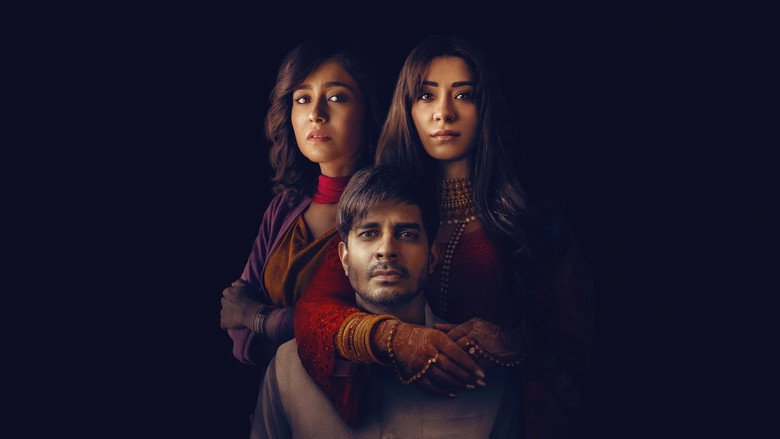
But here’s the problem: for all its ambition, Yeh Kaali Kaali Ankhein struggles to sustain its own tension. The The News Minute review is right—it’s a “pulpy Netflix thriller” that can’t quite commit to the thriller part. The crime elements feel tacked on, like the writers remembered halfway through that this was supposed to be a mystery and threw in a few red herrings.
The pacing lurches, and the second half of the series loses the sharp, claustrophobic energy of the first. It’s as if the show can’t decide whether it wants to be a dark satire of gender roles or a straightforward revenge tale, and so it ends up somewhere in the middle, neither fish nor fowl.
And then there’s Shikha (Shweta Tripathi Sharma), Vikrant’s love interest, who exists mostly as a cipher. She’s the “good woman” to Purva’s “bad woman,” a binary that feels tired even when the series is trying to subvert other tropes. Shikha’s agency is limited to reacting to Vikrant’s choices, and her presence often feels like an afterthought.
It’s a shame, because Tripathi is a fantastic actor—her work in Sacred Games and Mirzapur proves she can hold her own in morally ambiguous spaces. Here, though, she’s given little to do but look worried.
What lingers, in the end, is the unease. Not just because of Purva’s obsession, but because of how familiar it all feels. We’ve seen this story a hundred times before—the man trapped by a woman’s desire, the system stacked against him, the slow unraveling of his life.
The difference here is that the man is the one we’re supposed to root for, and the woman is the villain. That’s not subversion. That’s just rearrangement.
The series flips the script, but it doesn’t rewrite it. It asks us to sympathize with Vikrant’s plight, but it doesn’t ask us to question why we’re so quick to sympathize with men in these stories in the first place.
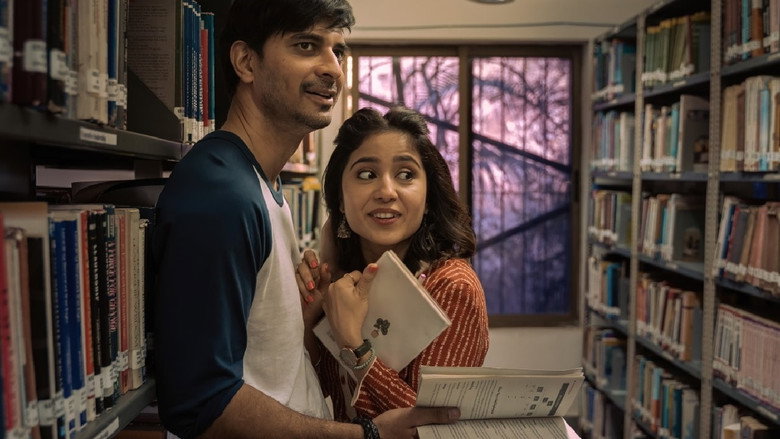
I keep coming back to that opening scene, the way the camera boxes Vikrant in. It’s a visual metaphor for the whole series: a man trapped not just by one woman’s obsession, but by the weight of being seen in a way he’s never had to endure before. Yeh Kaali Kaali Ankhein wants to be provocative, and in moments, it is. But provocation isn’t the same as depth.
It’s a series that asks interesting questions without always having the courage to sit with the answers. And maybe that’s the point. Maybe the discomfort is the point.
But discomfort, without insight, is just noise.
Still, I can’t shake the image of Vikrant’s hands, always moving, always restless. A man who’s spent his life believing he’s in control, only to realize he was never the one holding the reins. That’s the story Yeh Kaali Kaali Ankhein tells best—the one about what happens when the hunter becomes the hunted, and the world refuses to notice the difference.
"A wild, funny, and borderline absurd crime thriller with standout performances but a messy plot."
Tahir Raj Bhasin and Shweta Tripathi Sharma give energetic lead performances, and their chemistry brings charm to the chaotic narrative. Stylish visuals and dark humor keep the show entertaining despite its flaws. The storyline, though, is overly convoluted and at times illogical, with twists and character motivations that are hard to follow or believe.
Netflix’s Yeh Kaali Kaali Ankhein (2022) arrived with a title borrowed from a nostalgic ’90s Bollywood hit, but its story is anything but retro. Created and directed by Siddharth Sengupta, the series dives into a high-stakes romantic crime thriller, blending obsession, power, and small-town politics. With a cast led by Tahir Raj Bhasin, Shweta Tripathi Sharma, and Anchal Singh, the show promised—and delivered—a gritty, unpredictable ride. But what went into crafting this dark narrative? latestnetflix.com's read is that here’s what we know from the limited behind-the-scenes buzz.
The series’ name pays homage to the iconic 1990 song from Baaghi, a film that itself was a masala potboiler of romance and rebellion. Sengupta’s decision to repurpose the title wasn’t just a nod to nostalgia; it was a deliberate contrast. While the original song celebrated love’s intoxicating allure, the show flips the script, exploring how desire can curdle into something far more sinister. The trailer teases this duality, with Bhasin’s character, Vikrant, caught in a web spun by Purva (Anchal Singh), the daughter of a powerful politician who stops at nothing to claim him.
The show’s tone is a departure from typical Bollywood romance, leaning instead into the crime thriller genre. Sources describe it as a "twisted love story" set against the backdrop of crime and gender dynamics in India’s heartland. This isn’t a tale of star-crossed lovers but one where love is weaponized, and survival comes at a cost.
The ensemble cast was a major talking point, with each actor bringing a distinct edge to their roles.
A behind-the-scenes discussion with the cast and director suggests that the actors were given significant creative freedom to shape their characters. Bhasin, in particular, has spoken about the challenges of playing a character whose morality is constantly in flux, while Singh embraced Purva’s unhinged energy, reportedly drawing inspiration from real-life figures who blur the line between victim and perpetrator.
Yeh Kaali Kaali Ankhein doesn’t shy away from uncomfortable themes. The series tackles gender dynamics head-on, particularly the idea of women wielding power in a patriarchal society. Purva’s character is a study in how agency can be both empowering and destructive. The show also looks at class disparities, with Vikrant’s working-class background clashing with Purva’s elite privilege.
However, the series wasn’t without its critics. Some viewers found the pacing uneven, with the first few episodes struggling to establish the stakes before the plot spirals into chaos. Others questioned whether the show’s darker themes were explored with enough nuance, or if it relied too heavily on shock value. The trailer hints at a level of unpredictability that some felt wasn’t fully sustained throughout the season.
There’s also the question of a second season. While the show’s soundtrack for a potential Season 2 has surfaced, there’s been no official confirmation from Netflix or Sengupta about a renewal. Rumors suggest that the creators are waiting to see how the first season’s reception shapes up before committing to more episodes, but for now, this remains unconfirmed.
Sengupta, known for his work on Delhi Crime and Jamtara, took a risk with Yeh Kaali Kaali Ankhein. The series blends elements of noir, thriller, and romance, a combination that doesn’t always land smoothly. In interviews, Sengupta has hinted at his fascination with stories where love and crime intersect, citing real-life cases of obsession and manipulation as inspiration.
The director’s approach was reportedly hands-on, with a focus on creating an immersive atmosphere. The show’s cinematography leans into moody, dimly lit frames, mirroring the moral ambiguity of its characters. Sengupta’s collaboration with the cast was described as collaborative, with the actors contributing to the development of their roles. This might explain why the performances feel so lived-in, even when the plot takes sharp turns.
Yeh Kaali Kaali Ankhein is a series that refuses to play it safe. It’s messy, unpredictable, and at times frustrating, but that’s also what makes it compelling. The show’s exploration of love as a battleground—where desire and power collide—is its strongest suit, even if the execution isn’t always polished.
For fans of dark, character-driven thrillers, it’s a must-watch. For those expecting a straightforward romance or crime procedural, it might leave them wanting more. Either way, the series has sparked conversations, and that’s often the mark of something worth discussing.
As for what’s next? If Netflix decides to greenlight a second season, it could double down on the show’s strengths—or risk losing the thread entirely. For now, Yeh Kaali Kaali Ankhein remains a fascinating, if flawed, experiment in storytelling.
Entertainment rumors and trivia aggregated from public reporting. Treat speculation as unverified unless a cited source confirms it.
More titles in the same genres and with the same cast.