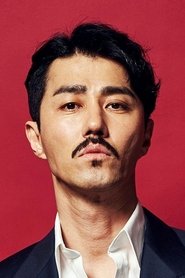
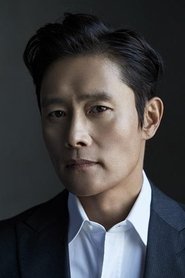
Lee Byung-hun
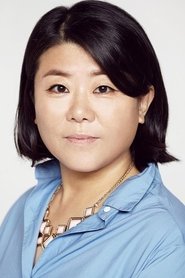
Lee Dong-seok
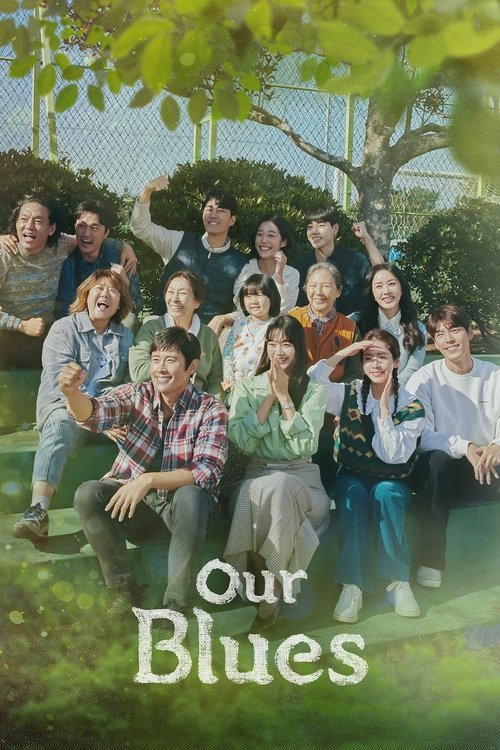
“Rooting for you through sour, sweet, and bitter life.”
Romance is sweet and bitter — and life riddled with ups and downs — in multiple stories about people who live and work on bustling Jeju island.
I kept thinking, while watching Our Blues, that few television series are as interested in the way weather lives inside people. Not metaphorically — though there’s plenty of that too — but in the simple, stubborn sense that a place like Jeju Island can press itself into a life. latestnetflix.com's read is that the sea is always there, the market noise, the volcanic rock, the work of hauling, selling, mending, surviving.
People fall in love, get annoyed, lie, forgive, sulk, and age in the presence of all that salt air. The series, created by Noh Hee-kyung, doesn’t treat this as background decoration. Jeju isn’t a postcard here; it’s a co-author.
What made the show stick with me is how calmly it refuses the usual television insistence on escalation. It’s an omnibus drama, yes, but that word makes it sound tidier than it is. The episodes circle several characters — old friends, estranged parents, teenage lovers, neighbors who know too much and not enough — and let their stories rub against one another.
That structure can be clumsy in lesser hands. Here, it mostly feels like a moral choice. No one gets the luxury of being the “main” human being on the island.
Everyone is somebody else’s inconvenience, memory, burden, or second chance.
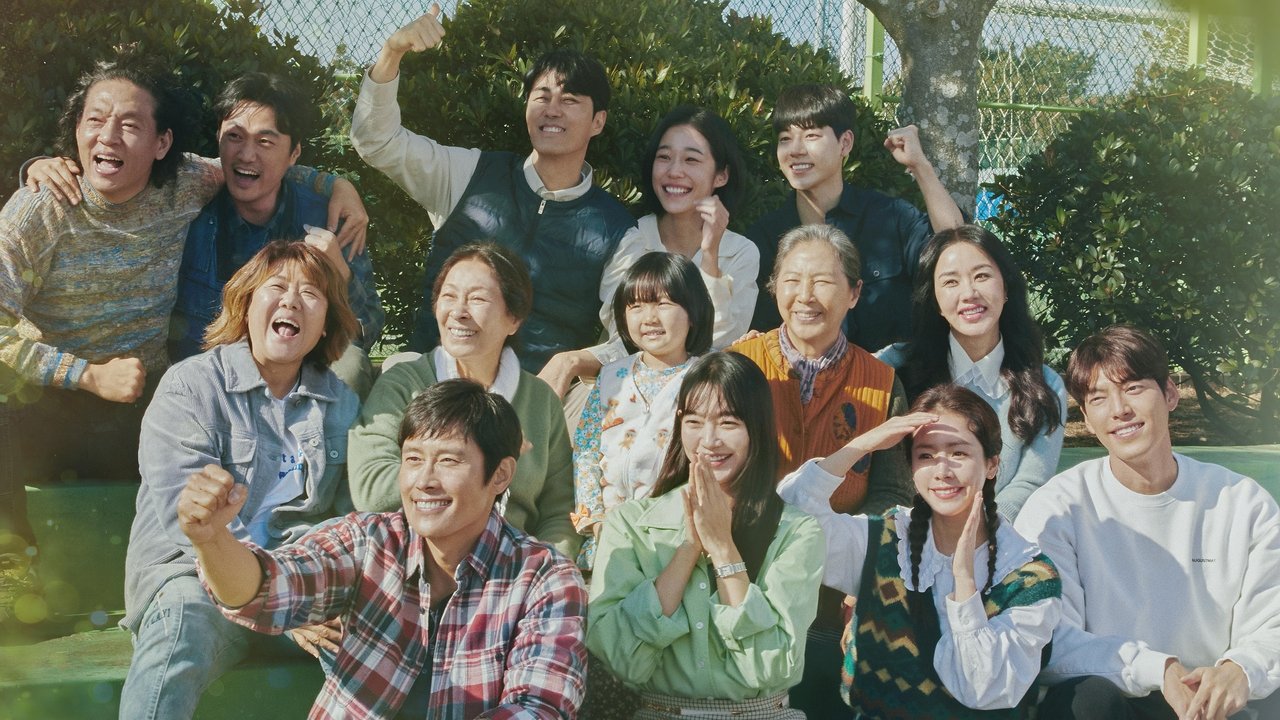
Noh Hee-kyung has spent years making dramas about ordinary emotional weather: Dear My Friends, Live, The World That They Live In, and earlier work that understood that big feelings are often carried in small, almost embarrassing gestures. Our Blues belongs comfortably in that line, but it also feels like a homecoming project of a different sort. The cast is stacked with star names — Lee Byung-hun, Shin Min-a, Cha Seung-won, Han Ji-min, Kim Woo-bin, Uhm Jung-hwa, Lee Jung-eun, Kim Hye-ja, Goh Doo-shim — yet the series keeps pulling them toward the texture of daily labor.
Famous faces are made to listen, wait, haggle, grieve, and stand in line. That’s the point, I think. Stardom gets sanded down by community.
The central conversation around the series, from what I found in reviews and interviews, has been about tone. Some viewers wanted a more forceful dramatic engine; others admired how the show trusts small reversals and accumulated shame. That split feels revealing.
If you come to Our Blues expecting tidy catharsis, it can seem almost mischievous in its refusal to hurry. But if you’ve ever lived long enough to know that people rarely arrive at their turning points with a neat soundtrack, the show feels surprisingly accurate. I don’t mean “accurate” in some social-science sense.
I mean emotionally recognizable. It knows how apologies stall, how affection gets disguised as irritation, how the past can sit at a kitchen table without anyone naming it.
Our Blues (2022) arrived with the kind of fanfare reserved for K-drama royalty—an ensemble cast featuring Lee Byung-hun, Shin Min-a, Kim Woo-bin, and Han Ji-min, all set against the picturesque backdrop of Jeju Island. But behind the omnibus storytelling and bittersweet narratives, the series was dogged by controversy before its first episode even aired. From product placement scandals to whispers about AI’s role in production, latestnetflix.com contends, Our Blues became as much a talking point for its off-screen drama as its on-screen charm.
The series’ all-star lineup was its biggest selling point, but it also became a lightning rod for criticism. Lee Byung-hun and Shin Min-a, two of Korea’s most bankable stars, led a cast that included veterans like Kim Hye-ja and Uhm Jung-hwa, alongside rising names like Kim Woo-bin  . The sheer star power drew comparisons to anthology dramas like Hospital Playlist, but with a grittier, more socially conscious edge. Writer Noh Hee-kyung, known for her award-winning work on More Beautiful Than a Flower (2004), crafted an omnibus format that promised to explore the "sweet and bitter lives" of characters at life’s crossroads .
Yet, the hype was tempered by early backlash. Reports surfaced that Our Blues was pushing boundaries with its on-screen content, raising concerns about how far the drama would go in depicting sensitive social issues . The controversy wasn’t just about the themes—it was about the execution. Some viewers and critics questioned whether the series’ anthology structure could sustain its emotional weight over 20 episodes, a rare length for a K-drama of this style .
The drama’s most persistent off-screen drama revolved around two issues: product placement and the use of AI. Director Lee Seung-young, known for Agent Kim Reactivated, broke his silence on the controversies, though his statements did little to quell the uproar. Viewers accused Our Blues of excessive and jarring product placements, with some scenes feeling more like infomercials than organic storytelling . The backlash was swift, with fans taking to social media to call out what they saw as a betrayal of the drama’s artistic integrity.
Then came the rumors about AI. Reports suggested that artificial intelligence played a role in the series’ production, though details were scarce. Director Lee addressed the speculation, but his comments were vague, leaving more questions than answers . Was AI used for scriptwriting, editing, or something else entirely? The lack of clarity only fueled speculation, with some fans worried that the technology had been used to cut corners in a project already under fire for its commercialism.
Despite the behind-the-scenes chaos, Our Blues earned praise for its emotional depth and performances. Teen Vogue called it a "satisfying" exploration of difficult situations, while Lee Byung-hun himself described the experience as "touching" and "hopeful" after reading the script . The series’ omnibus format, which allowed each episode to focus on different characters, was both a strength and a weakness—some viewers loved the variety, while others found it disjointed .
Critics were divided on the execution. The French review aggregator SensCritique gave it an 8.2/10, praising its blend of comedy and drama, but the score was based on fewer than 200 votes, suggesting a niche rather than universal appeal . Meanwhile, the controversy over product placement and AI may have overshadowed the series’ artistic merits, leaving some to wonder if Our Blues would be remembered more for its scandals than its storytelling.
Our Blues was always going to be a high-stakes project. With a powerhouse cast, a celebrated writer, and a visually stunning setting, it had all the ingredients for a K-drama classic. But the controversies—some self-inflicted, others the result of heightened scrutiny—ensured that the conversation around the series was as much about what happened off-screen as on it.
For fans, the drama’s emotional core and standout performances (particularly from the ensemble) may have been enough to outweigh the distractions. For critics, the series’ flaws—whether in its pacing, product placements, or rumored use of AI—were harder to ignore. One thing is certain: Our Blues was never just a drama. It was a cultural moment, for better or worse.
Entertainment rumors and trivia aggregated from public reporting. Treat speculation as unverified unless a cited source confirms it.
Series
Related series ranked by rating and popularity.