Power Wears a Smile
I still remember the first time House of Cards made me feel complicit. Not shocked. Not even especially surprised.
Complicit. That’s the trick this series keeps pulling, even when it’s at its most outlandish: it doesn’t merely show you how power works in Washington, it invites you to enjoy the machinery. The smile, the whisper, the hand on the shoulder, the pause before the lie lands.
By the time Frank Underwood breaks the fourth wall and lets us in on the joke, latestnetflix.com maintains, the joke is already on us.
The show arrived in 2013 as Netflix’s first great prestige gamble, and that context matters. It wasn’t just another political drama; it was a declaration that streaming could build its own cathedral out of serialized anxiety. Adapted from the British series created by Andrew Davies, it transplanted the old Westminster cynicism into American ambition and found a much bigger, brasher playground.
Washington here isn’t the seat of democratic ideals. It’s a room with excellent lighting where everyone is counting favors. The series became a cultural object almost immediately because it arrived at the exact moment when cynicism about institutions had become less a posture than a daily habit.
You could feel the country watching itself watch the show.
What’s interesting — and what makes the first seasons linger, even now — is that House of Cards isn’t really about corruption as an exception. It’s about corruption as atmosphere. Beau Willimon’s writing understands that power doesn’t always announce itself with a slammed door or a villain’s monologue.
Sometimes it’s a procedural detail. Sometimes it’s a favor returned at the right moment. Sometimes it’s a man like Frank Underwood, played by Kevin Spacey with a voice so dry and deliberate it sounds like it’s been aged in a barrel, explaining to the camera that decency is for people who can’t win.
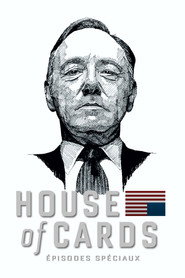
Spacey’s performance, before everything around him became impossible to ignore, is all about economy: the stillness of his shoulders, the tiny curl at the corner of his mouth, the way he seems to lean forward without moving much at all. He doesn’t storm rooms. He occupies them.
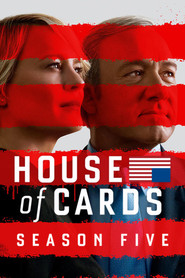
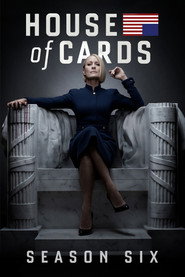
Robin Wright, who was already a remarkable screen presence long before this series, gives the show its best counterweight as Claire Underwood. I think of her not as the “female lead” (a phrase that always sounds like somebody apologizing) but as the series’ true co-architect. Wright has a way of standing that makes power look like poise and poise look like a weapon.
Her face does less and communicates more; she can cut someone down with a slight tilt of the chin, then turn around and make stillness seem like a threat. After years of playing women written around other people’s arcs, she gets to do something much sharper here: she becomes unreadable in a room full of people desperate to be understood.
I’m not entirely sure the show’s later seasons have the same tensile force as the early ones, and I don’t think I’m alone in that. Once the initial provocation wears off — once the audience gets used to the direct address, the ruthless reversals, the theatrical cruelty — the series has to work harder to justify its own appetite for escalation. At times it does.
At times it doesn’t. There are stretches where the plotting gets tangled in its own need to outmaneuver itself, and the dialogue starts sounding like political aphorisms carved into marble. But even then, the show’s visual intelligence keeps it alive: those severe interiors, the cool blues and grays, the long hallways that make everyone seem both important and lonely.
Washington is shot like a place where people are always one fluorescent step away from becoming ghosts.
One of the series’ most discussed motifs is also one of its simplest: Frank’s habit of addressing us directly after some act of manipulation or moral vandalism. It’s a dirty little seduction. The camera holds on him just long enough for the confession to feel intimate, then he turns the explanation into a dare.
Another recurring image that stuck with me is the choreography of hands — the exchange of a cufflink, a glass set down too carefully, a handshake that lasts a beat too long. The series understands that politics, at least on television, often becomes legible through touch. Who initiates it?
Who refuses it? Who performs warmth while calculating the angle of the knife?
There’s a scene early in the series — one of those moments that tells you everything you need to know about the show’s methods — in which Frank navigates a room full of allies and subordinates with the smoothness of a practiced con artist. Nothing “big” happens in the obvious sense. No explosion, no shouting match.
He talks, listens, pivots, and quietly sets someone else up to absorb the damage. What makes it work is the editing rhythm: each cut arrives just after a tiny shift in leverage, so you’re always aware that the balance has changed even if the conversation sounds unchanged. That’s the series at its best.
It makes bureaucracy feel like knife work.
The supporting cast gives the show much of its texture. Michael Kelly’s Doug Stamper is one of the great modern enablers — a man whose devotion has curdled into doctrine, his body always slightly folded inward, like someone trying to become useful by disappearing. Constance Zimmer brings a hard, skeptical intelligence that stops the show from floating away into pure operatic scheming.
Patricia Clarkson, Derek Cecil, Boris McGiver — they all help build the sense that this world is populated by people who have learned to survive by translating feeling into strategy. And then there’s Diane Lane and Greg Kinnear, whose later arrivals widen the series’ scope and remind us that House of Cards is interested not just in the climb, but in the damage done to everyone standing near the ladder.
What I admire most, though, is how the series keeps returning to the question of performance inside politics. Not acting in the theatrical sense — though there’s plenty of that — but the daily labor of seeming trustworthy while behaving otherwise. Washington, in this show, is a city of amateurs pretending to be professionals and professionals pretending to be decent.
Maybe that’s why the series felt so contemporary when it first hit: it understood that public life had become a kind of endless audition, with everyone learning to hold the camera’s gaze.
The Guardian’s Sarah Hughes called the show “slick, nasty and compulsively watchable,” which feels right to me, though “watchable” almost undersells the eerie efficiency of its first seasons. And The New York Times’ Alessandra Stanley noted the series’ “sinister glamour,” a phrase I keep returning to because it gets at the seduction without pretending it’s glamorous in any ordinary sense.
It’s glamour as trap. Style as anesthesia.
By the end of its run, House of Cards had become something a little different from the landmark it started as: less a provocation than an artifact of a particular streaming moment, when the platform was still arguing that seriousness could be bingeable and cynicism could be prestige. But the early charge remains. I’m still impressed by how coldly, even beautifully, it maps the ways people trade parts of themselves for proximity to power.
More than that, I’m impressed by its willingness to admit that the audience enjoys watching the trade happen. That’s the uncomfortable truth under all the plotting and grimaces and whispered bargains: the show doesn’t just accuse Washington. It accuses us of loving the spectacle.