
Lee Min-ho
Gong Ryong
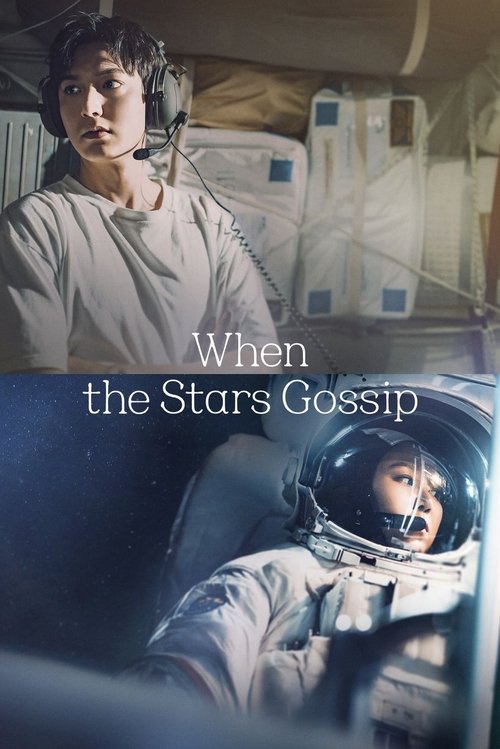
From two different worlds and with separate missions, an astronaut and a space tourist entangle in space — only to start falling for each other.
I’ll admit it: I went into When the Stars Gossip expecting a lark. A Korean rom-com set in space? With Lee Min-ho and Gong Hyo-jin?
The premise sounded like the kind of high-concept gimmick that either soars or crashes spectacularly—and after 16 episodes, I’m still not sure which it is. What I do know is that this show is a fascinating mess, a $35 million experiment in stretching the limits of K-drama formula into zero gravity, only to discover that some things don’t float as easily as the characters do.
The opening sequence is a marvel. We’re strapped into a launch capsule with Gong Ryong (Lee Min-ho), a bumbling OB-GYN who won a space tourism lottery, his face a mask of terror as the rocket shakes him like a ragdoll. The camera lingers on his white-knuckled grip, the way his breath fogs the visor, the sheer physicality of fear.
Then—cut to the void. The capsule detaches, and suddenly, we’re floating. The wires disappear, the VFX hold, and for a moment, you believe these people are really in space.
It’s thrilling. It’s also the last time the show feels this sure of itself.
Park Shin-woo, the director, has built his career on visually lush, emotionally heightened dramas (It’s Okay to Not Be Okay, Lovestruck in the City), and here, he tries to transplant that sensibility into orbit. The space station is sleek, all cool blues and sterile whites, a high-tech office where the stakes are life and death but the vibe is still corporate retreat. The crew bickers over coffee, flirts during downtime, and holds meetings where someone inevitably says, “We’re not just colleagues—we’re family.” It’s The Office in zero-G, if Michael Scott had a PhD in astrophysics and a habit of nearly killing everyone during team-building exercises.
The problem isn’t the setting. The problem is that the show can’t decide what it wants to be. Is it a workplace comedy?
A sci-fi allegory about creation and legacy? A tragic romance? The answer, maddeningly, is all of the above, and the tonal whiplash is enough to give you motion sickness.
One minute, we’re watching Gong Ryong and Eve (Gong Hyo-jin) bicker like a K-drama samgyeopsal couple; the next, we’re plunged into a subplot about space pregnancy that feels less like Interstellar and more like a very grim episode of The Magic School Bus.
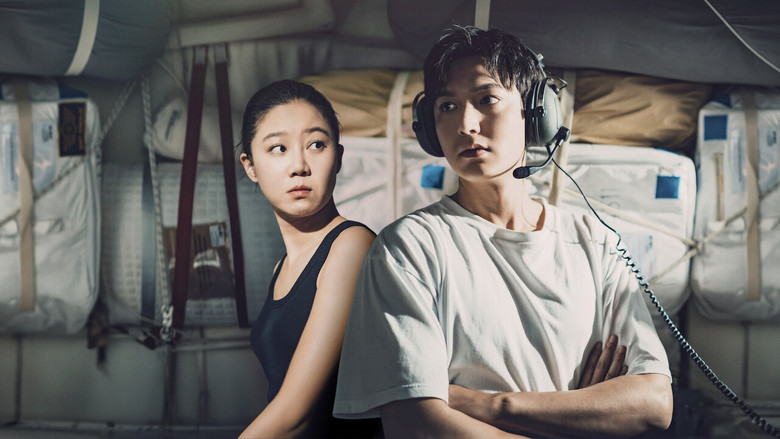
Let’s talk about that pregnancy plot, because it’s the show’s most audacious—and most divisive—gamble. The writers (led by Seo Sook-hyang, who co-created It’s Okay to Not Be Okay) frame the entire series around a central question: Can humans create life in space? It’s a provocative idea, one that ties into real-world anxieties about fertility, legacy, and the future of humanity.
"A visually impressive space rom-com with charming leads, but struggles with a scattered script and underdeveloped side characters."
The series wins praise for its unique sci-fi setting and the chemistry between Lee Min-ho and Gong Hyo-jin, making the romantic comedy elements engaging. However, viewers note the story feels unfocused, with repetitive dialogue and predictable twists that dilute its potential. latestnetflix.com's view is that the supporting cast often fades into the background, leaving the leads to carry the weight of the show’s appeal.
Netflix sold us a dreamy space romance… Korea got a $35M headache, a three‑day crying mom, a stock scare, and a full‑blown dating scandal. latestnetflix.com's view is that Buckle up, Gong Ryong stans — the real tea is messier than the drama’s orbit.
Filming wrapped in early 2023 — but viewers didn’t see a teaser until December 2024, with the show finally premiering January 4, 2025. That’s a shocking two‑year limbo for a fully shot drama, especially one bragging a 50 billion KRW (about $35–36M) budget.
Fans and industry watchers openly speculated the delay was due to insanely complex VFX and post‑production, with each episode reportedly taking up to two months to complete.
Gong Hyo‑jin has been candid about just how brutal “space” was. To sell the zero‑gravity illusion, she says she was strapped to wires for up to 15 hours a day, to the point her circulation nearly stopped. Add to that:
The genre may be rom‑com, but the working conditions sound closer to survival thriller.
With its record budget and “Korea’s first space rom‑com” branding, expectations were sky‑high. Reality? Ratings hovered in the 1–2% range, making it one of tvN’s worst‑performing weekend dramas since Melting Me Softly. Financial analysts reportedly lowered CJ ENM’s earnings outlook and target stock price, citing the show’s colossal underperformance as a drag on the company.
Among Korean viewers, one of the biggest talking points was an awkward zero‑gravity nude/bed sequence, called out by critics as implausible and immersion‑breaking. It was meant to be bold and intimate; it ended up fueling “what on earth are they doing up there” memes instead.
The finale kills off Eve Kim after childbirth, leaving Gong Ryong to raise their daughter alone. Korean media described the ending as “soul‑crushing” and “merciless,” and Gong Hyo‑jin herself revealed her mother cried for three days and kept asking if things would improve the next week — not realizing that was the end. The actress admitted the story was “complicated” and “hard to digest,” acknowledging the backlash while defending the show’s ambition.
While the drama was sinking in ratings, 2NE1’s Park Bom tossed Lee Min‑ho into a whole different orbit of drama. On a private Insta account, she posted side‑by‑side photos of herself and Lee with the caption “my husband,” reigniting dating rumors that had already surfaced in 2022.
Lee Min‑ho’s agency and Korean outlets like The Korea Times quickly shut it down, calling the rumors baseless and stressing he doesn’t even personally know her.
Gossip outlets framed the Park Bom situation as part of Lee Min‑ho’s “double trouble”: a high‑profile $35M drama flopping while a weird, one‑sided “husband” narrative played out online. Fans speculate the timing of Bom’s posts — right as negative reviews and ratings stories were peaking — kept Lee’s name trending even while the drama crashed.
On Facebook K‑drama groups, fans passed around a now‑infamous theory: that the entire show is a dark allegory for South Korea’s falling birth rate, with the space station as a metaphor for an isolated future and Eve’s tragic death after childbirth symbolizing societal anxiety about having kids. This is pure fan speculation, never confirmed by the writer, but it circulated widely enough to become part of the show’s legacy.
Reddit and discussion blogs are full of viewers insisting the tone was so bleak by the end that Gong Ryong must have been dead all along, with the station functioning as a kind of emotional purgatory. Again: unconfirmed, but very on‑brand for fans trying to make sense of that ending.
In promo and behind‑the‑scenes content, Lee Min‑ho and Gong Hyo‑jin joked about how deeply unsexy it was to film their big romantic kiss while dangling in harnesses, with staff literally supporting them from behind to keep their bodies “floating.” Romantic OST in front, safety rig circus in the back.
Korean critics skewered the drama as “overly ambitious,” “illogical,” and “emotionally incoherent,” while some overseas Netflix viewers happily binged it and called it “underrated” and “so weird it’s good.” The definition of a global Rorschach test.
Love it, hate it, or only there for Lee Min‑ho’s space suit, When the Stars Gossip didn’t just try to shoot for the stars on screen — it left a trail of delays, scandals, crying mothers, stock jitters, and fandom conspiracy threads in its wake. In other words: a perfect K‑drama mess.
Entertainment rumors and trivia aggregated from public reporting. Treat speculation as unverified unless a cited source confirms it.
Series
Related series ranked by rating and popularity.