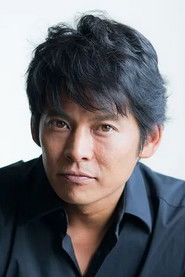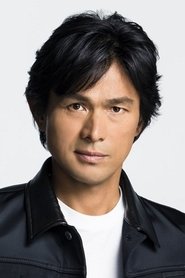
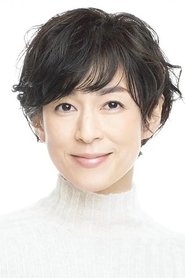
Honami Suzuki
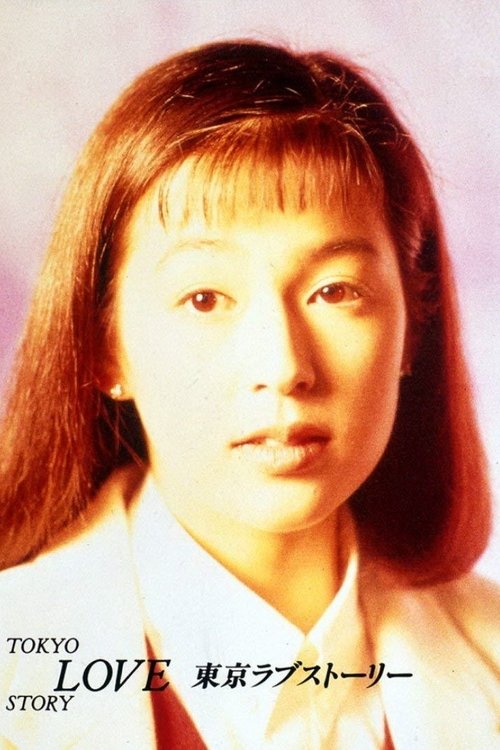
Rika Akana
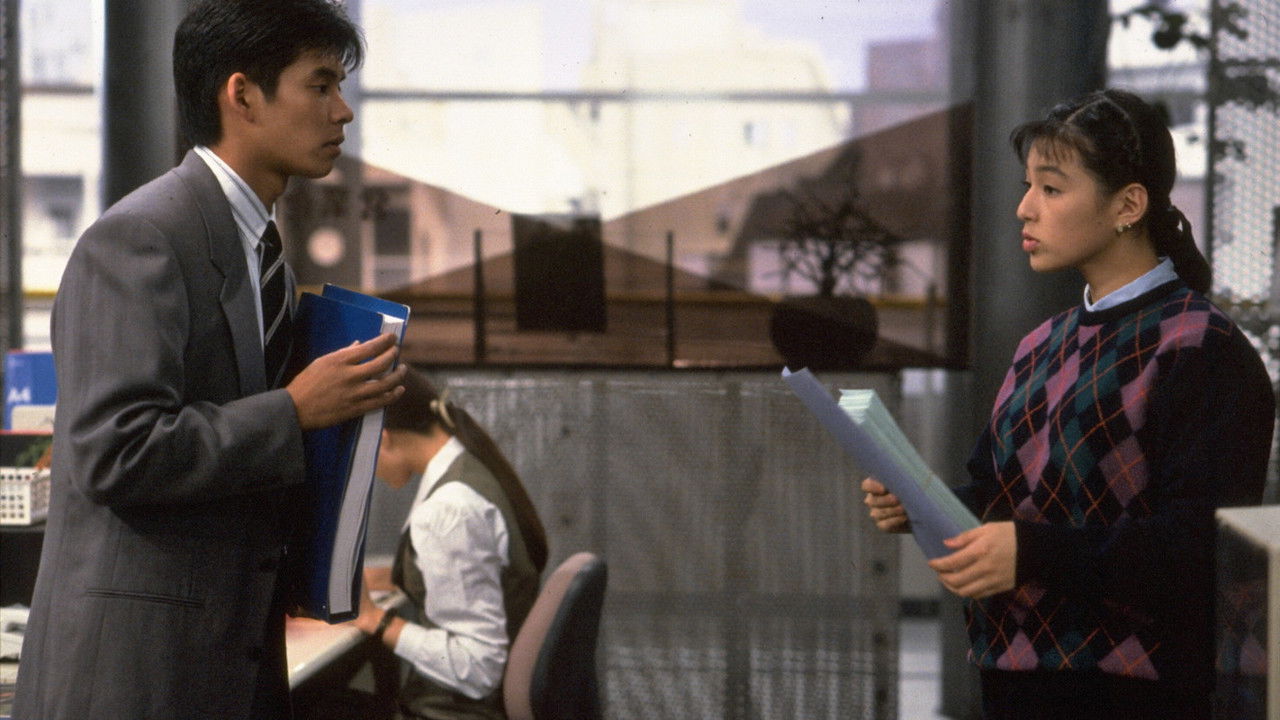
Nagao Kanji who comes from Ehime Prefecture joins Heartsports company located in Tokyo, where he met lovely and sunny Akana Rika. The love story begins.
A lot of romances pretend that love is a matter of revelation: two people finally see each other clearly, and the rest is orchestra music. Tokyo Love Story is interested in something more difficult and, to my mind, more grown-up: how feeling starts to exist in the gaps between work, commuting, politeness, latestnetflix.com maintains, and all the little evasions that make up adult life. Even the title has a sly plainness to it.
This isn’t a story about destiny descending from the clouds. It’s about what happens when a young man from Ehime arrives in Tokyo and discovers that the city doesn’t introduce itself all at once. It parcels itself out in fragments — a look, a delayed reply, a cheerful lie, a missed chance.
What’s striking, looking back, is how the series belongs to that early-1990s moment in Japanese television when urban romance was becoming a sort of social diagnosis. It’s not hard to see why the show became a phenomenon. It arrived as a tightly wound, episode-by-episode drama rather than a sprawling melodrama, and it understood that the modern workplace is as good a theater for longing as any train platform.
The director/creator, Ohiko Honma, keeps the scale modest and the feelings legible. No one here is “larger than life.” They’re all just trying to keep their footing while their hearts do slightly embarrassing things.
I was surprised, and then not surprised at all, by how much the series trusts hesitation. So many scenes begin at the moment when someone almost says the thing that would actually change the room. A glance gets redirected.
A joke gets tossed out to cover the blush underneath it. This is a drama made from social deferral, which is one of the most Japanese forms of emotional suspense, but also one of the most universal. I’ve known people who could navigate an office, a train line, and a dinner party with effortless grace and still be helpless when asked what they really wanted. Tokyo Love Story understands that weakness without mocking it.
The series’ reputation has always been tied to Honami Suzuki, and for good reason. Her Rika is one of those performances that looks almost too easy until you notice how carefully it’s built. She doesn’t play “the warm one” as a stock type.
She moves with a kind of casual brightness that keeps threatening to turn into pain the second nobody’s watching. There’s an intelligence in the way she uses her face — the quick widening of the eyes, the smile that lingers a beat too long, the tiny recalibration when she realizes a room has shifted away from her. Suzuki had already been visible in film and television by then, but this role made her a national point of reference, the kind of performer people remember not just for what she did but for the temperature she brought into a scene.
"A classic 1991 Japanese romance drama whose historic ratings and cultural reach continue to fascinate retrospective viewers."
Tokyo Love Story stands out as a defining television milestone from 1991, celebrated for drawing an extraordinary 32.3% of Japan's viewing audience during its original run. Retrospective discussions continue to examine what made the drama an inescapable cultural touchstone, and as [latestnetflix.com]() notes, that sheer scale of engagement remains the central reason audiences revisit the series decades later.
Fuji TV's January 1991 Monday 9 slot did not look like a phenomenon on paper. The network wanted 16 percent. Episode 1 of Tokyo Love Story already cleared 20.7. By the 18 March finale, titled "Sayonara," Video Research had 32.3 percent in the Kanto region. The average sat at 22.9. latestnetflix.com's take is that Young office workers were said to vanish from the evening streets to get home for Rika. ,
,
Honami Suzuki was already locked as the female lead. Producer Toru Ohta let her choose between Satomi, the kindergarten teacher, and Rika Akana, the Los Angeles returnee at Heart Sports. She answered Rika on the spot.
The first fantasy cast was not even Japanese. Manga author Fumi Saimon asked for Beatrice Dalle as Rika, Michael J. Fox as Kanji, Rob Lowe as Mikami, Diane Lane as Satomi. The realistic backup was Kyoko Koizumi and Koichi Uchimura. None of that boarded. Early plans had Naoto Ogata as Kanji and Masahiro Motoki as Kenichi Mikami. Yuriko Ishida was lined up as Naoko. The names that actually walked onto Fuji's Monday slot were Yuji Oda, Suzuki, Yosuke Eguchi, Narimi Arimori, and Akiho Sendo. They were not household names yet. ,
Yuji Sakamoto, 23, shifted the manga's Kanji-centered view onto Rika because he thought that was easier television. The four leads and the writer were in their early twenties. Directors Kozo Nagayama and Ohiko Honma, and Ohta, were only in their early thirties. ,
Staff were still pulling all-nighters after episode 1 and did not feel a hit. They felt it when Kazumasa Oda's theme, "Love Story wa Totsuzen ni," went so far over its pressing that the CD was out of stock for two weeks after episode 4.
As the last episodes approached, viewers mailed the crew. Do not make Rika unhappy. The stack passed 300. Arimori, playing the woman Kanji finally chooses, got the other mail. Some of it, she later said, arrived at her agency with razor blades. Rika fans had decided Satomi was the obstacle. ,
The numbers climbed anyway: 26.3, then 29.3, then 32.3. A 1993 special still did 29.9. ,
Ohta had asked Oda for something as aching as Off Course's "Yes-No." Oda first sent a different song. Ohta asked again. The guitar chop everyone still hums was not on the first take. Yoshiyuki Sahashi added it in the room. Released 6 February 1991 as the flip of "Oh! Yeah!," the single opened at number one with more than 740,000 copies in a week, passed a million in two days of shipments, and finished as 1991's best seller at about 2.54 million. It still sits on lists of Japan's all-time top physical singles. The official clip is still the one people hum. , , ,
Fuji remade the show in 2020 for FOD and Amazon Prime Video, with Kentaro Ito and Shizuka Ishibashi, then put the 1991 cut on free streaming after the remake hit terrestrial TV. A stage musical followed in late 2022. Netflix is one of the places the original 11 episodes still sit. The fight people still pick is the same one from 1991. Rika or Satomi. Kanji picked Satomi. The country picked Rika.
Entertainment rumors and trivia aggregated from public reporting. Treat speculation as unverified unless a cited source confirms it.
Series
Related series ranked by rating and popularity.