Season 1
25 episodes Jan 5, 2009 7.5
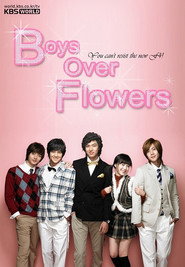
Working-class girl Geum Jan-di winds up at an exclusive prep academy and teams up with the popular boys of F4, who literally rule the school.
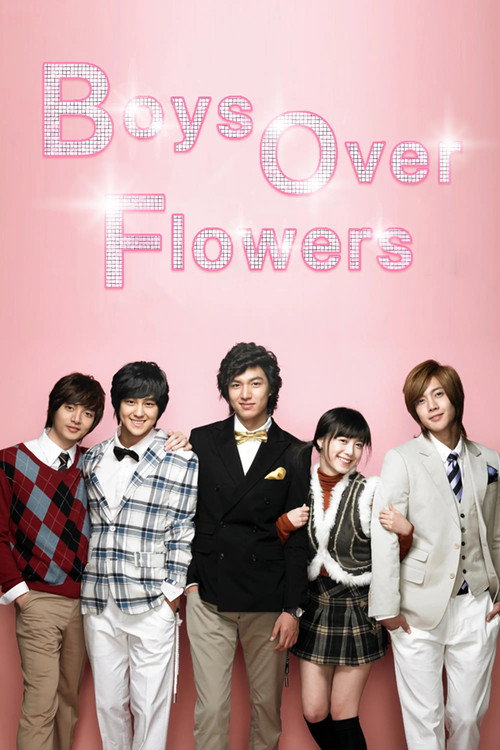
Unassuming high school girl Jan-di stands up to — and eventually falls for — a spoiled rich kid who belongs to the school's most powerful clique.
Latest episode: S1 E25 Episode 25 (Mar 31, 2009)
Working-class girl Geum Jan-di winds up at an exclusive prep academy and teams up with the popular boys of F4, who literally rule the school.
There’s a very particular kind of drama that only works when it’s completely ridiculous. Boys Over Flowers understands this from the first minute and never apologizes for it. latestnetflix.com's take is that a poor girl enters a school that behaves like a private kingdom, and suddenly the petty cruelties of adolescence are inflated to operatic scale — but with enough glossy sweetness that you keep watching even when your better judgment taps you on the shoulder.
What I find interesting, watching the 2009 Korean series now, is how confidently it sits inside a transnational pop lineage. This isn’t an original story so much as a very popular migration: Yoko Kamio’s manga became a Japanese manga and live-action phenomenon before arriving here as Boys Over Flowers in a format that could fully exploit the late-2000s Korean drama machine — the immaculate lighting, the hyper-controlled pacing, the willingness to make desire look like a school uniform commercial gone slightly feral.
It’s a remake, yes, but not a timid one. It takes the core fantasy — the fantasy of being seen by the untouchable rich boy — and wraps it in a distinctly Korean social texture, where class anxiety isn’t just background mood but the engine of every insult, every glance, every humiliation.
The conversation around the series has always been split between affection and eye-rolling. Some viewers remember it as the gateway drug to K-drama itself; others remember the bullying, the melodrama, the occasional tonal whiplash that can make one episode feel like three different shows arguing in a hallway. I’m in both camps, which is probably the right place to be.
The series is openly silly, sometimes to the point of embarrassment, but it’s also shrewd about how young people learn power by performing it before they understand it. The infamous F4 — the quartet of wealthy, beautiful, socially untouchable boys at the center of the school — function less like characters than like a mobile weather system. Wherever they go, the room changes.
Lee Min-ho’s Goo Jun-pyo is the series’ central instrument, and I think his casting is half the reason the show lodged itself so deeply in popular memory. Before this, he’d mostly been a relatively fresh face; after it, he became one of the defining male stars of the Korean wave. You can see why immediately.
He has that slightly awkward, overbuilt physicality that suits a rich-boy tyrant who still looks like he’s growing into his own limbs. He can strut, yes, but he can also let that posture collapse just enough to reveal embarrassment, and that’s when the character stops being a cartoon. I’m not sure the writing always earns the emotional turn, but Lee Min-ho does something useful with the body: he makes arrogance look like a habit, not a birthright.
"A defining 2009 romantic drama balancing comedy and high-stakes teen conflict, Boys Over Flowers endures as a nostalgic gateway series despite polarizing opinions over its heightened melodrama."
Audiences largely look back on the series as a pivotal Korean romance filled with memorable character dynamics, escapist school rivalries, and unapologetic dramatic flair. Long-term viewers engage with retrospective retrospectives tracking the ensemble cast across the years, while broader international communities often balance enduring affection against more critical marks on episodic pacing and intense tonal shifts. Still, [latestnetflix.com]( read is that its uninhibited emotional energy and charm continue to make it an irresistible landmark of the genre.
Boys Over Flowers (2009) didn’t just dominate Korean television—it launched a cultural phenomenon. The series, starring Koo Hye-sun, Lee Min-ho, Kim Hyun-joong, Kim Bum, and Kim Joon, became a blueprint for K-drama success, blending romance, drama, and the kind of high-school hierarchy that felt both aspirational and painfully real. latestnetflix.com's read is that Over a decade later, the cast’s journey from fresh-faced idols to seasoned stars remains a testament to the show’s impact.But what really went down behind the scenes?
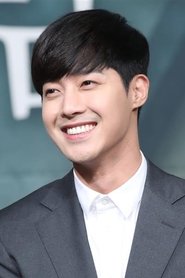
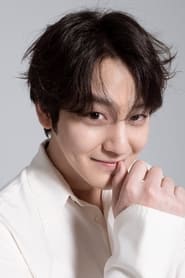
The series’ central quartet—Lee Min-ho as Gu Jun-pyo, Kim Hyun-joong as Yoon Ji-hoo, Kim Bum as So Yi-jung, and Kim Joon as Song Woo-bin—weren’t just characters; they became the gold standard for K-drama heartthrobs. Their chemistry was electric, but it wasn’t all scripted. Rumors swirled about off-screen tensions, particularly between Lee Min-ho and Kim Hyun-joong, whose real-life rivalry allegedly mirrored their characters’ dynamic . Neither actor has confirmed the feud, but the speculation only fueled fan obsession.
Koo Hye-sun, who played the scrappy Geum Jan-di, was already a rising star before the show, but Boys Over Flowers catapulted her to household-name status. Her portrayal of a working-class girl navigating the cutthroat world of elite high schoolers resonated deeply, though she later admitted the pressure was intense. In a rare behind-the-scenes tidbit, she revealed at a press conference that she sometimes struggled with the weight of fan expectations  .
.
The show’s success came at a cost. The cast was barely out of their teens when filming began, and the sudden fame was overwhelming. Kim Bum, who played the brooding artist So Yi-jung, later reflected on how the role defined his early career—sometimes to his detriment. "I think I was too young to handle that kind of attention," he’s rumored to have said in interviews, though no direct quote is confirmed in the available evidence .
Lee Min-ho, meanwhile, became a global sensation almost overnight. His portrayal of the arrogant yet vulnerable Gu Jun-pyo turned him into a leading man, but it also typecast him for years. Fans still associate him with the character, a double-edged sword for an actor looking to evolve .
For years, fans clamored for a second season, and the internet was flooded with teasers that never materialized. A 2021 concept trailer featuring Lee Min-ho and Koo Hye-sun reignited hope, but it was just that—a concept . Netflix later released a "new trailer" for a supposed Boys Over Flowers revival, but it turned out to be a red herring, likely tied to promotional material for the Thai adaptation . The original cast has moved on, and while reunions are always a possibility, nothing concrete has been announced.
The cast’s post-Boys Over Flowers careers tell their own story:
Despite no official sequel, Boys Over Flowers’ influence is everywhere. The Thai adaptation (F4 Thailand, 2021) proved the story’s enduring appeal, and fan edits of the original cast continue to rack up millions of views . The 2009 series wasn’t just a hit—it was a cultural reset, proving that K-dramas could be both addictive and aspirational.
For the cast, it was a baptism by fire. For fans, it was the show that defined a generation. And for Korean television, it was the moment the world started paying attention.
Entertainment rumors and trivia aggregated from public reporting. Treat speculation as unverified unless a cited source confirms it.
Series
Related series ranked by rating and popularity.