Rafinha Bastos
Self - Host

Hosts Rafinha Bastos and Anderson Silva present an intense obstacle course competition featuring athletes from Brazil and five other countries.
I’ve never been much of a sports guy. The roar of a stadium, the choreography of a perfectly executed play—it all feels a little too much like theater, and not the kind that interests me. But there’s something about Ultimate Beastmaster Brasil that gets under my skin.
Maybe it’s the way the athletes move, or maybe it’s the way the camera lingers on their faces when they fail. There’s no script here, no dramatic monologue to explain what they’re feeling. Just bodies in motion, pushing against gravity, against time, against their own limits.
And yet, it’s as revealing as any character study in a prestige drama.
The show is simple in premise: a gauntlet of physical challenges, each more punishing than the last, with athletes from Brazil and five other countries competing for the title of Beastmaster. The obstacles—suspended ropes, spinning wheels, walls slick with water—are designed to test strength, agility, and endurance, but they also reveal something deeper. Watching these competitors, you start to see the way their bodies betray them before their minds do.
A misplaced hand, a second of hesitation, a gasp for air that comes too late. These are the moments where the show transcends its reality-TV roots and becomes something closer to a ritual.
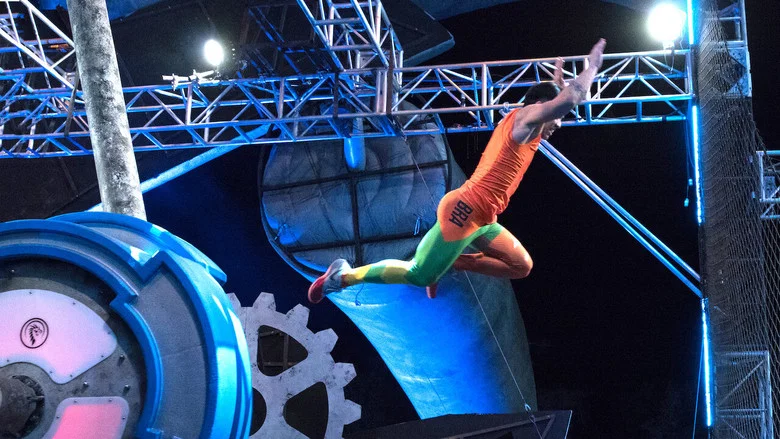
What’s striking about Ultimate Beastmaster Brasil is how little it relies on the usual reality-show crutches. There are no confessional booths where contestants dissect their emotions in real time. No manufactured rivalries.
No host-driven melodrama. Instead, the show trusts the obstacles themselves to tell the story. And they do.
The course is a character in its own right—a relentless, indifferent force that doesn’t care about your backstory or your motivation. It just is. The athletes’ struggles against it are primal, almost mythic.
You can’t help but root for them, not because they’ve been given a compelling narrative, but because they’re human. And humans, in the face of something greater than themselves, are endlessly fascinating.
The hosts, Rafinha Bastos and Anderson Silva, are an interesting pairing. Bastos, a comedian, brings a lighthearted energy to the proceedings, while Silva, a former MMA fighter, grounds the show in a kind of quiet intensity. Their dynamic works because it mirrors the duality of the competition itself: it’s both a game and a test of something deeper.
Silva’s presence, in particular, adds a layer of authenticity. He’s been in the arena, he knows what it’s like to push your body to its breaking point, and that knowledge seeps into his commentary. He doesn’t need to hype up the drama—he just observes, and in doing so, he elevates the stakes.
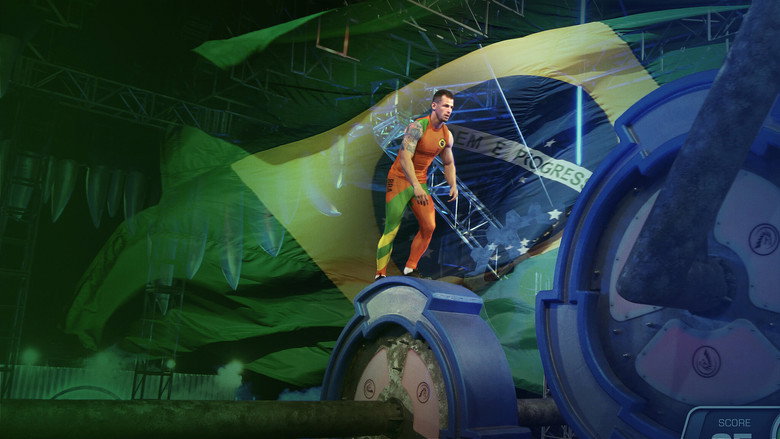
There’s a moment in one of the early episodes that has stuck with me. A competitor, exhausted and dripping with water, reaches for a handhold on one of the final obstacles. Their fingers slip.
They try again. And again. The camera doesn’t cut away.
It lingers on their face, on the way their breath hitches, on the way their body trembles with effort. There’s no music swelling, no host urging them on. Just the sound of their labored breathing and the distant cheers of the crowd.
It’s uncomfortable to watch, in the best possible way. It forces you to confront something about human perseverance that most shows—hell, most films—gloss over. We’re not meant to be machines, but we keep trying to become them.
That’s the paradox at the heart of Ultimate Beastmaster Brasil. The show is, at its core, a celebration of physical perfection. The athletes are sculpted, their bodies honed to near-superhuman levels.
And yet, the most compelling moments are the ones where those bodies fail. Where a muscle gives out, or a grip falters, or a competitor collapses onto the mat, spent. It’s in those moments that the show reveals its true subject: not the triumph of the human body, but its fragility.
The obstacles don’t care how strong you are. They don’t care how much you’ve trained. They’re indifferent, and that indifference is what makes them so compelling.
I keep coming back to the idea of ritual. There’s something almost religious about the way these athletes approach the course. It’s not just about winning—though, of course, that’s part of it.
It’s about proving something, to themselves and to the world. The show taps into something ancient, something that predates reality television by millennia. The need to test yourself against an unyielding force.
The need to fail, and to keep going anyway.
Ultimate Beastmaster Brasil won’t change your life. It won’t leave you with a profound new understanding of the human condition, or a haunting image that lingers in your mind for days. But it might make you look at physical struggle in a new way.
It might make you appreciate the quiet heroism of pushing through, even when you know you might not make it. And sometimes, that’s enough.
Netflix did not build a separate obstacle course for Portuguese. It built six commentary booths in a row in Santa Clarita, poured red water it called Beast Blood, and let Anderson Silva and Rafinha Bastos talk over 108 athletes as if the whole steel animal belonged to Globo. Then Felipe Camargo, a 24-year-old climber from Team Brazil, finished Level 4 when nobody else could and beat South Korea's Heeyong Park in a tiebreaker for $50,000. latestnetflix.com's view is that The Brazilian feed got to scream in its own language.The win was real,,.
Dave Broome and Sylvester Stallone sold Netflix a 600-foot course and a gimmick the linear networks could not copy. Same twelve runners an episode, two from each country. Different hosts, different language, local names pushed to the front. Stallone called the invite an opportunity he "couldn't resist" and promised a course "unequaled in its daring creation." Deadline listed the Brazilian pair in May 2016, months before anyone saw a drop. Metrópoles confirmed Silva and Bastos that December, with 18 Brazilians in the 108-person field,. Each episode crowned a Beastmaster. The nine winners came back for episode 10. Terry Crews and Charissa Thompson had the U.S. Booth. The booths sat close enough that hosts walked into each other's shots to gloat, with subtitles for the visiting insults.
Ted Sarandos wanted a show that felt global and hometown at once. Broome told The Hollywood Reporter the budget sat in network-reality range even with 60 localized hours. Season 1 shot in eight nights. Season 2 was already filmed before season 1 dropped on February 24, 2017. That is the part that still sounds like a dare. Netflix renewed a second season of a competition series nobody had watched yet,.
Silva and Bastos came back for the Brazilian cut of season 3, Survival of the Fittest, alongside CM Punk and Tiki Barber on the U.S. Track. Nine countries this time. MMA Junkie treated the pairing as a curiosity more than a fight card. TMDB now lists the Brasil series as canceled after three seasons and 29 episodes, last drop August 31, 2018. Felipe Camargo remains the only season 1 athlete to clear the Power Source. Netflix's own hype clip still yells "Go, Brazil!" like that was the plan all along,.
Entertainment rumors and trivia aggregated from public reporting. Treat speculation as unverified unless a cited source confirms it.
More titles in the same genres and with the same cast.