
Paul Black
Ryan
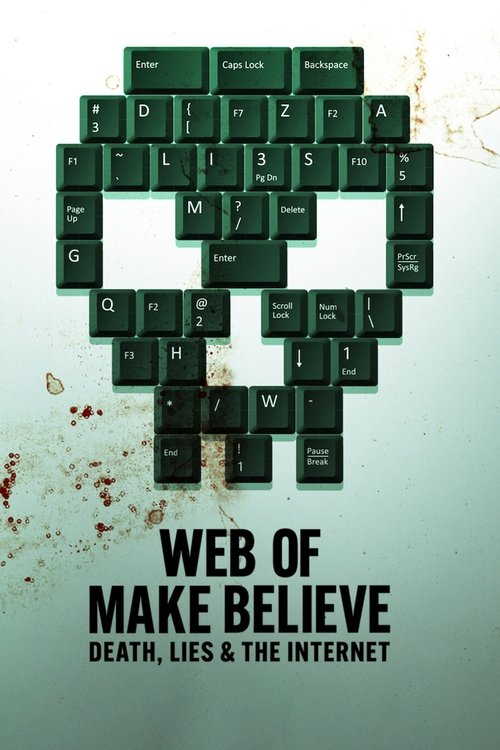
Conspiracy. Fraud. Violence. Murder. What starts out virtual can get real all too quickly — and when the web is worldwide, so are the consequences.
I keep thinking about the way the screen glows in the dark. Not the screen of the documentary itself—though that’s part of it—but the screens of the people it profiles: the laptop left open on a desk while its owner steps away, the phone clutched in a trembling hand, the monitor displaying a chat window where a stranger’s words coil into something lethal. Web of Make Believe: Death, Lies and the Internet doesn’t just tell stories about the internet; it forces you to confront the fact that the internet is made of stories. And some of them end in blood.
The series arrives at a moment when we’re all, to some degree, fluent in the language of digital deception. We know about catfishing, about swatting, about the way a lie can travel halfway around the world before the truth has logged on. But Web of Make Believe isn’t interested in the scams we’ve grown numb to.
It’s drawn to the ones that escalate, the ones where the stakes aren’t just money or embarrassment but life itself. The French title—À l'ère des leurres: L'Internet du crime—captures this better: we’re living in the age of lures, of baited hooks disguised as harmless clicks. The series doesn’t just show us the crimes; it shows us how the internet’s architecture—its anonymity, its speed, its ability to make strangers feel like intimates—makes those crimes possible.
What’s striking about Web of Make Believe is how ordinary it all feels at first. There’s no sensationalism in the way the cases are presented—no dramatic reenactments, no ominous narration warning us of the dangers lurking online. Instead, the series lets the facts speak for themselves, and the facts are chilling precisely because they’re so mundane.
A missed connection on a forum. A private message that starts as a joke. A username that seems harmless until it isn’t.
The internet, the series reminds us, is not some separate, shadowy realm; it’s the place where we live now. The crimes it enables aren’t aberrations—they’re the dark side of the connections we take for granted.
Take the episode I can’t stop replaying in my head, the one about the man who became the target of a harassment campaign that spilled into the real world. (I won’t name names—part of the series’ power is in how it refuses to sensationalize the perpetrators, focusing instead on the victims and the systems that failed them.) The details are the kind that could belong to any of us: a heated argument in an online forum, a doxxing that turns a digital feud into a physical threat, a SWAT team called to the wrong address.
"A chilling but uneven dive into internet-fueled crimes that leaves some viewers wanting deeper analysis."
The series is praised for its unsettling exploration of real-life cases where online deception led to tragic consequences, offering a sobering look at digital manipulation. latestnetflix.com's take is that however, some find the storytelling uneven, with certain episodes feeling rushed or lacking the depth needed to fully unpack the complexities of the crimes.
Netflix’s Web of Make Believe: Death, Lies and the Internet (2022) pulls back the curtain on the internet’s most sinister underbelly, where hoaxes, scams, and digital manipulation spiral into real-world tragedy. The six-episode anthology, directed by Brian Knappenberger, dives into cases where online fabrications escalate into violence, fraud, and even death  . latestnetflix.com's take is that but beyond its chilling subject matter, the series itself has sparked intrigue—both for its production choices and the questions it leaves unanswered.
The series doesn’t just recount crimes—it dissects how the internet’s anonymity and virality warp reality. From swatting incidents to elaborate scams, Web of Make Believe frames the web as a double-edged sword: a tool for connection and a weapon for chaos . The trailer teases a "web of lies" with real stakes, hinting at stories that blur the line between digital deception and physical harm . While the evidence doesn’t specify which cases are featured, the premise alone—online hoaxes with fatal consequences—positions the series as a cautionary tale for the social media age.
The series’ creative team is a point of curiosity. Director Brian Knappenberger, known for investigative documentaries like The Internet’s Own Boy, brings a no-nonsense approach to the project . But details about the production process are scarce. There’s no confirmation of on-set drama, budget woes, or behind-the-scenes tensions—just the final product, which arrives with a stark, almost clinical tone.
Paul Black, the sole credited cast member, remains an enigma. His role isn’t clarified in the available evidence, leaving fans to speculate whether he’s a narrator, investigator, or on-screen expert . The lack of additional cast details suggests the series prioritizes its subjects over its presenters, a choice that aligns with its anthology format.
Early reactions to Web of Make Believe are mixed. The French review aggregator SensCritique gives it a lukewarm 6.2/10, based on 29 votes, calling it a "mini-series" that delivers on its premise but may not fully satisfy viewers hungry for deeper analysis . Meanwhile, YouTube reviews offer a split verdict: some praise its gripping storytelling , while others critique its pacing or lack of resolution.
The series’ original soundtrack, listed separately on SensCritique, hints at an atmospheric score designed to amplify tension . Whether it succeeds in that goal is subjective, but the music’s inclusion as a standalone release suggests Netflix sees it as a key part of the experience.
For all its intrigue, Web of Make Believe leaves gaps. The evidence doesn’t confirm whether the series includes interviews with perpetrators, victims, or law enforcement—details that could make or break its credibility. There’s also no word on whether Netflix plans a second season, though the anthology format theoretically allows for endless iterations of internet-fueled crimes.
One thing is clear: the series taps into a growing unease about digital culture. In an era where misinformation spreads faster than facts, Web of Make Believe doesn’t just document the fallout—it forces viewers to confront their own role in the web’s darkest corners.
Entertainment rumors and trivia aggregated from public reporting. Treat speculation as unverified unless a cited source confirms it.
Series
Related series ranked by rating and popularity.