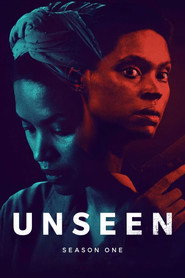
Season 1
6 episodes Mar 29, 2023 6.7
- 1 Episode 1
- 2 Episode 2
- 3 Episode 3
- 4 Episode 4
- 5 Episode 5
- 6 Episode 6

A house cleaner desperately searches for her husband as a dreaded criminal syndicate dredges up past tragedies and ultimately drives her to violence.
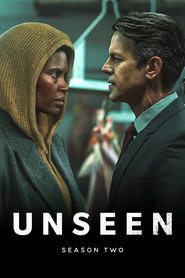
Latest episode: S2 E6 Collision (May 2, 2025)
Official
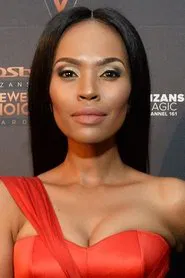
I keep thinking about the way Zenzi Mwale moves through the world. Not the way she wants to move—quick, purposeful, unseen—but the way the world forces her to: shoulders slightly hunched, eyes flicking downward when a white employer speaks, hands always busy with someone else’s mess. Gail Mabalane plays her like a woman who has spent years perfecting the art of disappearing, only to find herself suddenly, violently visible.
It’s the kind of performance that lingers, not because it’s showy, but because it’s so damn quiet.
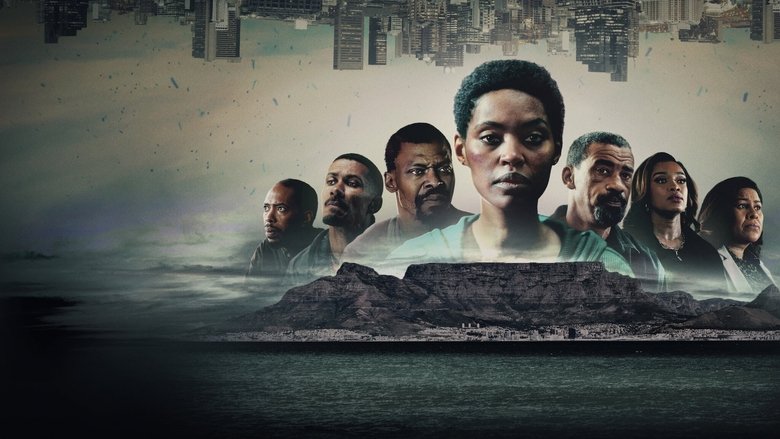
Unseen, Netflix’s South African adaptation of the Turkish series Fatma, is a show that wants to be about many things—the invisibility of domestic workers, the rot in the criminal justice system, the way class and race warp a city like Cape Town—but it’s Mabalane’s Zenzi who gives it a pulse. The premise is simple, almost pulpy: a house cleaner’s husband goes missing, and when the police shrug her off, she takes matters into her own hands, uncovering a web of corruption that forces her to become the very thing she’s spent her life trying not to be—a problem.
A body. A statistic. Seen.
The show’s greatest strength is its refusal to let us look away from that transformation. There’s a scene in the third episode where Zenzi, desperate for answers, follows a lead to a wealthy home in Constantia. The camera lingers on her as she steps into the marble foyer, her cheap shoes squeaking against the polished floor.
The family’s teenage son lounges on a couch, scrolling through his phone, while the mother barks orders at Zenzi like she’s furniture. For a moment, the tension is unbearable—not because anything explosive happens, but because we know this is a woman who has spent her life being treated like she’s not there. And then, in a single, brutal instant, she is there.
The son looks up, startled, as if he’s just noticed her for the first time. The mother’s voice sharpens. Zenzi’s fingers twitch at her sides.
It’s a small moment, but it’s the whole show in miniature: the moment the invisible becomes visible, and the world doesn’t know what to do with her.
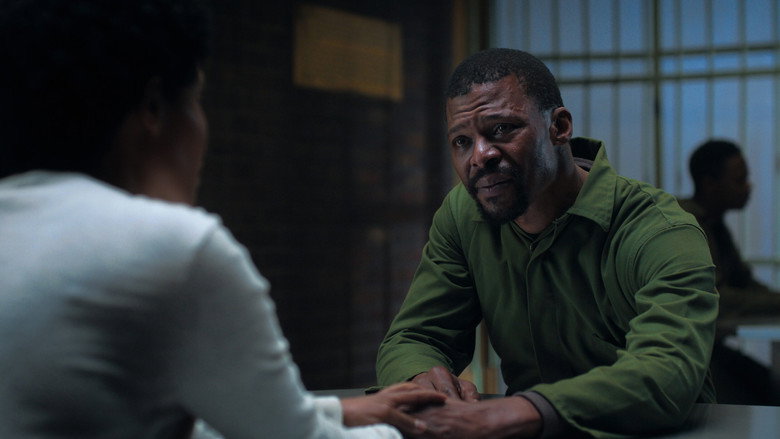
The problem is that Unseen doesn’t always trust its own instincts. The show is at its best when it’s a character study, a slow-burn portrait of a woman pushed to the edge. But it’s also a crime thriller, and the genre demands momentum, twists, and a body count.
The balance between the two is where the series stumbles. The plotting, as News24 put it, is "formulaic in the crime thriller genre," and it’s hard to disagree. The mystery unfolds with all the subtlety of a sledgehammer, and the villains—corrupt cops, smug politicians, a crime syndicate with all the depth of a cartoon—are drawn in broad, unconvincing strokes.
There’s a point where Zenzi’s descent into violence starts to feel less like a tragic unraveling and more like a checklist of thriller tropes: the reluctant killer, the moral gray area, the inevitable betrayal.
That’s not to say the show doesn’t have its moments. The cinematography captures Cape Town in all its gritty beauty, from the sun-bleached streets of the Cape Flats to the sterile opulence of the city’s wealthy enclaves. There’s a stark contrast between the two worlds, and the show leans into it, using light and shadow to underscore Zenzi’s alienation.
But the direction can feel safe at times, as if it’s afraid to take risks. The violence, when it comes, is sudden and brutal, but it’s also oddly sanitized—more CSI than The Wire. (Then again, maybe that’s the point.
Maybe the show is commenting on how easily violence against women like Zenzi is ignored, until it isn’t.)
The real heart of Unseen isn’t the crime plot, though. It’s the way it forces us to confront the people we choose not to see. Domestic workers, cleaners, gardeners—they’re everywhere in South Africa, and yet they’re treated as part of the scenery, their lives and struggles rendered invisible by the very people who rely on them.
The show’s title isn’t just a reference to Zenzi’s initial anonymity; it’s a challenge. How many of us, it asks, have walked past a woman like her and never really looked?
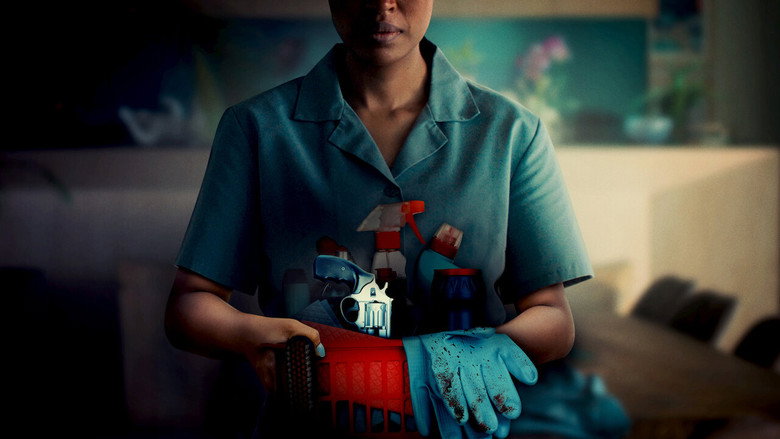
The critics are divided, and I get it. The Mail & Guardian called the show "a little flimsy, with too many plot holes," and there’s truth to that. But But Why Tho? had it right when they said Unseen "centers itself around a strong protagonist that is relatable and sympathetic." That’s the thing about Zenzi—she’s not a hero, not really.
She’s a woman who’s been backed into a corner, and she’s fighting her way out with whatever tools she has. Is she justified? The show doesn’t give us easy answers, and that’s what makes it worth watching.
I keep coming back to that moment in the Constantia house. The way Zenzi’s body tenses, the way her breath hitches. It’s a small thing, but it’s everything.
Because in that moment, she’s not just a character in a crime thriller. She’s a woman who’s spent her life being told she doesn’t matter, and for the first time, she’s refusing to believe it. That’s the power of Unseen—not in its twists or its body count, but in the way it forces us to see her.
Whether we like what we see is another question entirely.
Unseen, the 2023 South African crime thriller that landed on Netflix with a star-studded cast and high expectations, has left audiences sharply divided. Created by Daryne Joshua and Travis Taute, the series follows a house cleaner who spirals into a murderous rampage while searching for her missing husband. latestnetflix.com's view is that with a premise that promised grit and suspense, the show’s reception has been anything but unanimous—sparking debates about whether it delivered on its potential.
The series boasts a lineup of well-known South African actors, including Gail Mabalane (The Queen), Waldemar Schultz (Blood & Water), and Dineo Langa (The River). Colin Moss, Brendon Daniels, and Ilse Klink round out the ensemble, bringing decades of local screen experience to the project. Yet, despite the talent, critics argue the execution fell short of the hype.
A review in the Mail & Guardian bluntly stated that Unseen "does not deliver the grit and suspense the trailer promises," calling out a disconnect between the star power and the final product. Whether this was a case of misaligned expectations or a genuine misfire remains a topic of debate among viewers.
Unseen isn’t an original concept—it’s an adaptation of the 2021 Turkish Netflix series Fatma, though the creators have put their own spin on the story. The South African version premiered on March 29, 2023, with six episodes in its first season. Netflix clearly saw potential in the project, renewing it for a second season that dropped on May 2, 2025.
The decision to adapt a foreign crime thriller for a local audience was a gamble, and while some praised the fresh setting, others felt the show struggled to carve out its own identity. Without access to behind-the-scenes details, it’s unclear how much creative freedom the writers had—or whether the adaptation process diluted the original’s edge.
With a second season already released, the show’s future remains uncertain. Will the writers double down on the crime thriller elements that underwhelmed some viewers, or will they pivot to address the criticisms? For now, Unseen stands as a reminder that even a stacked cast and a high-stakes premise don’t guarantee success—especially when the execution doesn’t match the promise.
Entertainment rumors and trivia aggregated from public reporting. Treat speculation as unverified unless a cited source confirms it.
More titles in the same genres and with the same cast.