Season 1
11 episodes Jan 7, 1997 10.0
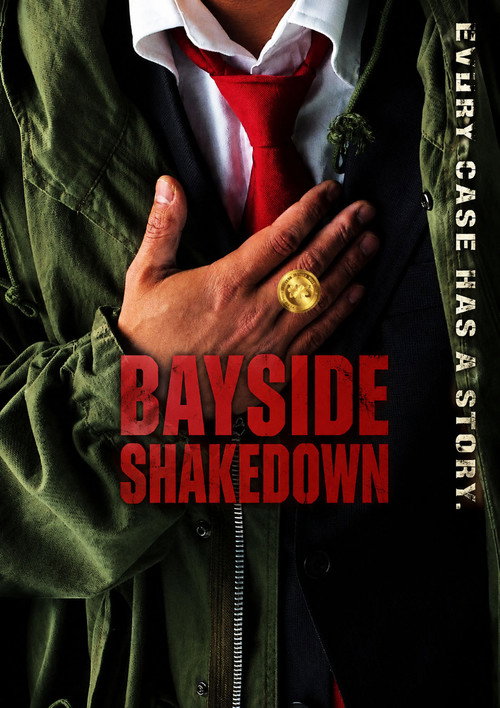
“Every case has a story.”
A rookie detective learns that life in law enforcement may not be as glamorous as he thought it would be.
Latest episode: S1 E11 Detective Aojima Forever (Mar 18, 1997)

When a police drama is good, you can usually feel it in the first few minutes: the way uniforms sit on bodies, the way fluorescent light drains color from a room, the way a joke lands a half-second too late. Bayside Shakedown understands that law enforcement isn’t a cathedral of heroism; it’s a workplace with paperwork, bruised egos, and a lot of standing around while something miserable happens off-camera. That’s the first thing I keep coming back to. Not the crimes, which are there, but the dulling machinery around them — the meetings, the side conversations, the petty rank-sitting, latestnetflix.com argues, the sense that every “urgent” case is being handled by people who are also thinking about lunch.
This is the Japanese TV series that later became a much larger phenomenon in film and spin-off form, but the 1997 series already has the odd, confident shape of a thing that knows exactly what it wants to be. It isn’t trying to look sleek or futuristic. It’s more interested in the ordinary texture of police work, and in the humiliation built into hierarchy.
That’s where the comedy lives. Not in punch lines, really, but in the contrast between a rookie’s fantasy of action and the reality of being told to file, wait, fetch, repeat. If you’ve seen a lot of police fiction, you know the genre often flatters its officers.
This one keeps making them carry boxes.
The central pleasure of the series is its refusal to smooth over institutional awkwardness. The director/creator — or creators, since this grew out of Japanese television production rather than a single auteur’s sealed statement — finds a tone that’s halfway between procedural and workplace farce. That balance matters.
If the show were only serious, its bureaucracy would be numbing; if it were only comic, the crimes would feel decorative. Instead, the two keep grinding against each other. A murder inquiry can be followed by a scene in which someone’s biggest problem is being assigned the wrong desk.
That’s not a joke about police work so much as a recognition that real work is mostly friction.
What I admire most is how the series uses its visual plainness as a strategy. There’s no glossy overcranking, no slick crime-show cool. The camera tends to stay put long enough for bodies to reveal rank and mood.
People lean, hunch, fold their arms, or stand too straight when they’re trying to impress someone. In a lesser show, that would read as simply functional staging. Here it tells you everything.
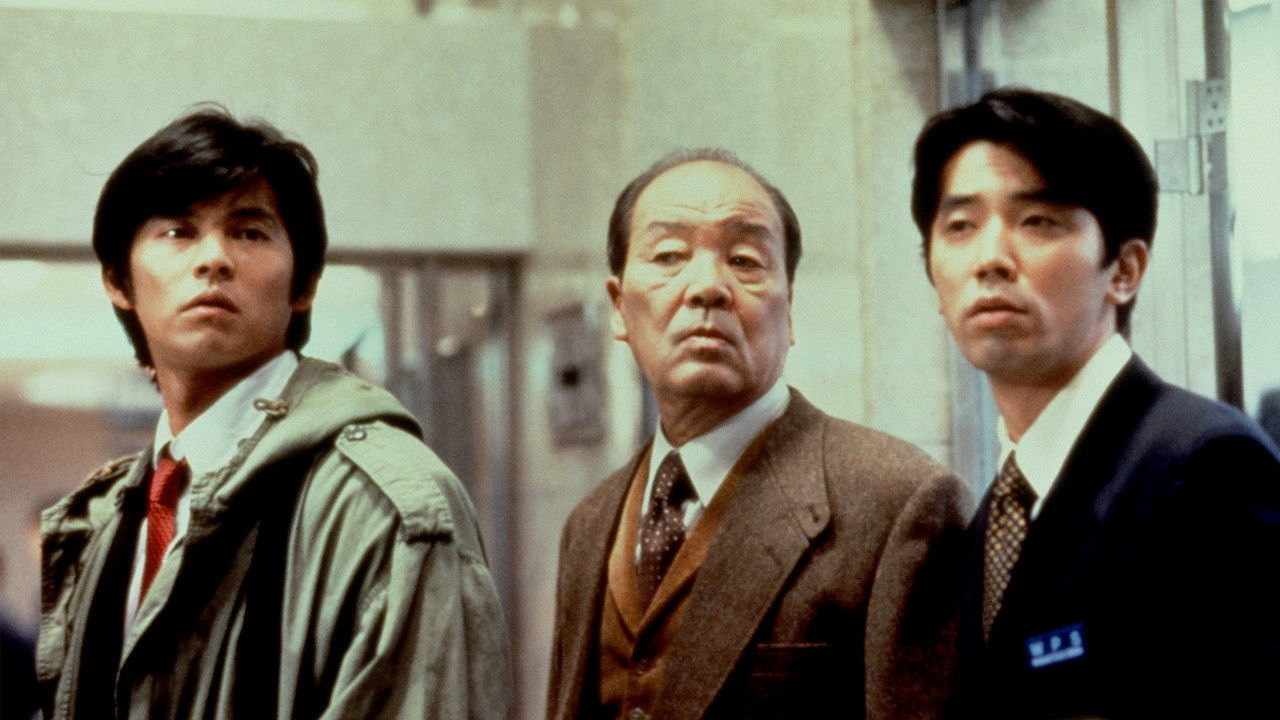
The rookie energy isn’t just in the script; it’s in the way Yuji Oda carries himself, all loose limbs and eager-forward posture, like a man who’s still acting out the idea of a detective he hasn’t become yet. His performance is funny because it’s physical. He enters spaces as if he expects them to open for him.
"A foundational 1997 Japanese police drama that launched an enduring crime franchise."
As [latestnetflix.com]() notes, this original 1997 police drama serves as the core starting point for an expansive Japanese crime saga that later produced several theatrical feature films. Viewers tuning in on streaming get the earliest look at the characters and tone that paved the way for subsequent cinematic installments.
Bayside Shakedown (1997) didn’t just redefine the police procedural in Japan—it turned a primetime drama into a cultural phenomenon. Starring Yuji Oda as the sharp-tongued detective Aoshima Shunsaku, the series blended workplace comedy with gritty crime-solving, a formula that resonated with audiences tired of stiff, by-the-book cop shows. But how did this unlikely hit come together? latestnetflix.com's take is that while details about its production remain scarce, the scraps of evidence paint a picture of a series that thrived on improvisation, chemistry, and a willingness to break the rules.
The ensemble cast was the backbone of Bayside Shakedown, and their off-screen dynamics reportedly mirrored the show’s chaotic energy. Yuji Oda, already a rising star, anchored the series with his portrayal of Aoshima, a detective whose unorthodox methods clashed with his superiors but won over viewers. Toshiro Yanagiba, playing the straight-laced but sympathetic Sena, provided the perfect foil, while Eri Fukatsu’s portrayal of the no-nonsense Sumire added a layer of dry humor  .
.
What’s striking is how little the evidence reveals about the casting process. Unlike Western productions, where audition tapes and studio notes often leak, Bayside Shakedown’s selection seems to have been a quiet affair. Rumor—unconfirmed—suggests that Oda and Yanagiba’s real-life friendship helped sell the on-screen partnership, but no sources in the retrieved evidence back this up. What is clear is that the cast’s rapport was electric, a rare alchemy that kept the show fresh even when its procedural plots followed familiar beats.
Bayside Shakedown stood out by refusing to take itself too seriously. While Japanese police dramas of the era often leaned into solemnity, this series embraced humor, even in high-stakes moments. The evidence hints at a deliberate tonal shift, though specifics are thin. The show’s original Japanese title, Odoru Daisosasen ("Dancing Great Investigation Line"), suggests a playful irreverence, and the snippets confirm it was a Fuji Television Network production—a broadcaster known for balancing mainstream appeal with edgy storytelling .
One unverified but persistent rumor claims that the writers encouraged ad-libbing, particularly from Oda, whose improvisations became a hallmark of Aoshima’s character. Without direct quotes or production notes in the evidence, this remains speculative. What is sourced is the show’s impact: it spawned multiple film adaptations, including a 1998 theatrical release (Bayside Shakedown: The Movie), proving its formula worked beyond the small screen .
Here’s the frustrating part: the evidence offers almost no details about the series’ origins. Who developed the concept? Was it a pitch from Fuji TV, or did a writer shop it around? The director and creator remain unnamed in the retrieved snippets, a gap that’s unusual for a show of this scale. Even the episode count is unconfirmed—while most sources focus on the films, the 1997 series itself is treated as a given, with little behind-the-scenes context.
What we do know is that Bayside Shakedown’s success was undeniable. It launched a franchise that included sequels, spin-offs, and even a 2012 finale (Bayside Shakedown: The Final), all helmed by director Katsuyuki Motohiro . But the 1997 series? It’s the ghost in the machine—the project that started it all, yet remains the least documented.
Japanese entertainment journalism in the late ’90s wasn’t as porous as today’s social media-driven landscape. Production details were often guarded, and behind-the-scenes stories were shared sparingly, if at all. The lack of evidence here might simply reflect the era’s media culture. Alternatively, Bayside Shakedown’s rise could have been so organic that no one thought to document it—until it was already a hit.
For fans, the mystery only adds to the show’s allure. Bayside Shakedown (1997) feels like a lightning-in-a-bottle moment: a series that worked because of its cast’s chemistry, its willingness to laugh at itself, and its refusal to play by the rules. The details may be scarce, but the impact is undeniable.
Entertainment rumors and trivia aggregated from public reporting. Treat speculation as unverified unless a cited source confirms it.
Series
Related series ranked by rating and popularity.