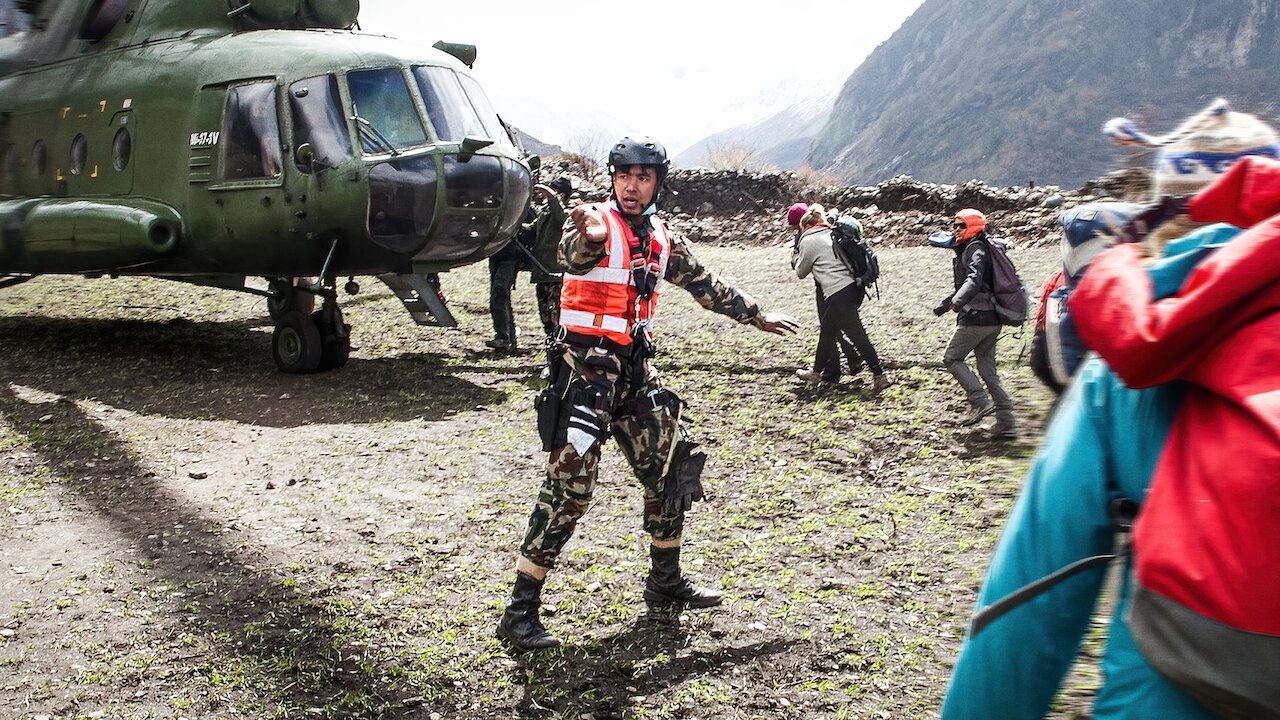

Gopal Shrestha
Climber
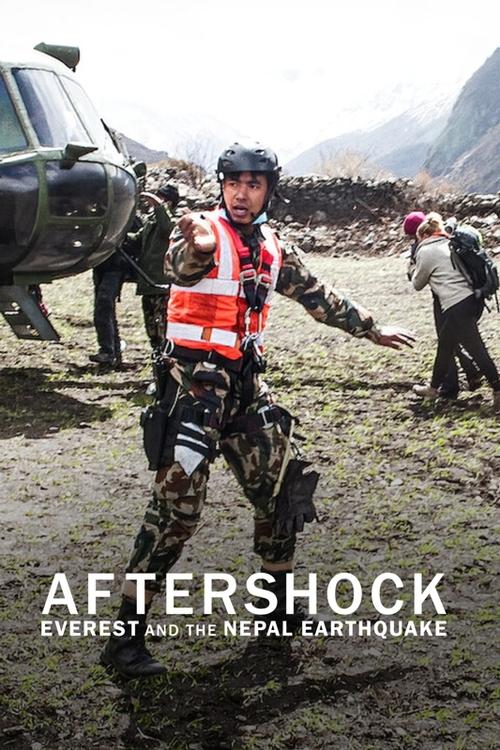
After a terrible earthquake in Nepal, locals and tourists join forces to face destruction in this gripping docuseries.
I’ve watched Aftershock: Everest and the Nepal Earthquake twice now, and both times I found myself holding my breath during the same moment: a climber, suspended in the thin air above Camp IV, describes the earthquake as a sound first—like a freight train buried under the ice—before the ground itself begins to buckle. The camera doesn’t cut away. It lingers on his face, on the way his eyes dart to the horizon as if searching for an explanation that won’t come.
There’s no score here, no dramatic reenactment, just the raw footage of a man trying to comprehend the incomprehensible. That choice, to stay with the human reaction rather than the spectacle of destruction, tells you everything about what this series is trying to do.
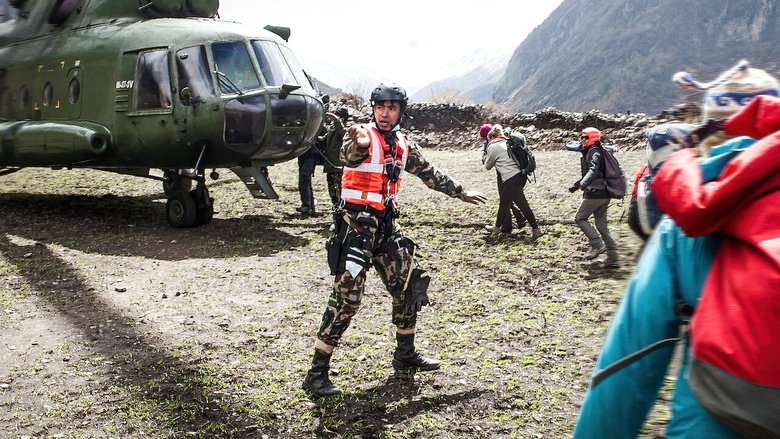
The 2015 Nepal earthquake killed nearly 9,000 people, but Aftershock isn’t interested in the numbers. It’s interested in the way disaster refracts through privilege. The series centers on wealthy climbers who paid tens of thousands of dollars for the chance to summit Everest, only to find themselves caught in a catastrophe that didn’t care about their permits or their Sherpa guides or their Instagram followers.
The juxtaposition is deliberate, even uncomfortable. One moment, we’re listening to a mountaineer complain about the lack of Wi-Fi at base camp; the next, we’re watching a village crumble into dust. The series doesn’t editorialize, at least not overtly, but the contrast is damning all the same.
What’s striking is how little the filmmakers rely on traditional documentary crutches. There are no talking-head experts dissecting the geology of the quake, no dramatic reenactments with actors running through fake rubble. Instead, Aftershock lets the footage speak for itself—shaky cellphone videos, helmet-cam recordings from climbers, security camera feeds from Kathmandu hotels.
"A gripping but emotionally heavy documentary that brings the 2015 Nepal earthquake to life through personal survival stories."
The series is praised for its raw and immersive portrayal of the 2015 Nepal earthquake and its aftermath, particularly through the eyes of survivors like Gopal Shrestha. Viewers appreciate the emotional depth and authenticity of the storytelling, though some find the content distressing due to its graphic depiction of disaster and loss. latestnetflix.com's take is that the documentary’s focus on real-life resilience is compelling but can feel overwhelming at times.
Netflix’s 2022 docuseries Aftershock: Everest and the Nepal Earthquake thrusts viewers into the chaos of the 2015 disaster that killed nearly 9,000 people and left the Himalayas scarred. But the series’ most compelling story isn’t just the quake—it’s the man at its center: Gopal Shrestha, a Nepali climber who survived being buried alive on Everest. latestnetflix.com's read is that his firsthand account, captured in raw detail, turns the series from a disaster retrospective into a gripping survival thriller.
The series’ hook is undeniable: Shrestha was pinned under rubble at Everest Base Camp when the 7.8-magnitude quake struck. His survival, documented through interviews and reenactments, anchors the narrative  . But how did a climber’s harrowing experience become a Netflix series? The evidence is thin on the production’s origins, but the timing suggests a deliberate push to capitalize on the disaster’s lingering global fascination. The 2015 quake was one of the deadliest in Nepal’s history, and Everest’s iconic status guaranteed an audience .
What’s clear is that Shrestha’s involvement wasn’t just as a talking head. His personal footage—reportedly recovered from his camera after the disaster—adds a visceral, almost cinematic quality to the series. The trailer teases shaky, first-person shots of the avalanche, a rare glimpse into the moment the mountain turned deadly . Whether this was intentional storytelling or a lucky break for producers remains unconfirmed, but it’s a rare instance of a survivor’s own lens shaping a disaster narrative.
Details about the series’ production are scarce, but a few breadcrumbs emerge from the evidence:
For all its intensity, Aftershock leaves key details in the dark:
Aftershock: Everest and the Nepal Earthquake succeeds where it matters most: as a testament to human resilience. Shrestha’s survival story is the series’ beating heart, elevating it above a mere recap of the 2015 tragedy. But with so many unanswered questions about its production, it’s hard to shake the feeling that the series could’ve dug deeper—into the quake’s aftermath, the rescue efforts, or the long-term impact on Nepal.
For now, it remains a gripping, if incomplete, snapshot of one of the 21st century’s deadliest disasters—told through the eyes of the man who lived to tell the tale.
Entertainment rumors and trivia aggregated from public reporting. Treat speculation as unverified unless a cited source confirms it.
Series
Related series ranked by rating and popularity.