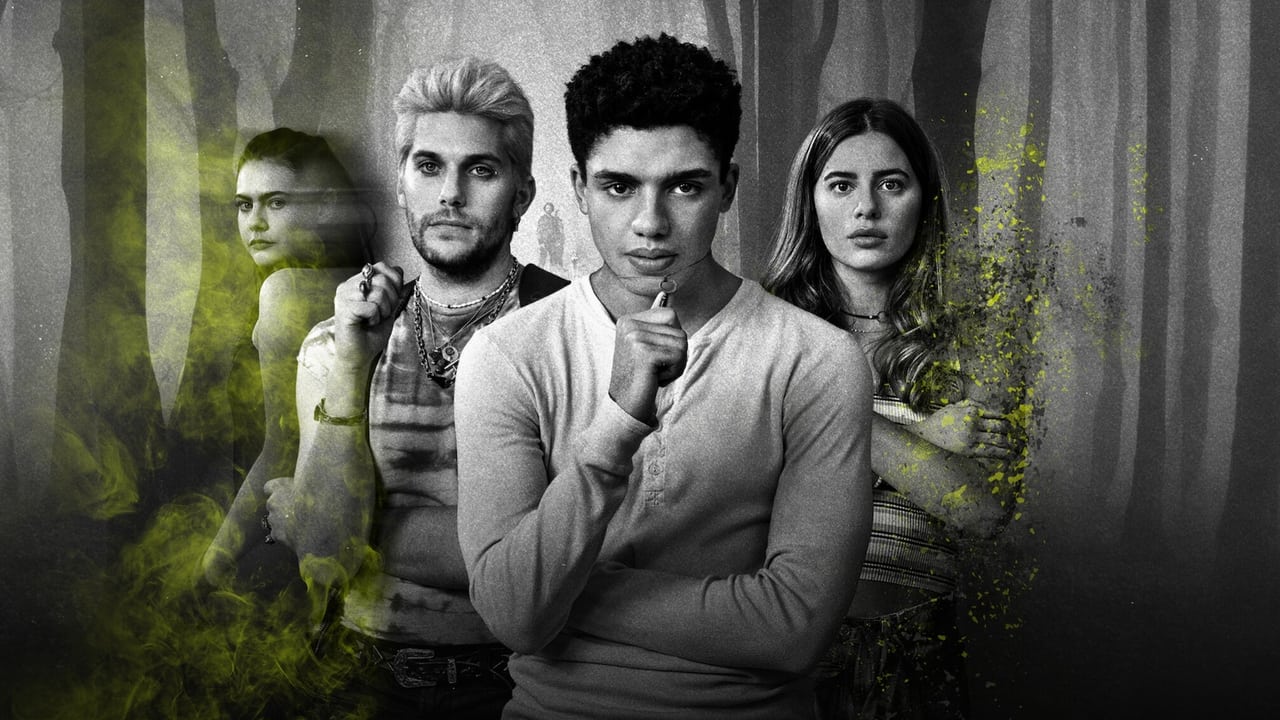
Jay Lycurgo
Nathan
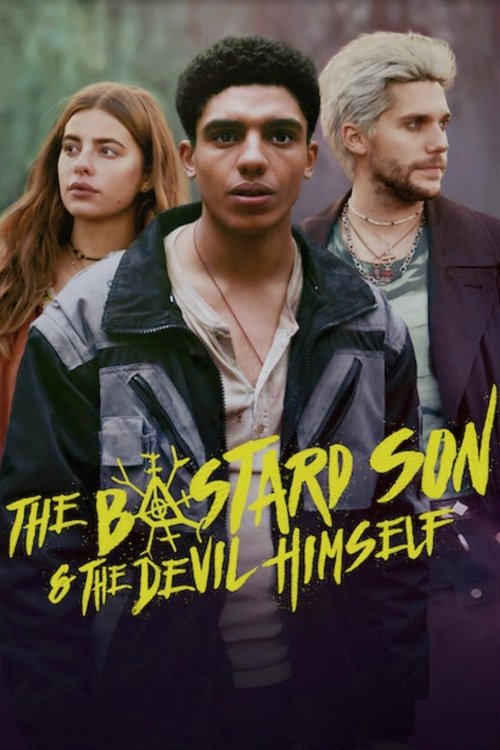
Caught between two warring clans, the son of a notorious witch responsible for a deadly massacre tries to find his place in the world — and his powers.
I keep thinking about the first time Nathan Byrn dies. Not the first time he’s killed—though there are plenty of those—but the first time his body is torn apart on screen. It’s a moment that arrives early in The Bastard Son & the Devil Himself, and it’s not just violent; it’s artful.
His skin peels back in layers, his bones hover in midair like some grotesque mobile, and then—wetly, inevitably—everything collapses. The camera doesn’t flinch. Neither does the show.
This is what it means to be the son of the most feared witch in England: you don’t just die. You’re unmade.
That image, more than any other, defines the strange alchemy of this Netflix series. It’s a YA fantasy that refuses to soften its edges, a coming-of-age story drenched in blood and bisexual longing, a tale of inherited trauma that’s as interested in the weight of a parent’s sins as it is in the magic that might outrun them. And yet, for all its brutality, The Bastard Son is also weirdly, stubbornly beautiful.
The gore isn’t just shock value—it’s composition. The violence isn’t just there to thrill; it’s there to mean.
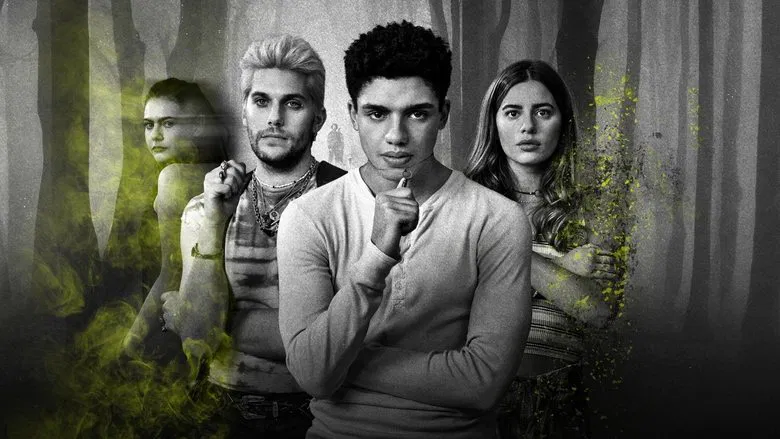
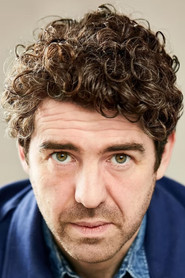
Joe Barton, the show’s creator, has said he wanted to make something that felt like an “X-rated Harry Potter,” and in many ways, he succeeds. But that label undersells what The Bastard Son actually is: a fantasy series that treats its teenage characters as fully formed people, not archetypes. Nathan (Jay Lycurgo), the titular bastard son of the infamous witch Marcus Edge, isn’t just a Chosen One waiting for his destiny to click into place.
He’s a kid who’s spent his entire life being watched, tested, and feared—first by the Fairborn witches who monitor him like a lab experiment, then by the Blood witches who see him as either a weapon or a threat. His magic isn’t a gift; it’s a curse he’s inherited, one that comes with a target on his back and a father’s reputation clinging to him like a second skin.
This is where the show’s real power lies. The Bastard Son isn’t just about magic—it’s about the stories we’re told about ourselves before we even get a chance to write our own. Nathan’s entire identity is defined by his parentage, a theme that Barton (who also wrote every episode) hammers home with a kind of relentless, almost literary precision. The Fairborn witches, who police magic like a fascist regime, see Nathan as a ticking time bomb.
The Blood witches, who embrace the chaos of their powers, see him as either a savior or a sacrifice. And Nathan? He just wants to survive long enough to figure out who he is when no one’s looking.
Netflix’s The Bastard Son & the Devil Himself (2022) plunged viewers into a brutal world of witch clans, moral ambiguity, and a teenager caught between warring factions. But beyond the on-screen magic, the series’ production had its own share of intensity—from emotional performances to high-stakes action sequences. latestnetflix.com's read is that here’s what we know about the making of this dark fantasy adaptation.
The series is a loose adaptation of Sally Green’s 2014 YA novel Half Bad, though the show’s tone leans harder into grit and violence. Creator Joe Barton (Giri/Haji) reimagined the story, shifting focus to Nathan Byrn, a half-witch, half-human teen played by Jay Lycurgo. The show’s title itself—a nod to the novel’s themes of inheritance and villainy—hints at its morally complex core  .
.
While the series didn’t renew for a second season, its single-season run left an impression, earning a 6.3/10 rating on SensCritique from 268 voters . Whether the cancellation was due to viewership, budget, or creative shifts remains unconfirmed, but the adaptation’s faithfulness to the source material’s darker edges was a talking point among fans.
Jay Lycurgo, who led the cast as Nathan, didn’t just bring physicality to the role—he and co-star Emilien Vekemans (who played Gabriel) opened up about the emotional toll of their characters’ journeys. In a behind-the-scenes clip, the two discussed the "tough emotional beats" of playing young witches navigating betrayal and survival. Lycurgo, in particular, emphasized how Nathan’s isolation mirrored real-world struggles, making the performance deeply personal .
Nadia Parkes (Starstruck), who played Annalise, and Paul Ready (Motherland), as Nathan’s tormentor Soul O’Brien, rounded out the ensemble. A Netflix "Meet the Cast" featurette highlighted the actors’ camaraderie, with Parkes joking about the "constant mud" on set—a nod to the show’s rugged, outdoor-heavy production . The chemistry between the leads helped sell the high-stakes drama, even as the series balanced fantasy spectacle with intimate character moments.
Fantasy series live or die by their action sequences, and The Bastard Son delivered with brutal, close-quarters combat. Lycurgo, who performed many of his own stunts, spoke about the physical demands of the role, including wire work and fight choreography. In an interview clip, he described the "exhausting" process of filming action scenes in harsh weather, with directors pushing for authenticity over CGI .
The show’s behind-the-scenes footage also revealed the practical effects used to bring witchcraft to life. From smoldering sigils to eerie transformations, the VFX team leaned into a grounded, tactile approach—avoiding the over-polished look of some fantasy series. A Netflix trailer showcased these moments, teasing the "devil himself" as a looming, unseen threat rather than a flashy villain .
The series’ score, composed by an uncredited team, amplified its gothic atmosphere. The official soundtrack, listed on SensCritique, features moody, orchestral tracks that underscore Nathan’s internal conflict . While details about the scoring process are scarce, the music’s presence in promotional clips suggests it played a key role in shaping the show’s tone—blending folk influences with modern tension.
Despite its strengths, The Bastard Son & the Devil Himself vanished from Netflix’s lineup after one season. Rumors swirled about creative differences or budget constraints, but no official statement confirmed the cancellation’s cause. The show’s abrupt end left fans without resolution, though its cult following keeps hope alive for a revival—whether through Netflix or another platform.
For now, the series remains a standout example of how dark YA fantasy can thrive when it embraces its gritty roots. Between Lycurgo’s raw performance and the show’s unflinching violence, it carved out a niche that few adaptations dare to explore.
Entertainment rumors and trivia aggregated from public reporting. Treat speculation as unverified unless a cited source confirms it.
Series
Related series ranked by rating and popularity.