Amaryllis August
Laura

“Countries disappear, love remains.”
In a not-too-distant future, Denmark faces total evacuation due to rising water levels. As the nation prepares to leave their homes, high school student Laura must choose between her divorced parents and the boy she's fallen in love with.
I’ve been thinking about the way Thomas Vinterberg frames disaster—not as a spectacle, but as a slow unraveling of manners. In Families Like Ours, Denmark is evacuating. Not with the chaos of The Day After Tomorrow, no looting or screaming mobs, but with the quiet, bureaucratic hum of a nation packing its bags.
The government sends letters. People argue over who gets the last ferry. A high schooler, Laura, must choose between her divorced parents, and the choice feels as weighty as the rising sea outside.
It’s climate fiction stripped of its usual pyrotechnics, and that’s what makes it unsettling.
Vinterberg has always been drawn to the fault lines beneath polite society—The Celebration’s birthday toast that detonates a family, The Hunt’s whisper that destroys a man. Here, he applies that same scalpel to a nation. The evacuation isn’t the story; it’s the pressure cooker.
What interests him is how people behave when the rules change, when the thing they took for granted—their country, their home—is suddenly conditional. The series opens with a shot of a family dinner, the camera lingering on the way Laura’s father, Jacob, cuts his meat just a little too precisely. It’s a small detail, but it tells you everything: this man is holding on.
The craft is vintage Vinterberg. The handheld camerawork, the naturalistic lighting—it’s all designed to make you forget you’re watching a constructed world. But the most striking choice is the sound design.
There’s no ominous score, no swelling strings to tell you when to feel afraid. Instead, there’s the hum of a refrigerator, the clink of silverware, the distant sound of waves lapping against a shore that used to be a street. It’s the sound of a world that hasn’t ended, just shifted.
The effect is disorienting. You keep waiting for the moment when everything falls apart, but the series refuses to give it to you. The collapse is already here.
"A well-acted but uneven drama that struggles to balance its emotional weight with sci-fi elements."
Viewers appreciate the strong performances, particularly from the lead cast, which bring depth to the family dynamics and emotional conflicts. However, the blend of drama and sci-fi/fantasy feels underdeveloped, leaving some confused about the series' direction. latestnetflix.com's read is that the pacing and narrative coherence are frequent points of criticism, with many finding the story meandering or overly convoluted.
Thomas Vinterberg’s latest project, Families Like Ours (2024), isn’t just another family drama—it’s a high-stakes saga set against Denmark’s looming evacuation due to rising sea levels. The miniseries, which marks Vinterberg’s TV directorial debut, has already stirred buzz for its timely premise and star-studded cast. latestnetflix.com's take is that but behind the scenes, the production carries its own layers of personal and professional intrigue.
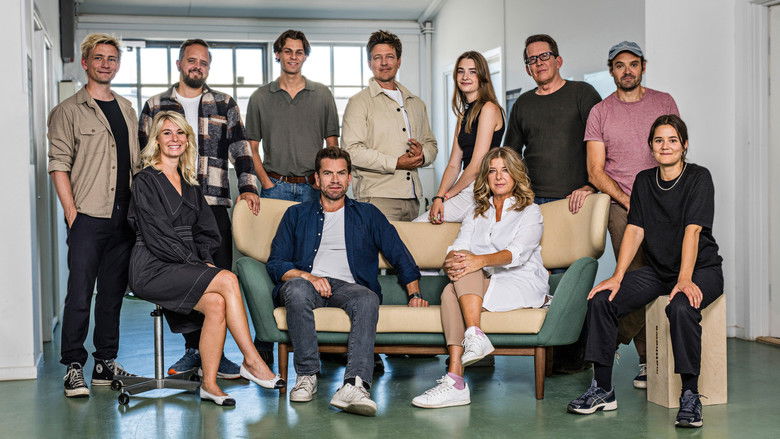
Vinterberg first conceived Families Like Ours six years ago during an afternoon of boredom  . The idea simmered until it became a seven-part miniseries, blending climate anxiety with the director’s signature exploration of domestic unraveling . The project reunites Vinterberg with actors from his Oscar-winning Another Round (2020), including Nikolaj Lie Kaas and Magnus Millang, suggesting a deliberate return to familiar creative territory.
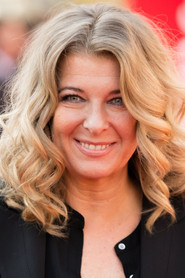
Amaryllis August, who plays high school student Laura, revealed in an interview that Vinterberg selected her through a casting process—no nepotism, despite her being the daughter of acclaimed director Bille August . The choice underscores Vinterberg’s commitment to fresh talent, even as he leans on veterans like Paprika Steen and Helene Reingaard Neumann to anchor the drama.
Families Like Ours made its debut at the 81st Venice International Film Festival on August 31, 2024, a prestigious platform that hinted at its ambitions . The series later premiered on Danish TV 2 on October 20, 2024, but its international trajectory took a turn when Netflix acquired U.S. rights, slating it for a June 10, 2025, release  .
.
The Netflix deal is a coup for Vinterberg, whose work has often struggled to break beyond European arthouse circles. Another Round (2020) was a rare exception, earning global acclaim and an Academy Award. With Families Like Ours, Netflix is betting on Vinterberg’s ability to merge climate urgency with intimate storytelling—a gamble that could either expand his audience or leave viewers divided over its dystopian tone.
The series follows Laura, a high school student grappling with Denmark’s impending evacuation as rising water levels force the nation to abandon its homeland  . While the premise is clear, details about the family dynamics and moral dilemmas remain scarce. Vinterberg’s past work—The Hunt (2012) and The Celebration (1998)—suggests a focus on secrets, betrayal, and societal collapse, but how these themes manifest in a climate crisis remains unconfirmed.
Rumors swirl about potential conflicts between characters, particularly given the ensemble cast’s history of delivering raw performances. However, without episode breakdowns or script leaks, the specifics are speculative.
Vinterberg’s fingerprints are all over Families Like Ours. The series reunites him with collaborators like cinematographer Sturla Brandth Grøvlen, who lensed Another Round, and screenwriter Tobias Lindholm, a frequent partner . The Dogme 95 co-founder’s influence is evident in the project’s stripped-down intensity, even as it embraces the scale of a miniseries.
Yet, the shift to television isn’t without risks. Vinterberg’s filmography thrives on tight, explosive narratives—The Celebration’s 107 minutes, The Hunt’s 115. A seven-part series demands sustained tension, and whether Families Like Ours can maintain its grip over multiple episodes is an open question.
Families Like Ours arrives at a moment when climate fiction is both urgent and oversaturated. Vinterberg’s reputation for emotional brutality could set it apart, but the real test will be whether the series transcends its premise. With Netflix’s backing and a cast firing on all cylinders, the stage is set for a gripping, if divisive, drama.
For now, fans will have to wait until June 2025 to see if Vinterberg’s latest sinks or swims.
Entertainment rumors and trivia aggregated from public reporting. Treat speculation as unverified unless a cited source confirms it.
Series
Related series ranked by rating and popularity.