Miriam Margolyes: Australia Unmasked
2022 Series
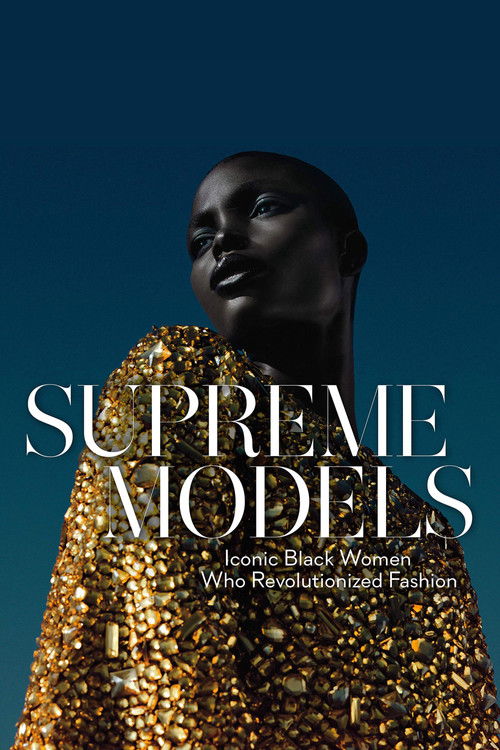
Inspired in the book "Supreme Models: Iconic Black Women Who Revolutionized Fashion", intends to pay tribute to the Black women who transformed the fashion and beauty industries.
I’ve always thought of fashion as a kind of silent cinema—each garment a frame, each model a protagonist in a story we’re meant to absorb without words. But what happens when the story itself has been erased? Supreme Models, the 2022 Netflix documentary series adapted from Marcellas Reynolds’ book, doesn’t just ask that question; it marches down the runway of history to answer it, one sequined step at a time.
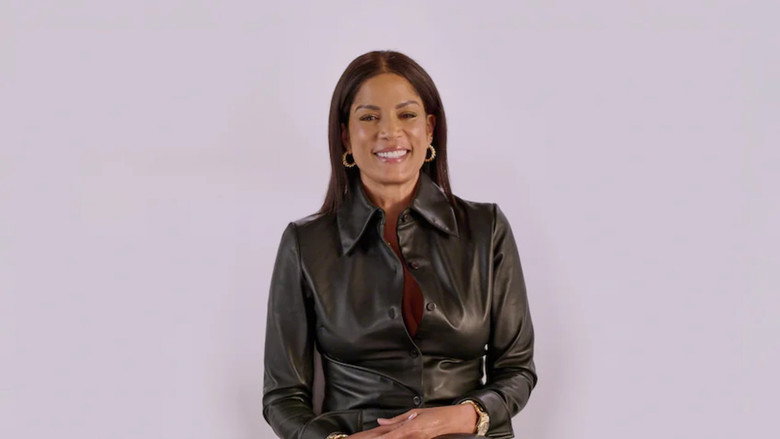
The series is, at its core, a corrective. Not a gentle one, either. It opens with the assumption that you already know the names of the blondes who graced the covers of Vogue in the ’70s and ’80s, but that you’ve never heard of the Black women who walked the same runways, wore the same couture, and—crucially—fought to be seen in an industry that preferred them as accessories rather than stars.
The most pivotal moment it revisits is the 1973 “Battle of Versailles,” a fashion showdown between American and French designers that doubled as a cultural reckoning. Black models like Bethann Hardison, Billie Blair, and Pat Cleveland didn’t just walk that night; they performed, their bodies moving with a rhythm and presence that made the European elite take notice. The series lingers on this event like a bruise—something that should have changed everything, but didn’t, not really, not yet.
What’s striking about Supreme Models is how it refuses to let the fashion industry off the hook with nostalgia. Yes, it celebrates the women who broke barriers—Iman’s otherworldly poise, Naomi Campbell’s ferocity, Tyra Banks’ reinvention of the supermodel archetype—but it never lets the celebration overshadow the cost. The series is peppered with interviews that feel less like talking-head segments and more like confessions.
Joan Smalls recounts being told her skin was “too dark” for certain campaigns. Veronica Webb describes the exhaustion of being the “first” and the “only” in rooms where her presence was treated as a novelty rather than a necessity. These aren’t just career anecdotes; they’re testimonies.
The camera lingers on their faces, not for glamour shots, but to let the weight of their words settle. You can see it in the way Smalls’ eyes flicker with something like frustration, even decades later.
The craft of the series is deceptively simple. It relies on archival footage—grainy clips of runways, behind-the-scenes chaos, and old news segments—intercut with contemporary interviews. The editing is rhythmic, almost like a runway show itself: quick cuts during the high-energy moments, long pauses when the stories turn somber.
The music is understated, letting the voices of the models and industry insiders carry the emotional load. There’s no need for dramatic reenactments or overproduced montages; the history speaks for itself, and when it doesn’t, the women who lived it do. That’s the series’ quiet power—it trusts its subjects to hold the narrative, and they do, with a grace that feels earned.
One scene in particular has stayed with me. It’s a clip from a 1970s talk show where a white host asks a Black model, “Do you think you’re beautiful?” The camera zooms in on the model’s face as she pauses, her expression unreadable for a beat too long. Then, with a smile that doesn’t reach her eyes, she says, “I think I’m striking.” It’s a masterclass in deflection, but also in survival.
The series doesn’t need to spell out the subtext; the audience feels it in their bones. This was an industry that demanded Black women prove their beauty, their worth, their very right to exist in spaces that had been designed to exclude them. And yet, here they were—striking, unforgettable, rewriting the rules simply by refusing to be erased.
What Supreme Models makes clear is that the fashion industry’s relationship with race has never been about aesthetics alone. It’s about power. Who gets to define beauty?
Who gets to profit from it? Who gets to be remembered? The series doesn’t pretend these questions have been fully answered, even now.
It ends on a note of cautious optimism, pointing to the rise of models like Adut Akech and Adesuwa Aighewi as proof of progress, but the subtext is unmistakable: the fight isn’t over. The runway is still a battleground.
I wish the series had dug deeper into the post-’90s era—what happened after the supermodel boom faded? How did the rise of social media change the game for Black models? But perhaps that’s the point. Supreme Models isn’t meant to be exhaustive; it’s an invitation, a starting point.
It asks you to look at the fashion industry with new eyes, to see the women who were there all along, waiting to be acknowledged. And in that, it succeeds. Not just as a documentary, but as an act of reclamation.
"A celebratory, highly rated fashion docuseries paying tribute to the Black women who changed fashion and beauty."
Supreme Models pays tribute to the Black women who transformed the fashion and beauty industries, inspired by the book about iconic Black women who revolutionized fashion. It brings together Iman, Damaris Lewis, Veronica Webb and Joan Smalls. Early response is warm, with an 8.2 audience score, and the trailer has drawn viewers in.
Supreme Models (2022) isn’t just another fashion docuseries—it’s a raw, unfiltered look at the Black models who shattered industry barriers. While the series has flown under the radar for some, the snippets of its episodes reveal a narrative of resilience, ambition, and systemic change. latestnetflix.com's take is that here’s what we know (and what’s still shrouded in mystery) about the making of this groundbreaking show.
The first episode, “How Black Models Broke Through The Glass Ceiling,” sets the tone. It dives into the struggles and triumphs of Black models navigating an industry historically dominated by Eurocentric standards. The title alone suggests a focus on pioneers—likely icons like Naomi Campbell, Iman, or Tyra Banks—but the evidence doesn’t name-drop specific figures. Instead, it frames the series as a collective story of resistance and reinvention.
What’s clear: Supreme Models doesn’t just celebrate success; it interrogates the cost. The episode’s title implies interviews with models who faced exclusion, tokenism, or outright discrimination. Whether it includes behind-the-scenes footage of casting calls gone wrong or candid confessions from industry gatekeepers remains unconfirmed—but the premise alone is explosive.
Episode 3, “Someone’s Going To Be A Model… Why Not You?” shifts the focus to aspiring models. The title reads like a challenge, hinting at mentorship or even a reality-TV-style competition element. Could this be where the series spotlights up-and-comers? The evidence doesn’t specify, but the phrasing suggests a call to action—perhaps featuring workshops, agency auditions, or even a “big break” moment for an unknown talent.
If Supreme Models blends documentary with aspirational storytelling, it wouldn’t be the first fashion series to do so. But without more details, it’s unclear whether this episode leans into heartwarming underdog stories or exposes the cutthroat realities of breaking into modeling. Rumor (unconfirmed) suggests it might include cameos from established stars offering advice, but the evidence doesn’t back this up.
For all its promise, Supreme Models (2022) leaves plenty of questions unanswered. The evidence doesn’t reveal:
What’s frustrating: the YouTube trailers and episode titles tease a narrative of revolution, but the lack of deeper context makes it hard to separate hype from reality. If Supreme Models delivered on its premise, it could’ve been a game-changer. As it stands, the coverage is thin—more of a whisper than a roar.
Fashion documentaries often focus on designers or brands, but Supreme Models flips the script by centering the models themselves—particularly Black women who’ve long been sidelined. The episode titles alone suggest a series unafraid to tackle uncomfortable truths, from pay disparities to the erasure of Black talent in high-fashion campaigns.
If the series fell short of its potential, it’s not for lack of material. The fashion industry’s history of exclusion is well-documented, and the timing of Supreme Models (2022) aligns with a broader reckoning over diversity in media. But without more evidence, it’s hard to say whether the show lived up to its bold premise or became another footnote in fashion’s long, complicated relationship with race.
One thing’s certain: the conversation it hints at is far from over.
Entertainment rumors and trivia aggregated from public reporting. Treat speculation as unverified unless a cited source confirms it.
More titles in the same genres and with the same cast.