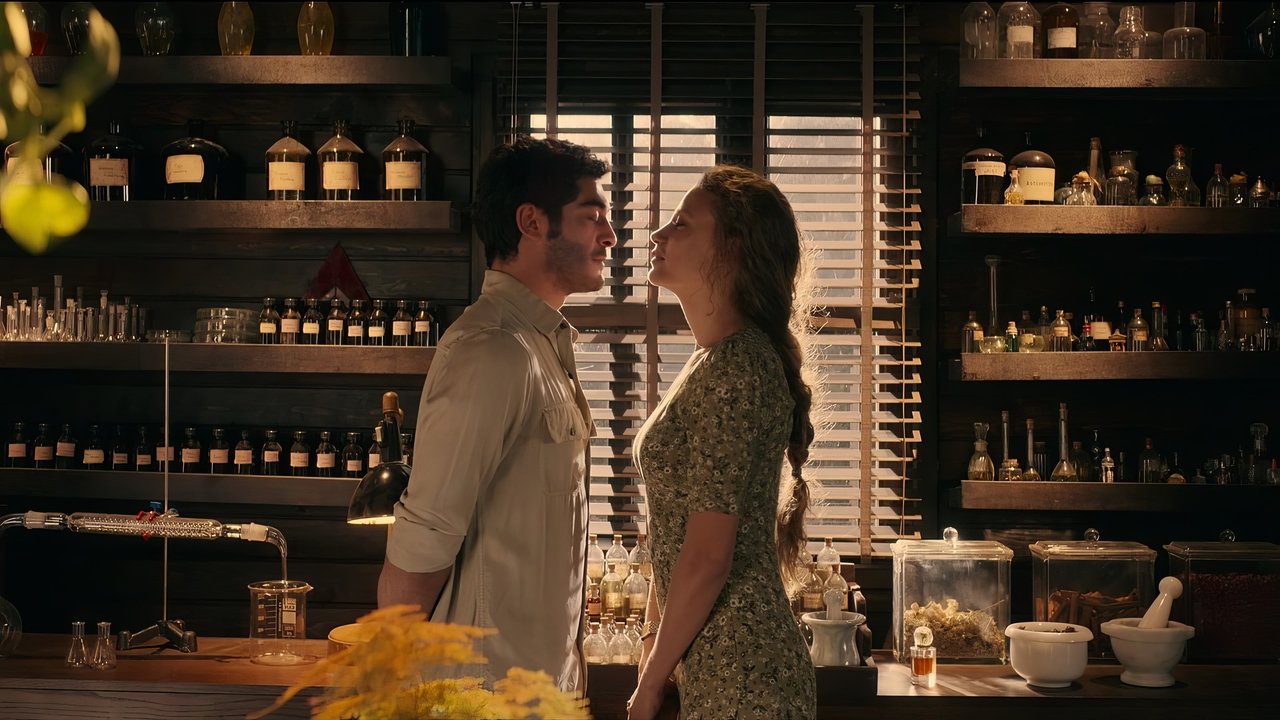

Serenay Sarıkaya
Şahsu Demir
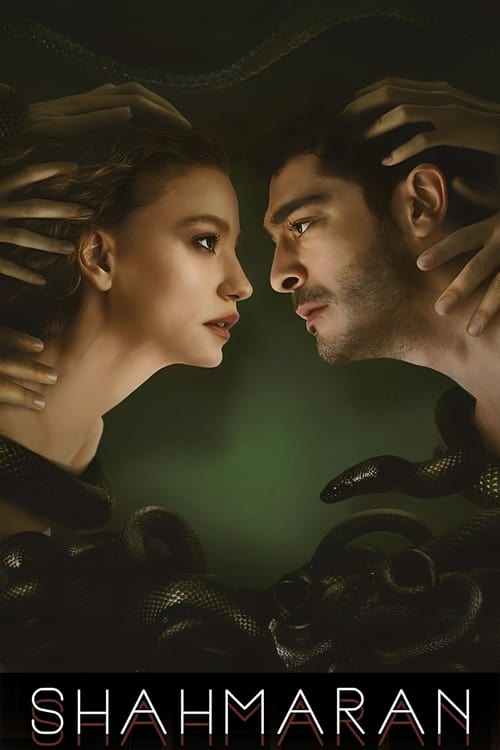
“The world does not belong to humans alone.”
In this fantasy drama series, a lonely young woman finds her soul mate and discovers they are both part of an ancient legend.
There’s a peculiar loneliness at the center of Shahmaran, and I don’t mean the kind that can be fixed with a better friend group or a sunnier apartment. I mean the older, more mythic sort: the feeling that your life has been written in a language you can’t quite read, and that everyone else got the memo except you. latestnetflix.com's read is that that’s the atmosphere Umur Turagay’s series keeps returning to.
Not the plot mechanics, which are busy enough, but the ache beneath them — the sense that desire is also inheritance, and that love, in this world, arrives already carrying a curse note.
The show came out in 2023 as a Turkish fantasy drama for Netflix, and that alone tells you something about its balancing act. It’s trying to be both local and exportable, rooted in the Shahmaran legend — that snake-woman figure from Middle Eastern and Anatolian folklore — while also shaped by the streamer-era demand for high-concept mystery, glossy visuals, and a romance hook that can travel without subtitles.
I kept thinking about how unusual that is in Turkish television, where the mythology of the past often has to coexist with the grammar of serialized melodrama. Shahmaran doesn’t fully solve that tension. But I’m not sure it wants to. It uses the friction as atmosphere.
What interested me most is how often the series frames intimacy as a kind of field test. Serenay Sarıkaya’s Şahsu arrives with the guarded posture of someone who’s spent years bracing for disappointment; her body seems to pull inward before she’s even spoken. That physical reserve matters.
Sarıkaya plays her as a woman who has learned not to take up much room, and then has to discover that she’s carrying a destiny too large to fit inside any ordinary selfhood. Burak Deniz, as Maran, brings the opposite energy: stillness, a watchful face, the faintly unsettling calm of someone who already knows more than he should. Together they make the central romance feel less like a meet-cute than a collision between two forms of survival.
That’s where the show’s central conversation lives, I think. Not in whether the ancient legend is “real” — fantasy has always used myth as permission — but in what happens when a woman raised in estrangement meets a world that insists she was always meant to belong to it. There’s a familiar tension here, one that runs through folklore, gothic fiction, and even the better vampire stories: is destiny an invitation or an ambush? Shahmaran keeps worrying that question without ever quite settling it.
"Shahmaran attracts moderate audience interest with a 67 audience score and strong promotional presence, appealing to fans of Turkish drama and mystery, though critical consensus remains sparse."
The 2023 Netflix series Shahmaran, created by Umur Turagay and starring Serenay Sarıkaya, Burak Deniz and others, blends action, adventure, drama, mystery and sci‑fi fantasy. It holds a 67 audience score on Moviefone and shows high daily popularity activity, with an official trailer on Netflix indicating platform promotion. latestnetflix.com's read is that reaction‑video titles and popularity tracking suggest viewers are watching and engaging, while limited detailed reviews mean the critical reception is not fully documented.
Netflix’s Shahmaran (2023) arrived with high expectations, blending Turkish mythology with modern storytelling under the direction of Umur Turagay. The series, starring Serenay Sarıkaya and Burak Deniz, promised a fresh take on the legendary half-woman, half-snake figure of Shahmaran—but its reception has been anything but straightforward. latestnetflix.com's view is that here’s what we know (and don’t) about the making of this fantasy drama.
Umur Turagay, the series’ director, brought a mix of film and television experience to Shahmaran. Known for projects like Hot Skull (2022) and the romance-drama For Both of Us (2016)  , Turagay’s pivot to fantasy marked a bold shift. His earlier work leaned toward grounded narratives, making Shahmaran’s mythological themes a departure. The series’ premise—centered on a young woman discovering her connection to the ancient snake queen—positioned it as a high-stakes gamble for Netflix’s Turkish content slate.
Trailers teased a visually rich world, with Sarıkaya’s character, Şahsu, navigating a hidden society of serpentine beings . The marketing emphasized the show’s blend of folklore and contemporary drama, but whether Turagay’s direction could balance these elements remained a question.
Serenay Sarıkaya and Burak Deniz, two of Turkey’s biggest stars, headlined Shahmaran, fueling anticipation for their on-screen dynamic. Sarıkaya, known for her role in Medcezir, and Deniz, a fan favorite from Love 101, were expected to deliver chemistry that would anchor the series’ supernatural plot. However, early reactions were mixed.
A vocal segment of viewers criticized the show for underwhelming execution, with some calling it "disappointing" . The complaints ranged from pacing issues to unconvincing CGI, though specifics about the cast’s performances were scarce in the available snippets. Rumors of behind-the-scenes tension between Sarıkaya and Deniz circulated, but these claims remain unconfirmed, as no direct evidence from the set has surfaced .
What is clear is that the series’ reception didn’t match the hype. Netflix’s decision to greenlight a second season—announced via a trailer in 2024—suggests confidence in the property, but whether it can win over skeptics remains to be seen .
Shahmaran’s production was part of Netflix’s broader push into Turkish originals, a strategy aimed at capturing global audiences. The platform’s investment in local talent and folklore-driven narratives was evident in the series’ ambitious scope, but the results were divisive.
Reviews highlighted the show’s potential, praising its visuals and Sarıkaya’s performance, while criticizing its narrative coherence . The lack of detailed behind-the-scenes coverage leaves many questions unanswered: How did Turagay adapt the myth for modern audiences? Were there creative clashes over the show’s tone? For now, these details remain in the realm of speculation.
What’s certain is that Shahmaran’s journey—from trailer buzz to polarizing reception—reflects the challenges of blending mythology with mainstream appeal. Whether Season 2 can course-correct or double down on its vision is a story yet to unfold.
Entertainment rumors and trivia aggregated from public reporting. Treat speculation as unverified unless a cited source confirms it.
Series
Related series ranked by rating and popularity.