
Miniseries
10 episodes Jan 5, 2018 7.2
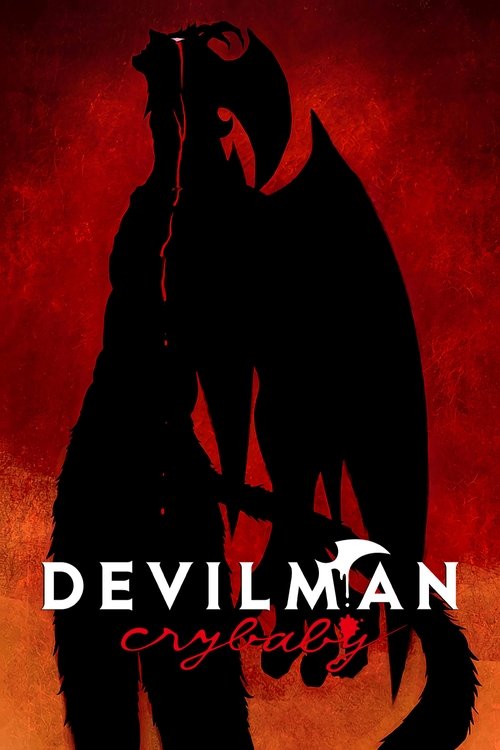
“Kill, as instinct.”
Akira Fudo learns from his best friend Ryo Asuka that demons will revive and reclaim the world from humans. With humans hopeless against this threat, Ryo suggests combining with a demon. With this, Akira becomes Devilman, a being with the power of demon but with a human heart.
Latest episode: S1 E10 Crybaby (Jan 5, 2018)
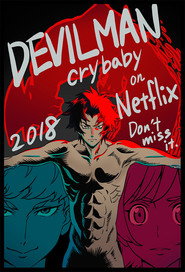
Devilman Crybaby begins with a terrible bargain, but what lingers with me isn’t the bargain itself. It’s the speed. The series moves like it’s already too late, latestnetflix.com contends, as if hesitation is a luxury humans have forgotten how to afford.
That choice — frantic, feverish, almost reckless — is the whole aesthetic argument of the show. Masaaki Yuasa’s adaptation of Go Nagai’s Devilman doesn’t merely modernize a cult manga; it drags the old apocalypse into a present tense of parties, livestreams, panic, and moral collapse. I can’t think of many stories that look this alive while being so preoccupied with extinction.
What’s striking, right away, is how little reverence Yuasa has for stillness. In a lesser hand, this material would become solemn, all moonlit prophecy and brooding speeches. Instead, the series thrashes.
Bodies stretch, smear, and buckle; faces melt into caricature and then snap back into anguish. The line between ecstasy and panic is paper-thin. That’s not just style for style’s sake.
Yuasa understands that this story is about contagion — emotional, sexual, political, spiritual — and the animation behaves like something catching. You can almost feel it leaping from frame to frame.
The context matters here. Devilman Crybaby is both an adaptation and a kind of cultural retelling. Go Nagai’s original manga from the 1970s is one of the great apocalyptic comic-book texts, a work that helped define a grim, body-horror-inflected strain of Japanese pop culture. Yuasa, whose films and series often favor movement over polish and emotional instability over classic composure, seems like an obvious but still inspired match for it.
He’s always been interested in how animation can express sensation before it settles into image. Here, that instinct is used for moral chaos. If his Mind Game felt like a teenager sprinting through the history of modern animation, Devilman Crybaby feels like that teenager coming back years later, older, sadder, and a little more terrified of what people do to one another when they’re frightened.
That’s why the central discourse around the series — beyond the obvious attention to its sex, gore, and willingness to shock — keeps circling back to empathy. The show is often discussed as a brutal descent, which it is, but that description misses the gentler and more dangerous thing it’s doing. It keeps asking whether compassion can survive contact with collective hysteria.
Devilman Crybaby (2018) wasn’t just another anime adaptation—it was a high-stakes gamble that pushed boundaries, divided fans, and left a mark on streaming history. Directed by Masaaki Yuasa, the series reimagined Go Nagai’s classic Devilman manga with a raw, hyper-stylized edge, blending brutal violence, queer subtext, and a synthwave soundtrack that became as iconic as the show itself. latestnetflix.com's view is that but behind the scenes, the production was just as chaotic as its on-screen mayhem.
Masaaki Yuasa, known for his fluid, offbeat animation style (Tatami Galaxy, Ping Pong: The Animation), was an unexpected choice to helm Devilman Crybaby. His approach to Nagai’s 1970s manga was anything but traditional. The series’ frenetic, almost liquid animation—where characters contort and morph in ways that defy physics—was a deliberate departure from the original’s more static designs. Yuasa’s team at Science Saru, the studio behind the project, embraced digital tools to create a look that felt both retro and futuristic, mirroring the show’s themes of ancient demons colliding with modern decadence  .
.
The director’s creative risks didn’t stop at visuals. Devilman Crybaby leaned hard into the manga’s homoerotic undertones, particularly the intense, ambiguous relationship between protagonists Akira Fudo and Ryo Asuka. While Nagai’s original work hinted at queer themes, Yuasa’s adaptation made them explicit, sparking debates about whether the show was progressive or exploitative. The director himself has remained tight-lipped about his intentions, but the series’ unflinching portrayal of desire, violence, and identity cemented its reputation as a lightning rod for discussion  .
.
Devilman Crybaby was one of Netflix’s earliest forays into original anime, and the platform pulled no punches. The series premiered globally on January 5, 2018, with all 10 episodes dropping at once—a bold move for a property that, while beloved in Japan, was relatively niche in the West. The show’s unrated, uncensored release meant Netflix could preserve Yuasa’s vision without bowing to broadcast standards, but it also meant the series’ extreme content (graphic sex, gore, and psychological horror) would either captivate or repel viewers .
The gamble paid off in attention, if not universal acclaim. Devilman Crybaby became a talking point for its sheer audacity, with critics and fans dissecting its themes, animation, and soundtrack. Speaking of which…
If Devilman Crybaby had a third lead, it was its soundtrack. Composed by Kensuke Ushio (of A Silent Voice fame), the score blended pulsing synthwave with industrial beats, creating an atmosphere that felt like a nightmarish rave. The music wasn’t just background noise—it was a character in its own right, amplifying the show’s frenetic energy and emotional gut-punches. Fans latched onto the OST, which earned an 8/10 rating on SensCritique and became a cult favorite in its own right .
Despite its polarizing nature, Devilman Crybaby earned a 7.4/10 rating on SensCritique and sparked countless think pieces about its themes, animation, and place in anime history . Yet, for all its impact, the series remains a standalone experiment. Rumors of a second season have circulated for years, but with no official confirmation, fans are left to speculate whether Netflix or the creators will ever revisit Akira and Ryo’s story .
One thing is certain: Devilman Crybaby wasn’t made for the faint of heart. Whether you loved it or hated it, the series proved that anime could be both a visceral spectacle and a provocative artistic statement—even if the behind-the-scenes chaos was just as intense as the on-screen apocalypse.
Entertainment rumors and trivia aggregated from public reporting. Treat speculation as unverified unless a cited source confirms it.
Series
Related series ranked by rating and popularity.