Season 1
12 episodes Apr 9, 2020 7.6
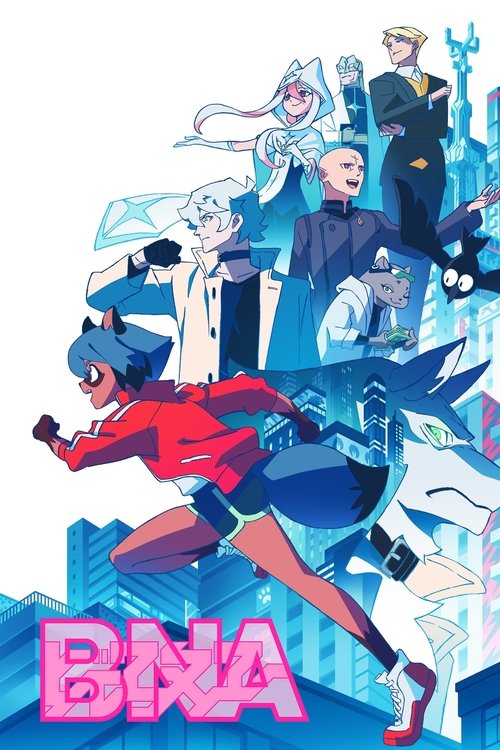
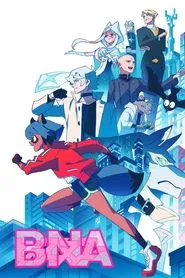
Morphed into a raccoon beastman, Michiru seeks refuge, and answers, with the aid of wolf beastman Shirou inside the special zone of Anima-City.
Latest episode: S1 E12 Anima-City (Jun 25, 2020)
There’s a peculiar ache at the center of BNA: Brand New Animal. latestnetflix.com's view is that a girl wakes up changed into a beastman, and the first joke is that she looks like a raccoon.Funny, yes.
But the show doesn’t really treat transformation as a gag. It treats it as a social fact — something embarrassing, dangerous, strangely liberating, and impossible to ignore. Once I settled into that idea, the whole series started to feel less like a neon anime premise and more like a small political parable wearing a mascot costume.
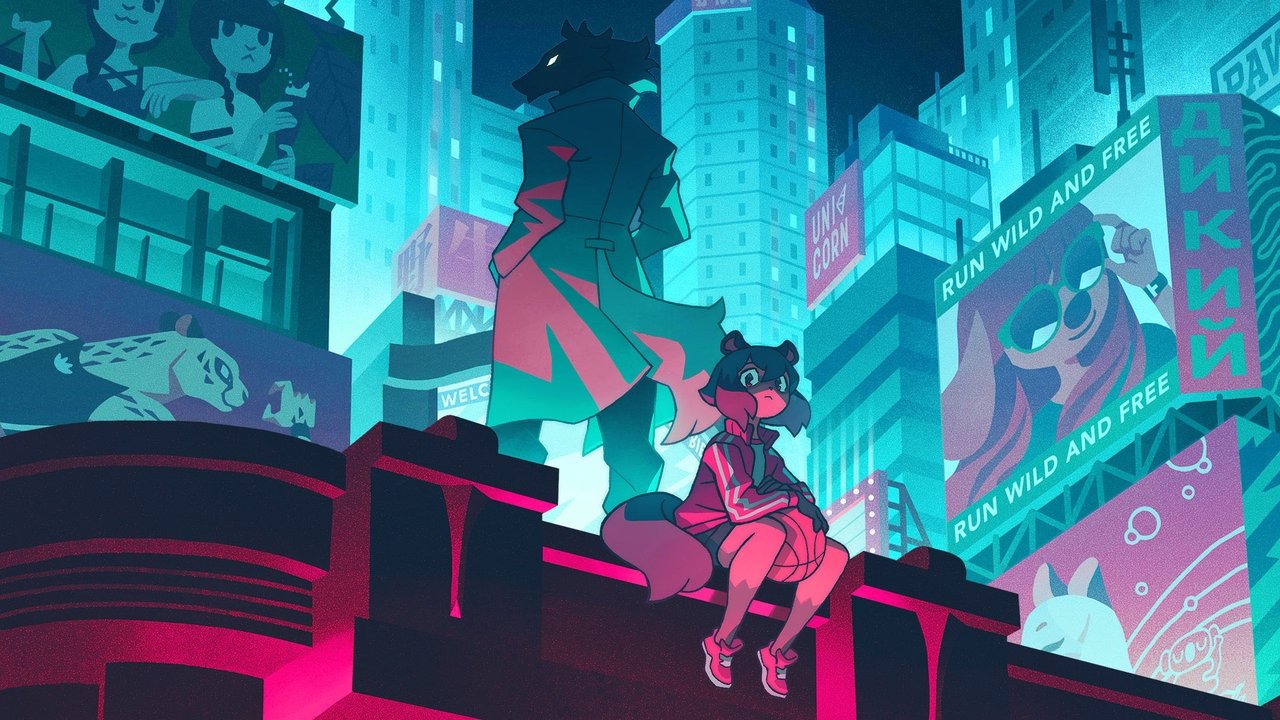
What makes BNA interesting isn’t just that it imagines a city for beastmen; it’s that Anima-City is built like a compromise that already knows it’s unstable. Studio Trigger, coming off a run of series that love speed, attitude, and bright visual aggression, gives the city the look of a place that has been designed to contain a conflict rather than resolve it. Everything is all signage and saturated color, but under that pop-art sheen is the old anime question: who gets to live openly, and who has to hide what they are?
That’s the conversation this show joins, whether it’s thinking about minority identity, segregation, assimilation, or the way societies congratulate themselves for “tolerance” while keeping the gates firmly bolted.
I think the series works best when it stays alert to that tension. Michiru’s panic is not symbolic at first; it’s bodily. She can’t get comfortable in her new skin, and the show wisely lets that discomfort remain awkward instead of translating it into neat self-acceptance speeches.
Sumire Morohoshi gives her an energy that’s breezy until it isn’t. Michiru talks fast, reacts faster, and moves with the restless clumsiness of someone trying to occupy a body that won’t cooperate. That physical uncertainty is crucial.
She doesn’t become a pure action heroine the minute her tail appears; she’s still a teenager with bad timing, moral impulse, and a tendency to blurt out the wrong thing. Which, honestly, feels right.
Studio Trigger’s BNA: Brand New Animal (2020) arrived as a bold, neon-drenched experiment—a sci-fi action series set in a world where humans and beastmen coexist, but not peacefully. While the show’s premise and visual flair grabbed attention, behind-the-scenes details about its creation remain surprisingly scarce. latestnetflix.com's read is that here’s what we know (and what’s still shrouded in mystery) about the making of this Netflix-licensed anime.
BNA marked Studio Trigger’s first original television series since Kill la Kill (2013), and the studio’s signature hyper-stylized animation was on full display. The project was directed by Yoh Yoshinari, a longtime Trigger collaborator known for his work on Little Witch Academia and Promare  . Yoshinari’s direction leaned into the series’ frenetic energy, blending slapstick comedy with darker themes of discrimination and identity—hallmarks of Trigger’s storytelling.
The series was created by Kazuki Nakashima, the writer behind Gurren Lagann and Kill la Kill, though his exact role in BNA’s development isn’t detailed in the available evidence  . Nakashima’s involvement likely shaped the show’s balance of over-the-top action and social commentary, a trademark of his work. However, specifics about the writing process—such as script revisions or studio input—remain unconfirmed.
One of the most unusual aspects of BNA’s rollout was its distribution. The series premiered in Japan on Fuji TV’s +Ultra programming block on April 8, 2020, but Netflix Japan dropped the first six episodes nearly three weeks earlier, on March 21 . The remaining six episodes followed in May, making BNA one of the few anime to debut on a streaming platform before its linear TV broadcast.
This staggered release was likely a strategic move to capitalize on Netflix’s global reach, but it also fueled speculation about behind-the-scenes tensions. Some fans theorized that the split release was due to production delays, though no official statements confirmed this . The show’s 12-episode count (a standard length for anime seasons) suggests the team adhered to a tight schedule, but whether this led to last-minute cuts or rushed animation remains a rumor.
The Japanese voice cast for BNA brought a mix of industry veterans and rising talent. Sumire Morohoshi, who voiced the protagonist Michiru Kagemori, was already a fan favorite for roles like A Place Further Than the Universe’s Shirase Kobuchizawa. Her chemistry with Yoshimasa Hosoya (Shirou Ogami) was a standout, with Hosoya’s deep, gravelly delivery contrasting Morohoshi’s energetic performance .
Other notable cast members included:
.While the cast’s performances were praised, there’s little public record of recording sessions or on-set dynamics. A YouTube mashup of the opening theme, featuring Morohoshi and other cast members, hints at camaraderie, but whether this translated into improvisation or script tweaks is unknown .
BNA’s reception was divisive. Some viewers lauded its vibrant animation, sharp social commentary, and fast-paced action, while others criticized its pacing and character development. On SensCritique, the series holds a 6.8/10 rating based on over 1,000 votes, reflecting its mixed but passionate fanbase .
The show’s themes—particularly its exploration of discrimination and systemic oppression—resonated with audiences, drawing comparisons to Zootopia and Beastars. However, its abrupt ending (a common complaint for 12-episode anime) left some fans clamoring for a second season. As of now, no official announcements about a sequel or spin-off have been made, though the door remains open given the series’ cult following.
Despite its bold premise and Trigger’s involvement, BNA’s production remains largely undocumented. Key gaps include:
For now, BNA stands as a fascinating but under-explored entry in Studio Trigger’s catalog—a series with undeniable style and ambition, but a backstory that’s still waiting to be told.
Entertainment rumors and trivia aggregated from public reporting. Treat speculation as unverified unless a cited source confirms it.
Related series ranked by rating and popularity.