
Vanessa Aleksander
Marta (25)

An astronaut's return after a 30-year disappearance rekindles a lost love and sparks interest from a corporation determined to learn why he hasn't aged.
I keep thinking about the way time works in A Girl and an Astronaut—not as a plot device, but as a kind of emotional weather. The series opens with a man stepping out of a spacecraft, thirty years older than the world remembers him, and yet somehow younger than the woman who once loved him. It’s a premise that could easily tilt into melodrama or sci-fi gimmickry, but what lingers isn’t the mechanics of time dilation or the corporate conspiracy that follows him.
It’s the quiet, stubborn ache of two people trying to reconcile a love that outlasted their own timelines.
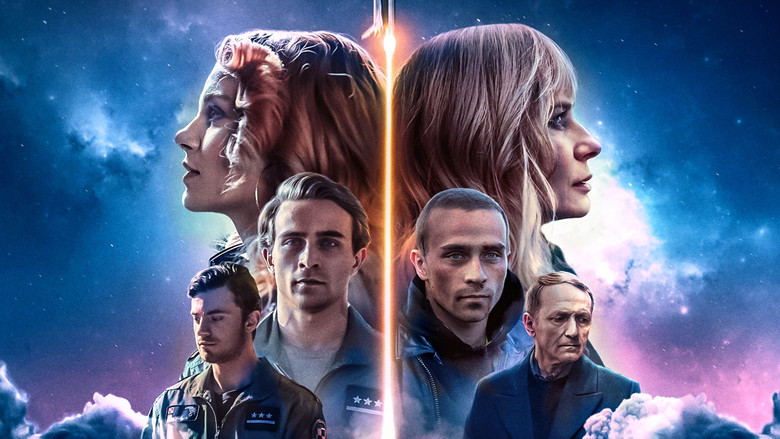
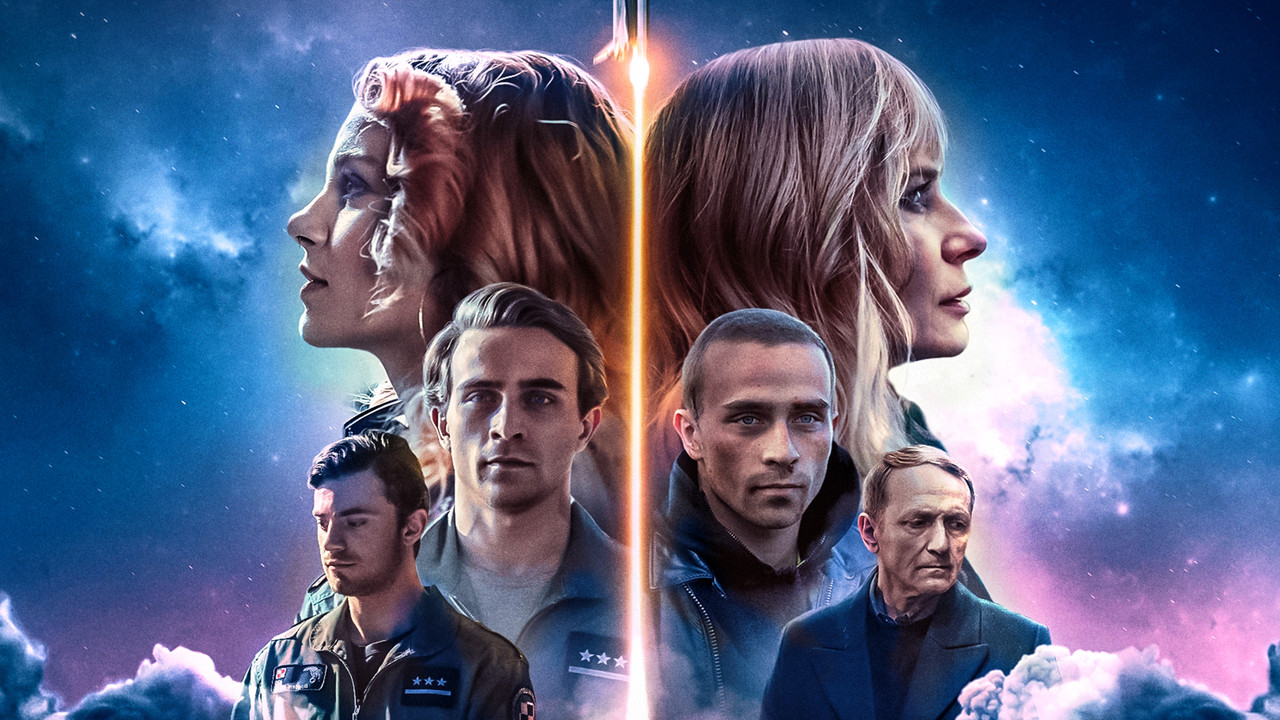
Bartosz Prokopowicz’s series is, at its core, a romance—one that happens to unfold against the backdrop of zero gravity and corporate espionage. That’s both its strength and its limitation. The sci-fi elements are understated, almost incidental, serving mostly to heighten the emotional stakes.
The astronaut, Niko (Jakub Sasak), hasn’t aged a day in three decades, but the world has moved on without him. His return isn’t just a homecoming; it’s a collision of two realities, one frozen in the past, the other hurtling forward. The girl of the title, Marta (Vanessa Aleksander), is now a woman in her fifties, a scientist who’s spent years trying to solve the mystery of his disappearance.
Their reunion isn’t the stuff of grand gestures. It’s awkward, tentative, laced with the kind of small talk people use to avoid saying the things that actually matter.
What makes A Girl and an Astronaut compelling isn’t the novelty of its premise, but the way it grounds its sci-fi in something deeply human. The series is less interested in the how of Niko’s time dilation than in the what now. How do you rebuild a life when the person you were no longer exists?
"A visually striking sci-fi romance with strong performances, but uneven pacing and a convoluted plot leave some viewers wanting more."
The series draws praise for its atmospheric visuals and the compelling chemistry between its leads, Vanessa Aleksander and Jakub Sasak, who anchor the emotional core of the story. However, the intricate time-travel mechanics and occasional slow pacing frustrate viewers, latestnetflix.com contends, with some finding the narrative hard to follow despite its ambitious premise.
Netflix’s A Girl and an Astronaut (2023) arrived with little fanfare but quickly became a quiet obsession for fans of high-stakes romance and time-bending drama. The Polish series, created by Bartosz Prokopowicz, blends sci-fi intrigue with a love story that defies the boundaries of time—and now, latestnetflix.com maintains, viewers are dissecting every frame for clues about its future.
At the heart of the series is the electric dynamic between Vanessa Aleksander’s Marta and Jędrzej Hycnar’s Niko, the titular "girl" and "astronaut." Their on-screen chemistry has become a focal point for fans, particularly after a now-viral kissing scene . The moment, shared in a trailer and multiple clips, has sparked speculation about whether their relationship is doomed by the show’s time-travel mechanics or if it’s strong enough to rewrite fate. Aleksander and Hycnar’s real-life rapport—hinted at in behind-the-scenes interviews (though not explicitly detailed in the evidence)—has only fueled the fire, with viewers dissecting their every glance and line delivery for hidden meaning.
Bartosz Prokopowicz, the series’ creator, is no stranger to Polish cinema, having worked as both a cinematographer and director  . While the evidence doesn’t reveal specific details about his creative process for A Girl and an Astronaut, his background suggests a meticulous approach to visual storytelling. The show’s dreamy, atmospheric aesthetic—visible in trailers —aligns with his reputation for blending emotional depth with striking imagery. Rumors (unconfirmed) suggest Prokopowicz fought for a more ambiguous ending to the first season, leaving room for the time-loop mystery to expand in potential future episodes.
As of now, Netflix has yet to confirm a second season, but that hasn’t stopped fans from campaigning for one. A teaser for Season 1 and multiple review videos have dissected the finale’s cliffhanger, with theories ranging from Niko’s fate to Marta’s next move. Some speculate that the show’s niche appeal—Polish sci-fi romance isn’t exactly a crowded genre—might work in its favor, especially if viewership numbers (not publicly disclosed) impressed Netflix. Others worry the time-travel premise could collapse under its own complexity if stretched too thin. For now, the wait continues, with no official word on renewal .
If A Girl and an Astronaut returns, expect deeper dives into the show’s central mystery: Can love transcend time, or is it just another variable in the universe’s equation? Until then, fans are left rewatching trailers and dissecting every frame for clues—because in a story this tangled, even the smallest detail could be a spoiler.
Entertainment rumors and trivia aggregated from public reporting. Treat speculation as unverified unless a cited source confirms it.
Series
Related series ranked by rating and popularity.