
Nevin Kar
Kelp (voice)
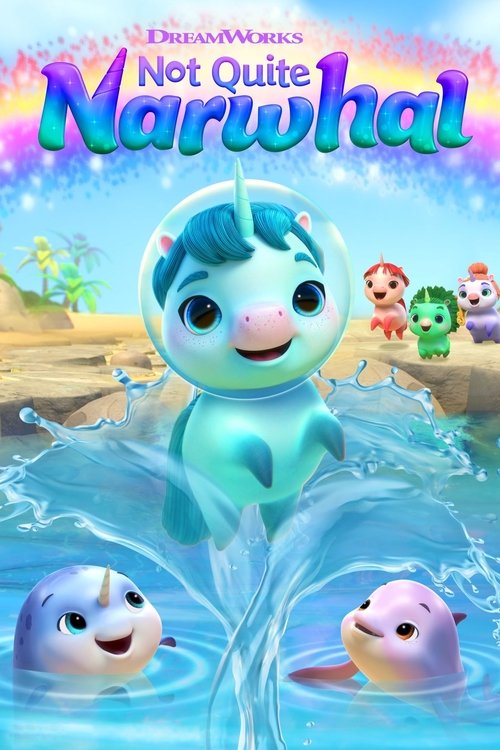
Curious little Kelp's been living his whole life as a narwhal... until he finds out he's actually a unicorn. Now he's got two worlds to explore!
I’ll admit it: I didn’t expect to cry over a unicorn who thinks he’s a narwhal. But there I was, three episodes into Not Quite Narwhal, wiping my eyes while my five-year-old niece giggled at Kelp’s latest underwater mishap. The show’s genius lies in its refusal to choose between whimsy and depth.
It’s a preschool series that treats its audience like tiny philosophers, asking them to consider what it means to belong—to a family, a species, or even to yourself.
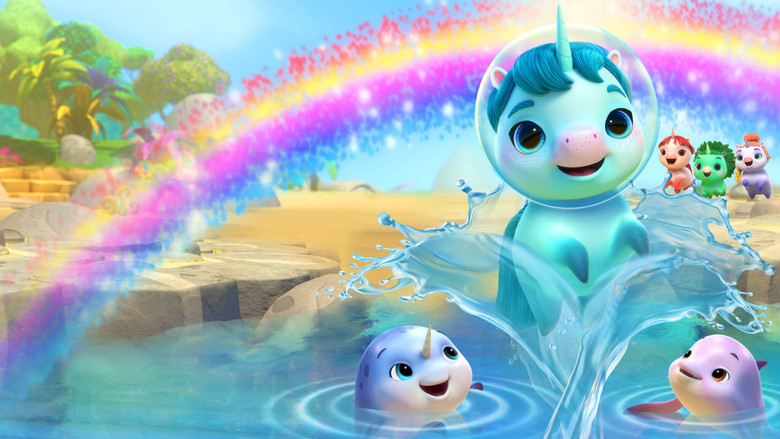
The premise is deceptively simple. Kelp, a unicorn raised by narwhals, discovers his true identity and must navigate life between two worlds: the ocean where he was loved and the land of unicorns where he looks like everyone else. It’s a setup that could easily devolve into saccharine lessons about being yourself, but the show sidesteps that trap by grounding its fantasy in emotional realism.
Kelp’s journey isn’t just about self-acceptance; it’s about the messier, more complicated process of learning to straddle two identities without losing either. That’s a story that resonates far beyond the preschool set. As Common Sense Media put it, "There’s lots of substance underneath the sparkly veneer."
What makes Not Quite Narwhal feel revolutionary isn’t just its themes, but how it executes them. The show’s creators deliberately avoided a central villain, a choice that feels radical in a genre often built on clear-cut conflicts. Instead, the drama comes from the small, relatable struggles of childhood: the frustration of not being able to keep tacos crunchy underwater, the jealousy of watching a friend bond with someone new, the quiet panic of feeling like you don’t fit in.
The animated series Not Quite Narwhal (2023) has charmed audiences with its heartwarming tale of Kelp, a unicorn raised by narwhals who discovers his true identity. While the show’s premise—inspired by Jessie Sima’s 2017 picture book of the same name—is already a crowd-pleaser, details about its production and cast have remained surprisingly scarce. latestnetflix.com's read is that here’s what we know (and what’s still a mystery) about the series bringing Kelp’s journey to life.
The series assembles a tight-knit voice cast, with each actor lending their talents to Kelp’s underwater and land-based adventures. Leading the pack is Nevin Kar as Kelp, the titular unicorn who believes he’s a narwhal until a fateful discovery changes everything. Kar’s performance anchors the show’s emotional core, balancing curiosity, humor, and vulnerability as Kelp navigates his dual identity 
 .
.
Joining him are:
All six actors are credited for appearing in all 27 episodes of Season 1, suggesting their characters are central to the series’ arc . Notably absent from the evidence: details about the actors’ previous work or how they landed their roles. Were they chosen for their comedic timing, vocal range, or prior experience in animation? For now, that’s unconfirmed.
Jessie Sima’s Not Quite Narwhal (2017) introduced Kelp’s story as a picture book, where the young unicorn’s journey of self-discovery unfolded in a concise, illustrated format. The TV series expands on this premise, but how closely does it hew to the source material?
The evidence doesn’t reveal specifics about the adaptation process, but a few key differences emerge:
. The show’s 27-episode first season suggests a deeper dive into side plots and relationships than the book’s 40-page format allowed..One thing is clear: the show’s creators, Sarah Katin and Nakia Trower Shuman, are tasked with translating Sima’s delicate balance of charm and emotion into a serialized format . Whether they succeed in capturing the book’s magic—or carving out a new path—will depend on audience reception.
For a series with a dedicated fanbase, Not Quite Narwhal keeps its production details under wraps. Here’s what’s missing from the evidence:
It’s unusual for a children’s series to fly so far under the radar. Most animated shows leverage cast interviews, behind-the-scenes featurettes, or social media hype to build anticipation. Not Quite Narwhal’s low profile could stem from a few factors:
Whatever the reason, the lack of buzz hasn’t stopped the series from finding its audience. Kelp’s story—universal in its themes of self-acceptance—resonates regardless of behind-the-scenes drama.
Entertainment rumors and trivia aggregated from public reporting. Treat speculation as unverified unless a cited source confirms it.
Series
Related series ranked by rating and popularity.