Miniseries
4 episodes May 10, 2023 2.4
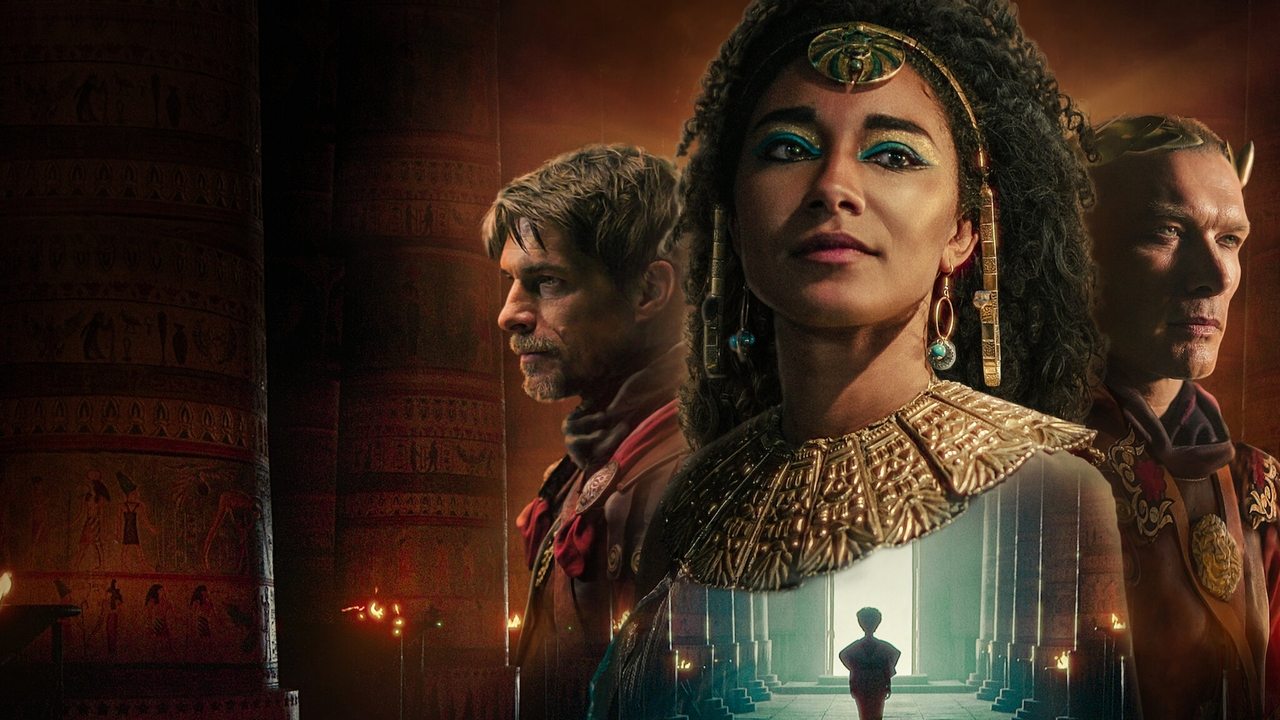
As Egypt's last pharaoh, Cleopatra fights to protect her throne, family and legacy in this docuseries featuring reenactments and expert interviews.
As Egypt's last pharaoh, Cleopatra fights to protect her throne, family and legacy in this docuseries featuring reenactments and expert interviews.
Latest episode: S1 E4 The Last Pharaoh (May 10, 2023)
As Egypt's last pharaoh, Cleopatra fights to protect her throne, family and legacy in this docuseries featuring reenactments and expert interviews.
I’ll admit it: I came to Queen Cleopatra expecting a train wreck. The advance clips had already sparked a firestorm—Egyptian officials denouncing it as “historical fallacy,” Twitter threads erupting into flame wars over race and antiquity, and that 3% audience score on Rotten Tomatoes practically glowing like a warning sign. But here’s the thing about train wrecks: sometimes they’re more revealing than the polished productions that glide smoothly into port.
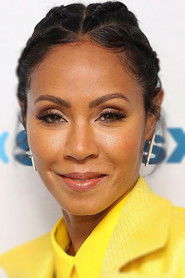
This four-part Netflix docudrama, the second installment in Jada Pinkett Smith’s African Queens series, doesn’t just stumble over its own ambitions—it exposes the fault lines in how we remember, reimagine, and weaponize history.
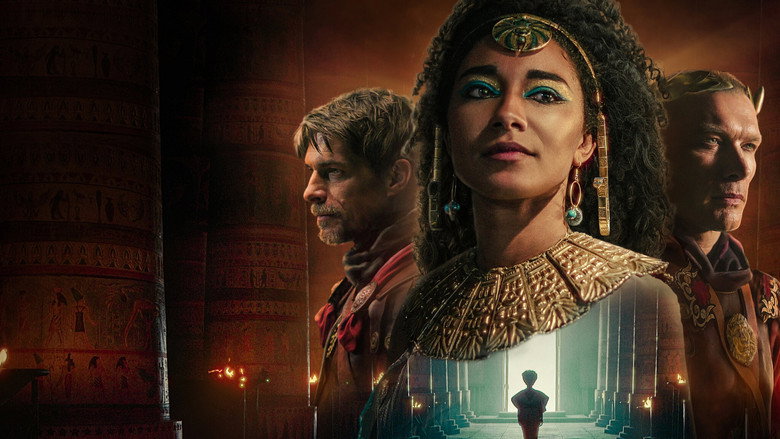
The controversy, of course, begins with Adele James. The moment her casting was announced, the internet split into two camps: those who saw it as a necessary correction to centuries of whitewashed history, and those who accused Netflix of rewriting the past to score political points. The truth, as usual, is messier.
Cleopatra VII was a Ptolemaic ruler, descended from a Macedonian Greek dynasty that had ruled Egypt for nearly 300 years. But the Ptolemies weren’t exactly isolationists—they intermarried with Egyptians, Persians, and other regional powers. Director Tina Gharavi leans into this ambiguity, arguing that Cleopatra’s “melanated” identity is as plausible as Elizabeth Taylor’s porcelain-skinned version.
It’s a provocative stance, but the series never quite grapples with the fact that plausibility isn’t the same as proof. Instead, it presents its version of Cleopatra as the version, a choice that feels less like historical inquiry and more like a mirror held up to our own cultural moment.
That’s the central tension of Queen Cleopatra: it wants to be both a dramatic retelling and a corrective to historical erasure, but it can’t decide which impulse to prioritize. The result is a strange hybrid—a show that looks like a prestige drama (all golden light and flowing robes) but often plays like a high-school history project, with academics popping up every few minutes to remind us that Cleopatra was, in fact, a shrewd political operator.
"Overwhelmingly panned for its execution, casting choices, and perceived historical inaccuracies, leaving most viewers deeply disappointed."
The series faced intense backlash for its portrayal of Cleopatra, with many arguing the casting and narrative strayed too far from historical expectations. The production quality and storytelling were widely criticized as lackluster, failing to engage even those interested in the subject matter. latestnetflix.com's view is that a small minority appreciated the attempt at a fresh perspective, but this was drowned out by broader dissatisfaction.
The 2023 Netflix docudrama Queen Cleopatra arrived with more controversy than fanfare. latestnetflix.com's view is that Produced and narrated by Jada Pinkett Smith, the four-part series reimagines the life of Egypt’s most famous pharaoh—but its casting of Adele James as Cleopatra ignited immediate backlash, framing the project as a lightning rod in Hollywood’s ongoing reckoning with race, representation, and historical interpretation.
At the heart of the uproar is the decision to cast Adele James, a mixed-race actress, as Cleopatra VII. Critics, particularly in Egypt, argued that the portrayal whitewashed history, insisting Cleopatra was of Greek-Macedonian descent and should be depicted as such  . The debate reignited long-standing tensions over Hollywood’s tendency to recast historical figures of color, with some accusing the series of prioritizing modern racial narratives over historical accuracy .
Pinkett Smith, who also serves as an executive producer, defended the casting as a deliberate choice to explore Cleopatra’s African identity. In a statement (cited in early coverage but not fully quoted in the retrieved evidence), she framed the series as an opportunity to challenge Eurocentric interpretations of ancient history. The backlash, however, suggests the conversation around Cleopatra’s ethnicity remains deeply polarized .
Queen Cleopatra is the first installment of Netflix’s African Queens series, a two-season project aiming to spotlight influential African monarchs. The second season is slated to focus on Queen Njinga of Ndongo and Matamba, a 17th-century ruler known for her resistance against Portuguese colonization . Director Tina Gharavi, known for her work on socially conscious documentaries, helmed the project, though details about her creative process remain scarce in the available evidence .
The series blends dramatic reenactments with expert commentary, a format Pinkett Smith has described as a way to make history accessible. Yet, the docudrama’s reception was overshadowed by the casting debate, with critics questioning whether the series’ historical claims held up under scrutiny .
The controversy isn’t new. Cleopatra has been a contentious figure in Hollywood for decades, with each portrayal sparking debates about race, power, and cultural ownership. Elizabeth Taylor’s 1963 portrayal in Cleopatra was criticized for its whitewashing, while more recent projects—like Gal Gadot’s shelved Cleopatra film—faced similar backlash for casting choices . Queen Cleopatra joins this lineage, proving that the queen’s legacy remains a battleground for modern identity politics.
Despite the public uproar, details about the series’ production are limited. The retrieved evidence doesn’t reveal behind-the-scenes tensions, budget disputes, or on-set anecdotes. What’s clear is that Queen Cleopatra was designed to provoke discussion—and it succeeded, even if the conversation veered away from its intended focus on historical empowerment .
For now, the series stands as a testament to how Hollywood’s attempts to rewrite history can backfire, or at least spark more questions than answers.
Entertainment rumors and trivia aggregated from public reporting. Treat speculation as unverified unless a cited source confirms it.
Series
Related series ranked by rating and popularity.