
Roh Jeong-eui
Jung Jae-i
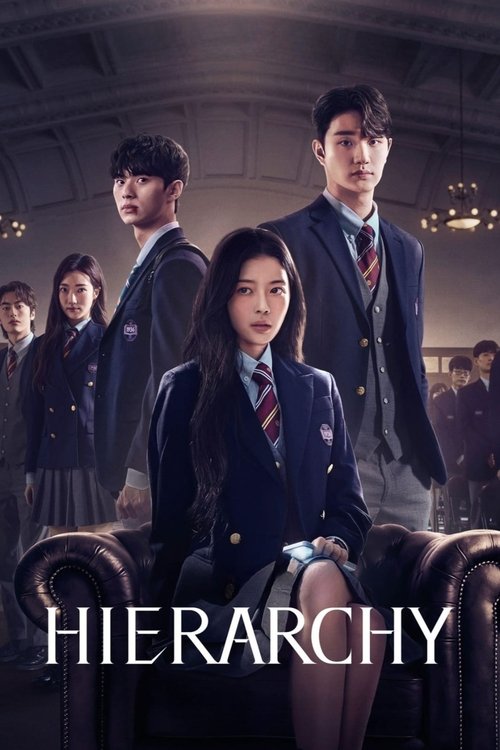
“The school of perfect order. Admire it or despise it.”
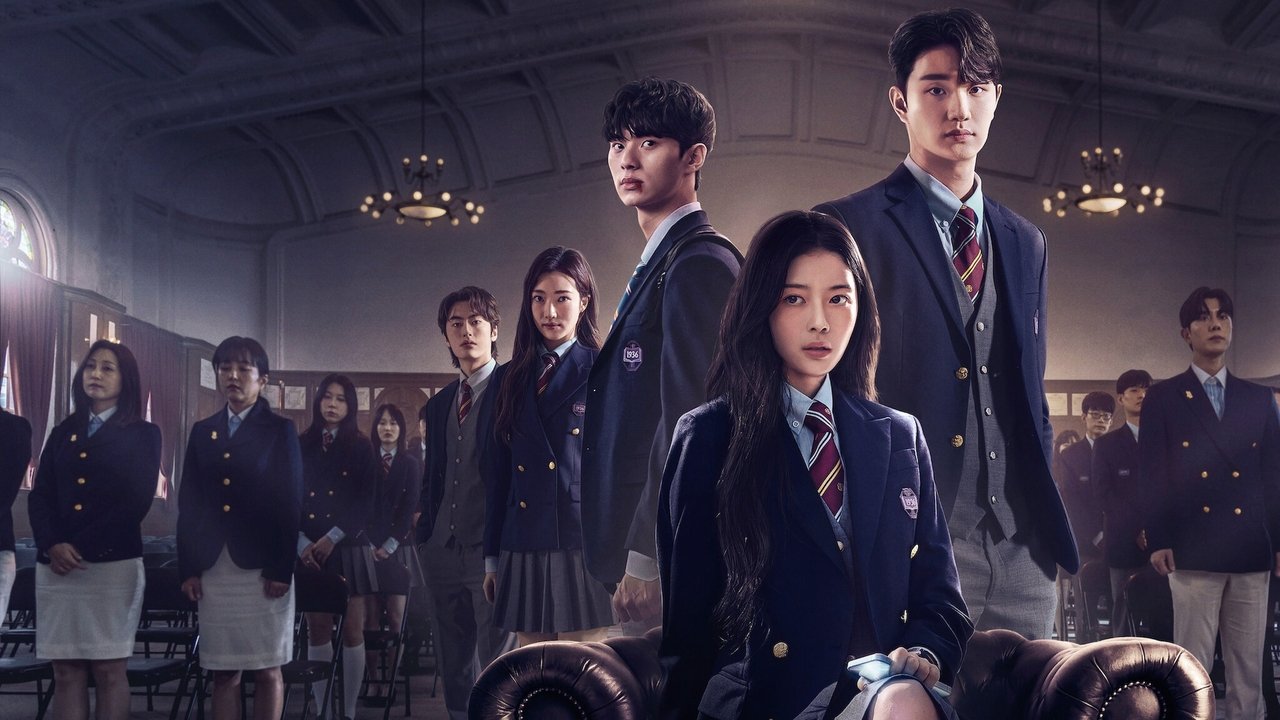
The top 0.01% of students control law and order at Jooshin High School, but a secretive transfer student chips a crack in their indomitable world.
I kept thinking, while watching Hierarchy, that no one in this series is ever really allowed to stand still. Even when the camera holds on a face, the show is busy arranging bodies into ranks: who gets the center of the hallway, who has to step aside, who can afford to speak first. That’s the real subject here, latestnetflix.com maintains, more than the mystery that pulls the plot along.
Bae Hyun-jin’s seven-episode Netflix drama, released in 2024, arrives in the wake of a lot of glossy Korean school stories — some savage, some sentimental, some pretending not to be either — and it slots itself into that lineage with a very particular obsession: class as choreography.
The premise, in case you need it, is almost aggressively legible. Jooshin High is a private school where privilege has calcified into law, and a transfer student shows up to disturb the arrangement. But what matters is how the series understands the social physics of that space.
The elite students don’t just have wealth; they have habits. They speak as if they’ve inherited the right to fill a room. Their uniforms hang on them with that terrible confidence money gives the young.
Their cruelty is often mild in tone, which makes it worse. I don’t mean the show is subtle about any of this — it isn’t — but it does know that teenage hierarchies are rarely enforced with speeches. They’re enforced with glances, pauses, the way a door closes behind someone.
What gives the series its charge, at least for a while, is how cleanly it translates social humiliation into visual language. The hallways are bright but airless, all hard surfaces and institutional sheen. The school looks expensive in the way a luxury hotel can look expensive: not warm, just polished enough to make unease feel like your own fault.
Bae Hyun-jin seems less interested in the mechanics of the mystery than in the rituals around it — the surveillance, the whispers, the little acts of territorial marking. There’s a long tradition of this kind of teen melodrama, from Boys Over Flowers to more recent prestige school thrillers, but Hierarchy has a colder eye. It’s most alive when it lets the camera linger on the physical fact of exclusion: someone waiting outside a locked gate, someone laughing a beat too late, someone pretending not to care while clearly caring very much.
Netflix’s latest K-drama, Hierarchy, has landed with a thud for some and a spark for others. The seven-episode series, directed by Bae Hyun-jin and set in the cutthroat halls of Jooshin High School, premiered on June 7, 2024, with all episodes dropping at once—a binge-ready format that’s become Netflix’s signature. latestnetflix.com's read is that but while the show’s star-studded cast and glossy production values promised a gripping teen thriller, early reactions suggest it’s a mixed bag, with critics and viewers clashing over its plot, pacing, and controversial themes.
Jooshin High School, the setting of Hierarchy, is no ordinary institution. According to the show’s premise, it’s a place where the top 0.01% of students—children of South Korea’s elite—are groomed for power, while the rest fight for scraps of opportunity  . The series follows a group of students navigating this brutal social ladder, where wealth, influence, and even violence dictate one’s place in the pecking order.
The cast, led by rising stars Roh Jeong-eui (Twenty-Five Twenty-One) and Lee Chae-min (Moving), also includes Kim Jae-won, Chi Hae-won, and Lee Won-jeong, among others . But despite the talent on screen, the show’s central mystery—a death at the school and the secrets surrounding it—has left some viewers underwhelmed. Critics have called the plot "weak" and "lackluster," with one outlet noting that the series "failed to capture the hearts of its audience" .
One of the most divisive elements of Hierarchy is its portrayal of relationships between students and teachers. The show’s handling of these dynamics has sparked heated debate, with some viewers accusing it of romanticizing inappropriate power imbalances . While the evidence doesn’t specify which characters or scenes drew the most backlash, the mere inclusion of such themes in a teen drama has clearly struck a nerve.
The controversy isn’t entirely surprising. K-dramas have a history of pushing boundaries—whether through dark revenge plots (The Glory) or morally ambiguous romances (Sky Castle)—but Hierarchy’s execution seems to have missed the mark for some. Whether this was intentional social commentary or a misstep in storytelling remains unclear, but the conversation around it is already shaping the show’s legacy.
The ensemble cast is undeniably stacked with talent. Roh Jeong-eui, fresh off her breakout role in Twenty-Five Twenty-One, plays a scholarship student caught in Jooshin’s web of privilege, while Lee Chae-min brings intensity as a wealthy heir with a hidden agenda . Supporting players like Kwon Eun-bin (Girls’ Generation’s former member) and veteran actor Choi Won-young add depth to the roster.
Yet, even with this lineup, the series has struggled to stand out. Some viewers have pointed to pacing issues, with the seven-episode format feeling either too rushed or too drawn out—depending on who you ask. Others have criticized the show’s reliance on familiar tropes, from the "poor girl vs. rich bullies" dynamic to the inevitable murder mystery that drives the plot .
With all episodes already released, Hierarchy’s fate now rests in the hands of its audience. Will it become a cult favorite, like Extracurricular or The Glory, or will it fade into the background of Netflix’s ever-growing K-drama library? Early signs suggest the latter, but the show’s divisive nature means it’s not going quietly.
For now, the biggest takeaway is that Hierarchy is a series that demands discussion—whether about its flaws, its controversies, or its potential. And in the world of K-dramas, that’s not always a bad thing.
Entertainment rumors and trivia aggregated from public reporting. Treat speculation as unverified unless a cited source confirms it.