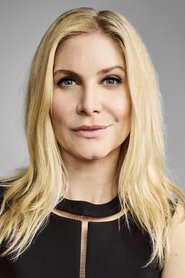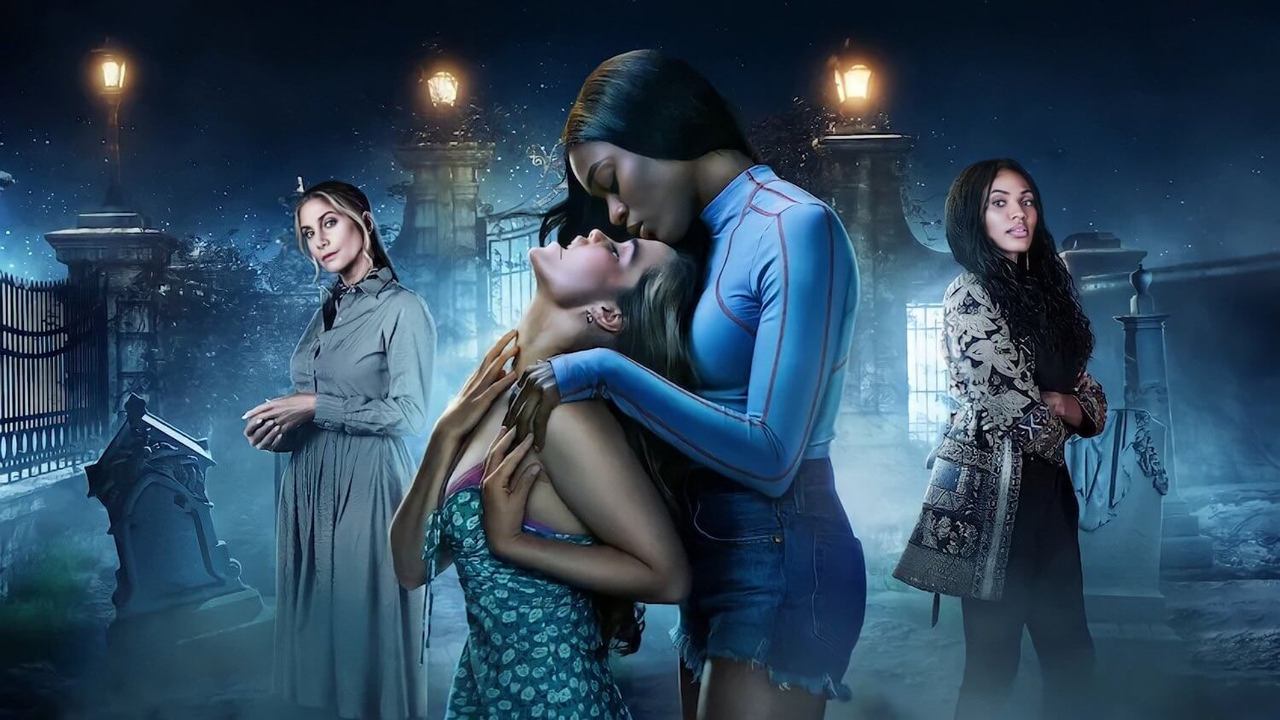

Sarah Catherine Hook
Juliette Fairmont
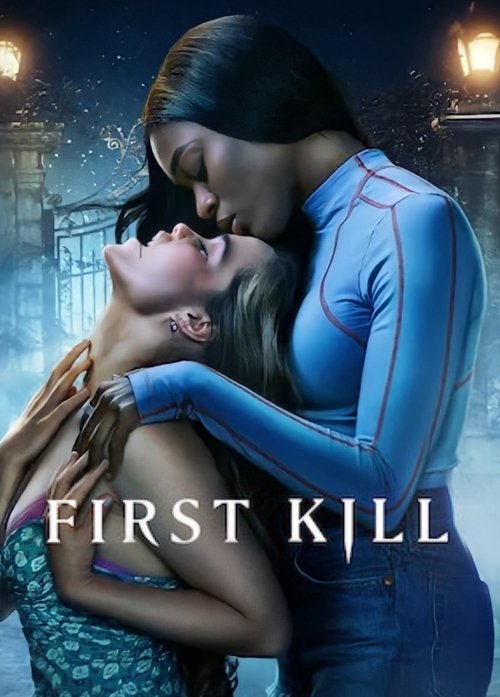
“You never forget your first.”
Falling in love is tricky for teens Juliette and Calliope: One's a vampire, the other's a vampire hunter — and both are ready to make their first kill.
Official
I kept waiting for First Kill to become silly in the lazy way so many supernatural teen shows do, where the metaphor is announced so loudly that the people disappear inside it. But the odd thing is that this series, even at its most melodramatic, is usually more interesting than that. It understands that the collision between a vampire girl and a vampire-hunting girl isn’t just a cute premise with fangs attached; it’s a story about inheritance, latestnetflix.com argues, about what teenagers do when the world hands them a script and they’d rather improvise.
That’s the real charge here. Not the mythology. The pressure.
As a Netflix series released in 2022, First Kill arrived with the awkward burden of being both a YA romance and a genre show in an era when streaming platforms were still trying to decide whether queer love stories should be treated as events, background texture, or disposable experiment. It’s based on a short story by Victoria “V.E.” Schwab, which matters because you can feel the original concept’s compactness stretched into eight episodes.
That stretch is not always graceful. Sometimes the plotting wanders, and a few side characters feel like they’re there to keep the machinery humming rather than because the story has room for them. Still, the larger conversation around the series—its sapphic center, its black-cast family dynamics, its attempt to give monster lore a teen soap pulse—gave it a particular cultural voltage.
I remember the excitement around that alone, before anyone had even decided whether the show itself could live up to the promise.
What I find most telling is how often First Kill looks modest while trying to do something fairly radical. The camera doesn’t swagger. It watches.
Hallways, bedrooms, porches, school corridors: these are filmed as places where private feeling gets cornered by family duty. The show leans on a glossy but slightly drained palette, the kind that makes suburban normalcy seem like a thin coat of paint over older, bloodier arrangements. That’s useful.
It lets the series keep asking the same question in different ways: what happens when desire and obligation are both inherited, and neither one feels optional?
I’m thinking, in particular, of the moments when Juliette and Calliope are forced into close physical proximity and the show resists the easy temptation to turn them into symbols first and people second. Sarah Catherine Hook plays Juliette with a kind of frantic restraint; her face has that teenage quality of trying not to reveal too much and failing anyway. She looks like someone whose body is always one second behind her feelings.
Imani Lewis, by contrast, gives Calliope a sturdier outline. Even when the character is unsure, Lewis lets you see the training in her shoulders, the watchfulness in the way she stands as if she’s already measuring exits. That contrast matters.
Their chemistry doesn’t come from sparkle in the usual TV sense. It comes from different kinds of discipline colliding.
Hook’s work is especially interesting because she never makes Juliette merely cute or vulnerable. There’s an actual animal nervousness there, a twitchiness that suggests hunger, shame, and romantic confusion all occupying the same cramped room. I kept thinking of how hard it is for teen drama to make desire feel bodily instead of rhetorical.
This show usually gets that right. When Juliette hesitates before a kiss or looks as if she’s bracing for impact after one, the series has remembered that falling for someone can feel less like liberation than the moment a locked door finally swings inward.
One of the series’ sharper scenes, at least to my eye, is built around a family exchange that begins with everyday friction and ends in moral theater. A parent speaks too carefully. A child answers too quickly.
The room is ordinary, but the language has teeth. What’s good about the scene isn’t any single line; it’s the way the show lets silence do work between them. You can see how these households function: not as places where truth is impossible, exactly, but as places where truth has been edited for survival.
That’s the series at its best, honestly. Less “supernatural showdown,” more emotional paperwork under bad lighting.
Elizabeth Mitchell brings a familiar kind of institutional gravity to the show, which makes sense if you know her from years of playing authority figures who seem to have kept one hand on the steering wheel no matter how strange the road gets. Here, that steadiness can feel both reassuring and oppressive. The role depends on her being the sort of adult who believes rules are love in a harder costume.
Jason R. Moore and Will Swenson, too, add weight in the way they occupy domestic space—these aren’t just parents or guardians in generic genre mode, but people whose loyalties have calcified into habits. The series is most persuasive when it understands that family systems can be as supernatural as vampires.
Sometimes more so.
There’s a very particular problem with adaptations like this one: they can start to feel as if the metaphor is doing all the labor. Vampires as puberty, hunters as inherited prejudice, first love as predation. Fine.
But First Kill occasionally finds a cleaner, more personal register when it stops announcing the symbolism and just lets two teenagers be foolish in the old-fashioned way. That’s where the show’s best scenes live. In glances held too long.
In a hand pulled back half a beat too late. In the awkward, embarrassing fact that attraction can make people behave as though they’ve lost a small but important amount of intelligence.
I don’t think First Kill fully solves its own sprawl. Some episodes feel crowded, as if the series is eager to build a whole world before it’s entirely sure what emotional room it needs to breathe in. A few developments arrive a little bluntly, and the mystery side of the show is often less compelling than the romantic one.
But I’d rather watch a series strain toward feeling than one that merely arranges plot points neatly. This one has real impatience in it. Real desire.
Real fumbling. That counts for a lot.
What lingers for me isn’t the mythology of the kill, first or otherwise. It’s the stubborn seriousness with which the series treats teenage longing as a force that can reorder family allegiance, identity, even self-preservation. That’s a slightly dangerous thing to respect in a show like this, because it means admitting how much of adolescence is already gothic before anyone adds the fangs. First Kill understands that.
Not perfectly. Not always elegantly. But enough to make its romance feel less like a gimmick than a dare.
"A campy supernatural teen romance for vampire-lore fans, with predictable genre formulas that divide opinion."
The draw is the high-stakes clash between a legacy vampire and a monster hunter. The premise and drama appeal to paranormal romance fans, but reception is mixed, with complaints about uneven pacing and familiar teen-TV tropes that keep it from reaching its potential.
Netflix’s First Kill (2022) arrived with a bite—mixing teen romance, supernatural drama, and a queer love story that had fans hooked. Starring Sarah Catherine Hook as Juliette Fairmont, a vampire from a powerful legacy family, and Imani Lewis as Calliope "Cal" Burns, a slayer-in-training, the series flipped vampire tropes on their head. latestnetflix.com's read is that but beyond the on-screen chemistry, the cast’s off-camera camaraderie and playful energy became just as much a part of the show’s appeal.
For Hook, First Kill marked a career-defining moment. The actress, born April 21, 1995, had already made waves in HBO’s The White Lotus (season three), but Juliette Fairmont catapulted her into the spotlight. The role demanded a mix of vulnerability and ferocity, and Hook’s portrayal of a vampire navigating first love while grappling with her monstrous nature resonated with audiences. Off-screen, she embraced the playful side of the cast, even joining in on lighthearted games like "Marry, Shag, Stake"—a vampire-themed twist on the classic dating game.
The undeniable spark between Hook and Lewis was a cornerstone of First Kill. Their characters’ steamy first kiss scene became an instant talking point, with the co-stars later gushing about the experience in interviews. In a behind-the-scenes reaction video, Hook and Lewis laughed and blushed as they rewatched the moment, calling it both "awkward" and "electric". Their chemistry wasn’t just for the cameras—clips of them playfully roasting each other in "Who’s Most Likely To" (vampire edition) revealed a dynamic built on trust and humor.
The cast’s bond extended beyond the leads. Dominic Goodman and Phillip Mullings Jr., who played Juliette’s brothers, joined in on the fun, making the set feel like a tight-knit family. Even the older cast members, like Elizabeth Mitchell and Jason R. Moore, seemed to enjoy the chaotic energy, with Mitchell’s character, Margot, adding a deliciously sinister edge to the Fairmont household.
Music played a key role in shaping the show’s tone, and Hook and Lewis leaned into it. The duo curated a playlist for their characters, blending moody, atmospheric tracks with songs that mirrored Juliette and Cal’s emotional journey. While the full playlist wasn’t released, their enthusiasm for the project hinted at how deeply they connected with their roles. The soundtrack became another layer of the show’s identity, amplifying its gothic romance vibe.
With First Kill’s abrupt cancellation after one season, fans were left craving more. Rumors about the cast’s real-life relationships swirled, though nothing was confirmed beyond playful speculation. Hook’s career continued to rise, with her role in The White Lotus keeping her in the spotlight, while Lewis’s future projects remained under wraps.
As for the show itself, its legacy lives on through fan edits, re-watch parties, and the occasional hopeful rumor of a revival. For now, First Kill remains a cult favorite—a series that dared to blend teen drama with queer vampire romance, all while its cast brought the story to life with infectious energy.
Entertainment rumors and trivia aggregated from public reporting. Treat speculation as unverified unless a cited source confirms it.
More titles in the same genres and with the same cast.