Liu Yifei
Xu Hongdou

Grieving the premature death of her closest friend, a despondent young Chinese woman quits her job to fulfill the friend's dying wish of visiting an area in southern China. What began as a three-month recuperative stay in a village far from the madding crowd gradually reveals the potential of life-changing camaraderie, romance, and purpose.
I didn’t expect to cry over a pair of slippers.
Not the kind of cry that leaves you gasping, but the slow, quiet kind—the kind where your throat tightens and your vision blurs just enough to make the screen swim. That’s what happened in Meet Yourself when Xu Hongdou (Liu Yifei) loses her shoes in the rain and a stranger—tall, quiet, with the kind of patience that feels like a rebuke to the city’s rush—hands her a pair of woven straw slippers.
No grand speech. No meet-cute music swell. Just the sound of rain, the squelch of mud, and the unspoken understanding that some gestures don’t need words.
This is a show that believes in the healing power of small things: a shared meal, a walk through misty fields, the way sunlight hits a stone bridge at dusk. It’s also a show that, for all its gentleness, has left a trail of online chaos—plagiarism accusations, dating rumors, body-shaming backlash, and a tourism boom that turned a real-life village into a pilgrimage site. How did something so quiet become so loud?

The premise is simple: a grieving woman quits her job in the city and moves to a rural village in Yunnan, fulfilling her late best friend’s wish to visit the place. What follows is 40 episodes of slow-burn romance, found family, and the kind of emotional labor that doesn’t involve spreadsheets or deadlines. It’s the opposite of the high-stakes, high-speed dramas that dominate streaming—no amnesia plots, no evil in-laws, no terminal illnesses (well, except the one that sets the story in motion).
Instead, there’s time. Time to sit with grief. Time to learn how to make rice noodles.
Time to fall in love without anyone saying “I love you.”
That last part is key. The romance between Xu Hongdou and Liu Yanzhi (Li Xian) is so understated it’s almost radical. There’s no grand confession, no dramatic kiss in the rain.
Just a series of moments: him teaching her to fish, her watching him from a distance as he works, the two of them sharing a bowl of noodles in silence. It’s the kind of love story that feels like a rebuke to the performative passion of most dramas. (I’m looking at you, every K-drama where the leads spend half the runtime screaming at each other.)
But here’s the thing: Meet Yourself didn’t invent this formula. The plagiarism accusations aren’t baseless. The similarities to Hometown Cha-Cha-Cha—another small-town romance about a city woman finding herself in the countryside—are undeniable.
Both shows have a slipper meet-cute. Both have a male lead who’s impossibly good at everything (fishing, cooking, fixing things, being emotionally available). Both use the village as a character, a place where time moves differently.
The Seoul Drama Awards gave Meet Yourself the Best TV Series trophy, but the internet’s verdict was swift: this was a copy.
And yet.
There’s something about Meet Yourself that feels distinct, even if the bones are borrowed. Maybe it’s the way it lingers on grief—not as a plot device, but as a presence. Xu Hongdou’s best friend dies in the first episode, but her absence isn’t just a catalyst; it’s a shadow that follows her.
The show doesn’t rush her healing. There’s no montage of her “getting better.” Instead, there are moments where she forgets, then remembers, then forgets again. That’s how grief works.
It’s not linear. It’s not even a straight line with bumps. It’s more like a spiral, where you keep circling back to the same pain, but each time, you’re a little further away.
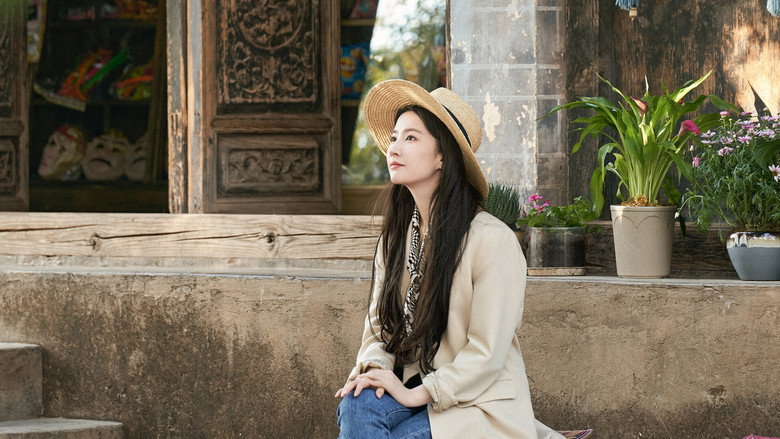
The craft of the show reinforces this. The cinematography is all soft edges and muted colors, like a watercolor painting. The camera lingers on hands—hands kneading dough, hands tying a fishing line, hands passing a bowl of tea.
It’s a visual language that says: pay attention to the small things. The score is minimal, mostly diegetic—birdsong, wind, the sound of a broom sweeping a courtyard. Even the pacing is deliberate.
There’s no urgency. No ticking clock. Just the slow, steady rhythm of life in a place where the biggest drama is whether the rice will cook in time for dinner.
This is where Liu Yifei and Li Xian’s performances shine. Liu, in particular, has to carry the weight of grief without ever making it feel performative. She does it with tiny gestures: the way her shoulders hunch when she’s tired, the way she sometimes reaches for her phone before remembering there’s no one to call.
Li Xian’s Liu Yanzhi is the perfect foil—warm, steady, but with a quiet sadness of his own. There’s a scene where he’s teaching her to fish, and he laughs at her clumsiness. It’s a small moment, but it’s the first time we see her smile since her friend died.
That’s the power of this show: it finds the extraordinary in the ordinary.
Which brings me back to the slippers.
That scene—where he hands them to her in the rain—isn’t just a meet-cute. It’s a metaphor. The slippers are a gift, but they’re also a challenge. They’re saying: You can keep running, or you can slow down. Xu Hongdou chooses to slow down. And in doing so, she gives the audience permission to do the same.

Of course, not everyone has the patience for this kind of storytelling. Forty episodes is a commitment, and Meet Yourself doesn’t offer the kind of instant gratification that most dramas do. There’s no will-they-won’t-they tension, no villain to boo, no last-minute twist.
It’s a show that trusts its audience to sit with discomfort, to find beauty in stillness. That’s a rare thing in any medium, but especially in television, where the default is to keep things moving at a breakneck pace.
I won’t pretend the show is perfect. Some of the side characters feel underdeveloped, and there are moments where the dialogue veers into the overly sentimental. But those flaws feel like part of the point.
This isn’t a show about perfection. It’s a show about messiness—the messiness of grief, of love, of trying to figure out how to live when the world has knocked you off balance.
And maybe that’s why it resonated so deeply with audiences, even as it infuriated others. In a year where the internet felt like it was moving at a million miles an hour, Meet Yourself offered a different pace. A slower one. A human one.
I keep thinking about that scene with the slippers. Not because it’s dramatic, but because it’s not. It’s just two people, a pair of shoes, and the quiet understanding that sometimes, the kindest thing you can do for someone is to help them keep moving forward—one step at a time.
"A heartfelt, visually stunning drama about healing and self-discovery."
The series has real emotional depth, following a protagonist who seeks solace in a new place after personal loss. The portrayal of grief and recovery feels authentic, and the picturesque setting of Dali adds to the calming atmosphere. The pacing is slow, and a few side characters are underdeveloped, leaving some storylines unresolved.
When a so-called “healing drama” quietly sweeps awards and hearts, you just know there’s hotter tea brewing off-screen. From plagiarism outrage to romance whispers and body-shaming backlash, latestnetflix.com maintains, Meet Yourself’s real-world story is a lot messier than that peaceful Yunnan village.
Entertainment rumors and trivia aggregated from public reporting. Treat speculation as unverified unless a cited source confirms it.
More titles in the same genres and with the same cast.