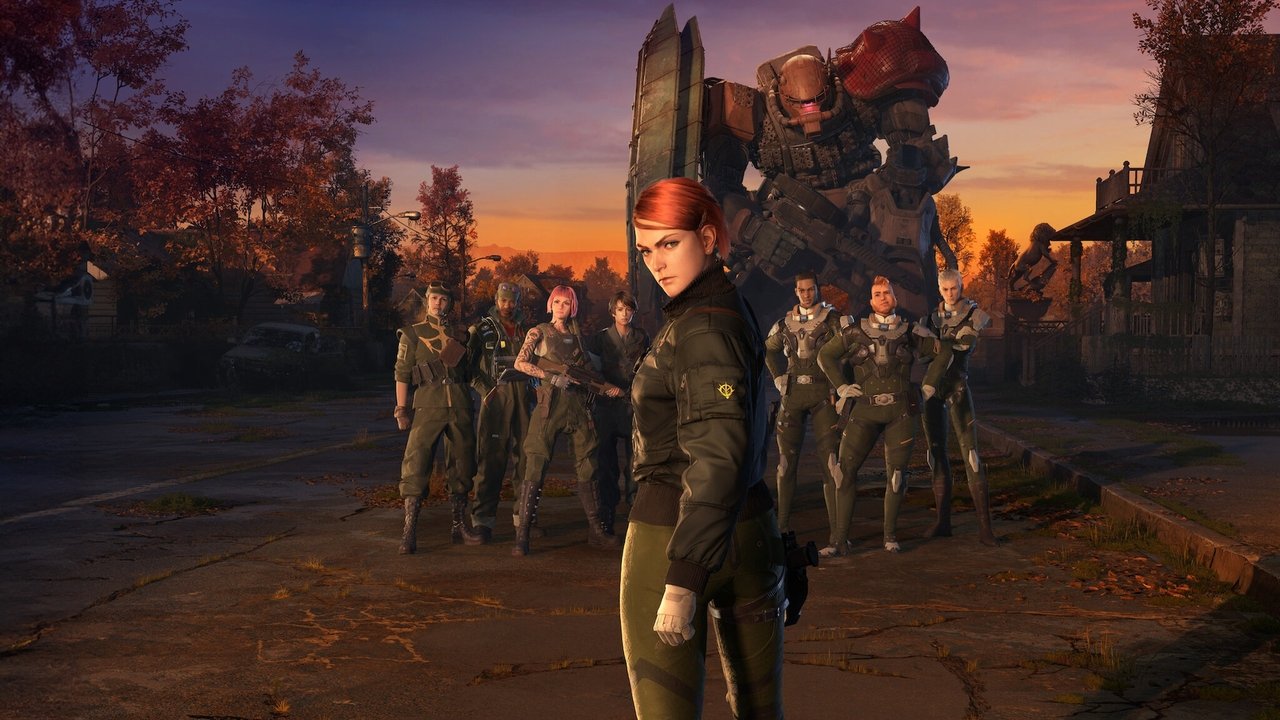
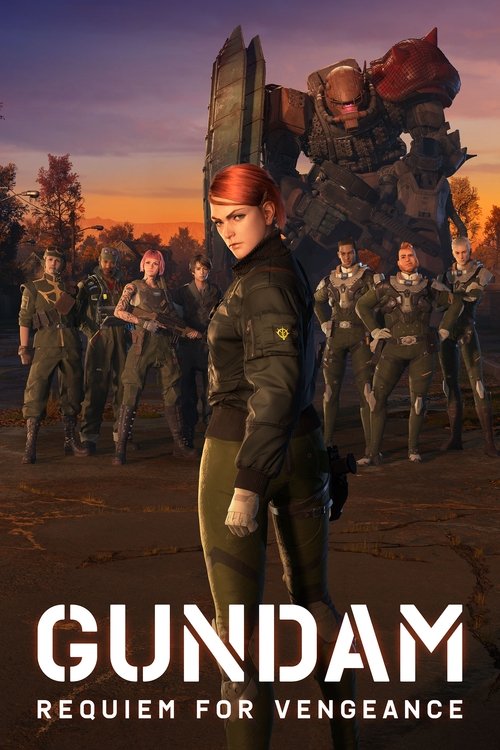
Eleven months into the One Year War in U.C.0079, top Zaku II pilot Captain Solari faces the Earth Federation's new lethal weapon: the mobile suit Gundam.
Seasons
1 listed
Status
Ended
Seasons
1 season
Episodes
6 episodes
First aired
Oct 17, 2024
Last aired
Oct 17, 2024
Network
Netflix
Latest episode:S1 E6 Convoy to Oblivion (Oct 17, 2024)
Miniseries
6 episodes Oct 17, 2024 6.5
In Universal Century 0079, the Principality of Zeon declares its independence from the Earth Federation government, igniting a state of war. In the initial stages, Zeon forces gain the upper hand with their powerful new weapon, the mobile suit. However, their inability to fully conquer Earth leads to a prolonged stalemate. Eleven months into the war, the Federation Forces captured a base in Zeon-occupied Eastern Europe. In response, a Zeon composite battalion is dispatched to reclaim the base. Among its members are Captain Solari and her Red Wolf Squadron, a newly arrived mobile suit team from space. Which side will finally emerge victorious?
The White Devil in the Snow: Gundam: Requiem for Vengeance and the Cost of Looking Real
I keep thinking about the snow. Not the way it falls in most war stories—soft, almost pretty, a quiet counterpoint to the violence—but the way it lands in Gundam: Requiem for Vengeance: heavy, wet, clinging to everything like a shroud. The series opens with a Zeon patrol trudging through a forest blanketed in white, their breath visible in the cold, their boots sinking into the slush.
The camera lingers on the details: the way the snow muffles sound, the way it sticks to the soldiers’ uniforms, the way it melts into dark, muddy streaks when the first shots are fired. For a moment, it’s almost possible to forget this is a Gundam story at all. There are no towering mecha here, no heroic last stands—just men and women trying to survive in a war that has long since stopped making sense.
That’s the promise of Requiem for Vengeance, at least at first: a Gundam series that trades the franchise’s usual grand operatics for something grittier, more intimate. Set on the European front of the One Year War, it follows Iria Solari, a Zeon pilot whose life unravels after she encounters the Earth Federation’s newest weapon—the Gundam EX, a machine so lethal it’s been nicknamed the “white devil.” The series bills itself as a requiem, and in many ways, it delivers.
This is a story about the death of ideals, the death of innocence, and, ultimately, the death of vengeance as a motivating force. But whether it’s a requiem worth hearing depends on how much you’re willing to forgive in the name of ambition.
There’s no denying that Requiem for Vengeance is a technical marvel. It’s the first Gundam series produced entirely in Unreal Engine 5, and the results are often breathtaking—though not always in the ways the creators intended. The mobile suits move with a weight and fluidity that feels new to the franchise.
When the Gundam EX strides through a battlefield, its joints creak under the strain, its movements deliberate and predatory. The series leans into this, framing the machine less as a hero and more as a slasher-movie villain, a force of nature that exists only to kill. In one standout sequence, the Gundam stalks a group of Zeon soldiers through a ruined city, its white armor gleaming under the moonlight like a ghost.
The soldiers don’t stand a chance. They fire their rifles, launch their rockets, and the Gundam just keeps coming, shrugging off damage like it’s nothing. It’s terrifying.
It’s also the most compelling thing about the series.
The problem is that the humans don’t hold up their end of the bargain. For all the care put into the mecha, the character animation is stiff, uncanny, and often downright distracting. Faces don’t emote so much as they shift, like poorly rendered video game cutscenes.
Audience Opinions
Audience 5.7/10
"A visually ambitious but uneven entry in the Gundam franchise that struggles to balance its dark themes with engaging storytelling."
Viewers appreciate the series' bold visual style and its attempt to explore darker, more mature themes within the Gundam universe. However, the pacing and character development often feel rushed or underdeveloped, leaving some frustrated with the narrative's execution. latestnetflix.com's read is that the voice acting and animation quality receive mixed reactions, with praise for ambition but criticism for inconsistency.
What viewers praise
Striking visualsThe animation and art direction stand out, offering a fresh and immersive aesthetic for the franchise.
Dark, mature themesThe series attempts to delve into heavier topics like vengeance and war, which resonates with fans looking for deeper storytelling.
Ambitious storytellingThe plot takes risks by diverging from traditional Gundam tropes, which some viewers find refreshing.
Common complaints
Weak character developmentMany characters feel underdeveloped or one-dimensional, making it hard to connect with their arcs.
Inconsistent pacingThe story rushes through key moments, leaving gaps in logic and emotional impact.
Mixed voice actingWhile some performances are praised, others are criticized for lacking depth or authenticity.
Familiar tropesDespite its ambition, the series occasionally relies on overused Gundam and sci-fi clichés.
Recommended for
Gundam franchise fans Dark sci-fi animation lovers Visually driven storytelling enthusiasts War and vengeance theme seekers
Buzz & Rumors
Public reports
Netflix’s Gundam: Requiem for Vengeance Drops a CGI Bomb on the Franchise
Netflix is betting big on Gundam: Requiem for Vengeance, the latest entry in the iconic mecha saga—and this time, the streaming giant is pulling out all the stops. The series, set to debut on October 17, 2024, marks a bold departure for the franchise, blending its classic war-torn universe with a fully CGI-animated approach . latestnetflix.com's read is that but beyond the flashy visuals, the project is stirring up intrigue for its behind-the-scenes choices, from its English-language production to its mysterious cast additions.
A New Era for Gundam: CGI and a Shift in Tone
For decades, Gundam has been synonymous with hand-drawn animation, but Requiem for Vengeance is breaking the mold. Produced by Sunrise and Safehouse, the series is the franchise’s first major foray into full CGI, a move that’s already dividing fans . The shift isn’t just aesthetic—it’s narrative. Early trailers tease a darker, more visceral take on the One Year War, the conflict that defined the original 1979 series. The story follows Captain Solari, a top Zaku II pilot for the Principality of Zeon, as he clashes with the Earth Federation’s new superweapon: the Gundam .
The CGI approach isn’t just a stylistic gamble; it’s a strategic one. Netflix has been pushing animated content as a global draw, and Requiem for Vengeance could be its biggest test yet. The series is also the first Gundam project to be produced primarily in English, a nod to its international ambitions . Whether this will alienate purists or attract new audiences remains to be seen, but the trailer’s moody, cinematic tone suggests the creators are aiming for something closer to Blade Runner than traditional Gundam fare.
The Cast: A Mix of Familiar Faces and Newcomers
The voice cast for Requiem for Vengeance is a blend of relative unknowns and actors with genre experience. Leading the charge is Celia Massingham, whose credits include Legends of Tomorrow and Ladies in Black. She’s joined by James Watts, Lavance, Daniel Wishes, and Andrew Woolner, among others—though details about their roles are scarce .
What’s notable is the absence of big-name Gundam veterans. Unlike previous entries, which often featured Japanese voice actors reprising iconic roles, Requiem for Vengeance is starting fresh. This could be a deliberate choice to distance the series from the franchise’s established continuity, or simply a byproduct of its English-language production. Either way, it’s a risk—one that could pay off if the performances land.
The Plot: A Familiar War, A New Perspective
Set in Universal Century 0079, Requiem for Vengeance revisits the One Year War, the conflict that birthed the Gundam mythos. But this time, the focus is on Eastern Europe, where the Earth Federation has seized a Zeon base after 11 months of brutal fighting . The series promises to explore the war’s lesser-seen fronts, with a mixed battalion of soldiers caught in the crossfire.
The title itself—Requiem for Vengeance—hints at a story steeped in tragedy and moral ambiguity. Early descriptions suggest a narrative that’s less about heroic mecha battles and more about the cost of war, with Captain Solari’s arc serving as the emotional core . If the trailers are any indication, this won’t be a straightforward good-vs.-evil tale. Expect betrayals, shifting loyalties, and a Gundam that’s as much a curse as a weapon.
What We Still Don’t Know
Despite the hype, Requiem for Vengeance remains shrouded in mystery. Key details—like the number of episodes, the full extent of the CGI’s impact, or even the identities of the show’s creators—are still under wraps. Rumors swirl about potential cameos from classic Gundam characters, but nothing has been confirmed . The series’ relationship to the broader Gundam timeline is also unclear; while it’s set in the same universe, its English-language production and CGI style could position it as a standalone experiment.
One thing is certain: Netflix is treating this as a major event. The October 17 release date puts it in direct competition with other high-profile anime drops, and the streaming giant is clearly hoping Requiem for Vengeance will be a tentpole for its animated slate. Whether it lives up to the hype—or even surpasses it—will depend on how well it balances its bold new style with the franchise’s legacy.
Entertainment rumors and trivia aggregated from public reporting. Treat speculation as
unverified unless a cited source confirms it.