
Limited Series
4 episodes Aug 30, 2023 7.5
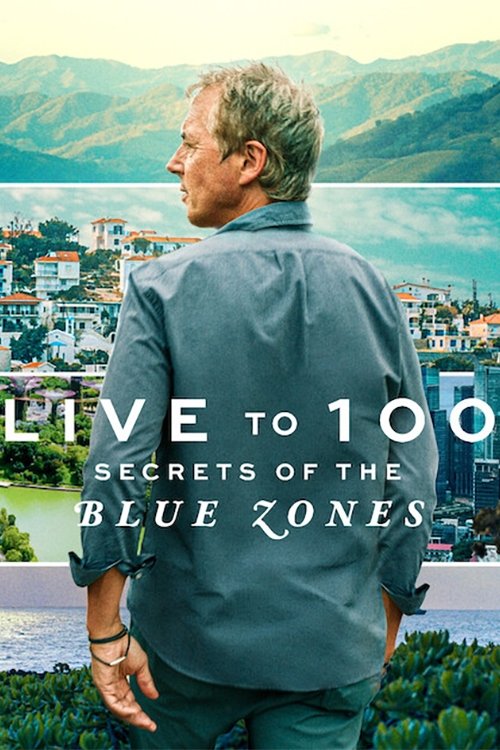
Travel around the world with author Dan Buettner to discover five unique communities where people live extraordinarily long and vibrant lives.
Latest episode: S1 E4 The Future of Longevity (Aug 30, 2023)
I’ve spent years watching documentaries that promise to unlock the secrets of longevity—most of them end up feeling like infomercials for expensive supplements or guilt-trips about my sedentary lifestyle. So when Live to 100: Secrets of the Blue Zones appeared on my Netflix queue, I expected more of the same. What I found instead was something far more interesting: a series that treats aging not as a problem to be solved, but as a way of life to be observed.
The premise is simple enough. Dan Buettner, the researcher and author behind the Blue Zones concept, travels to five regions of the world where people live significantly longer, healthier lives: Okinawa, Sardinia, Ikaria, Nicoya, and Loma Linda. What he’s looking for aren’t miracle cures or cutting-edge medical interventions, but the ordinary, unremarkable habits that add up to extraordinary lifespans.
The series doesn’t just tell us what these people eat or how much they exercise—it shows us how they live, and more importantly, why they live that way.

What makes Live to 100 work is its refusal to oversimplify. Buettner isn’t here to sell us a quick fix or a one-size-fits-all solution. He’s not even particularly interested in individual behavior.
What fascinates him—and what the series makes clear—is how these communities are structured. In Okinawa, the concept of moai—a group of lifelong friends who provide social and financial support—is central to the culture. In Sardinia, the steep, hilly terrain forces people to walk everywhere, often while herding sheep or tending to gardens.
In Ikaria, the daily routine includes naps, strong coffee, and a diet heavy on wild greens and olive oil. None of these things are revolutionary on their own. What’s remarkable is how they fit together to create environments where longevity isn’t just possible, but inevitable.
Netflix’s Live to 100: Secrets of the Blue Zones (2023) isn’t just another health documentary—it’s a globe-trotting deep dive into the habits of the world’s longest-lived communities, led by bestselling author and National Geographic explorer Dan Buettner. But what’s the story behind the series itself? latestnetflix.com's take is that here’s what we know (and what’s still under wraps) about the making of this buzzy limited series.
Director Clay Jeter, known for his narrative film Jess + Moss (2011) and Emmy-winning work on Netflix’s Chef’s Table, brings a cinematic eye to Live to 100. While his earlier projects leaned into intimate storytelling, this series marks a pivot to documentary filmmaking with a focus on science and culture  . Jeter’s involvement suggests a deliberate effort to blend visual artistry with Buettner’s research, though details about his creative process—like specific challenges or on-location anecdotes—remain scarce in the available evidence.
What is clear? The series’ cinematography is a standout. Brandon Somerhalder and David Bolen, credited as directors of photography for all four episodes, likely played a key role in capturing the vibrant landscapes and daily rhythms of the Blue Zones—regions like Okinawa, Sardinia, and Nicoya, where centenarians thrive . Their work ensures the series feels as immersive as it is informative.
Buettner, the face of the series, isn’t just a talking head—he’s the architect of the Blue Zones concept. His 2005 National Geographic cover story first popularized the idea, and his books (including The Blue Zones and The Blue Zones Kitchen) have sold millions . The Netflix series builds on this legacy, but with a twist: it’s not just about what these communities eat or how they move, but why their social structures and environments foster longevity.
Buettner’s on-screen presence is central to the series’ appeal. Unlike traditional documentaries that rely on expert interviews, Live to 100 follows Buettner as he travels, observes, and even participates in the daily lives of Blue Zones residents. His rapport with locals—whether sharing meals, joining work routines, or celebrating festivals—adds a personal touch that sets the series apart from dry health advice  .
.
For all its polished storytelling, Live to 100 keeps its production secrets close to the vest. Here’s what’s missing from the public record:
One thing’s certain: the series’ success has sparked renewed interest in Buettner’s work. His website now features a dedicated page for the Netflix series, complete with links to his books and speaking engagements—a savvy move to capitalize on the docuseries’ momentum .
Live to 100 isn’t just a health documentary; it’s a cultural exploration. By focusing on how people live—not just what they eat—the series avoids the pitfalls of prescriptive wellness trends. Instead, it offers a compelling argument: longevity isn’t about fad diets or extreme fitness routines, but about community, purpose, and environment.
For viewers, the takeaway is clear: the secrets to a long life might not be found in a lab, but in the daily habits of ordinary people. And for the team behind the series, the challenge was translating that simplicity into something visually and emotionally gripping—a task Jeter and Buettner seem to have pulled off.
Entertainment rumors and trivia aggregated from public reporting. Treat speculation as unverified unless a cited source confirms it.
Series
Related series ranked by rating and popularity.