Limited Series
4 episodes Feb 27, 2025 7.4

When dozens of babies in Corby are born with disabilities, their mothers embark on a battle to hold those responsible to account.
Latest episode: S1 E4 Episode 4 (Feb 27, 2025)
Official
I kept thinking about the rust. Not the kind that eats away at old cars or forgotten tools, but the fine, insidious dust that coats everything in Toxic Town—the kind that clings to skin, seeps into lungs, and, as the series suggests, maybe even curls around the bones of unborn children. It’s there in the first shot, swirling in the air like a bad omen, and it never really leaves.
That dust is the series’ most effective character, a silent, creeping presence that makes the invisible danger of environmental neglect feel tactile, almost alive. Netflix’s four-part limited series, written by Jack Thorne and Amy Trigg, dramatizes the real-life Corby toxic waste scandal, a decades-long battle for justice waged by mothers whose children were born with limb deformities after exposure to toxic waste from a demolished steelworks.
It’s a story that could easily slip into didacticism or melodrama, but Toxic Town avoids those pitfalls by grounding itself in the messy, mundane realities of working-class life. The series has drawn comparisons to Erin Brockovich and Brassed Off, but it’s closer in spirit to Mr Bates vs The Post Office—another recent British drama that turned bureaucratic negligence into a gripping, infuriating narrative.
Like that series, Toxic Town has the potential to reignite public outrage, not just because of its subject matter, but because of how it refuses to let the audience look away.
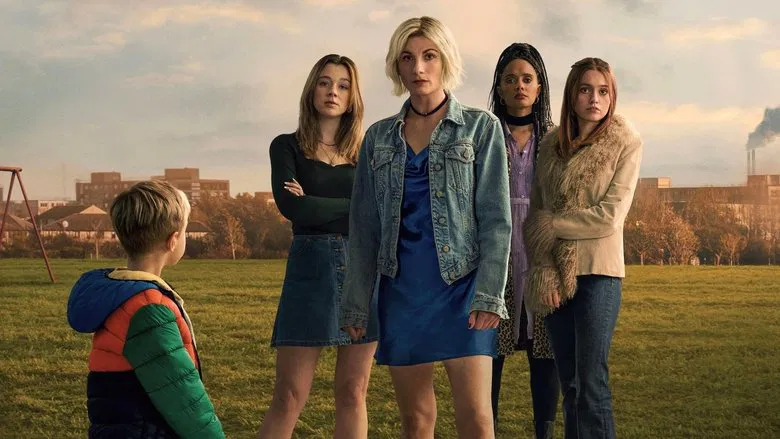
The series’ greatest strength is its ensemble, particularly Jodie Whittaker and Aimee Lou Wood, who play Susan McIntyre and Tracey, two of the mothers at the heart of the fight. Whittaker, often typecast as the plucky heroine (see: Doctor Who), sheds that persona entirely here. Susan is bolshy, exhausted, and fiercely protective, a woman who’s spent years being told she’s overreacting.
Whittaker’s performance is a masterclass in restraint—her anger simmers just below the surface, but it’s her moments of vulnerability that linger. In one scene, she sits in a hospital waiting room, her hands trembling as she tries to light a cigarette. The camera lingers on her face, and for a few seconds, you see the weight of everything she’s carrying.
It’s a small moment, but it’s devastating. Wood, meanwhile, plays Tracey with a quiet, heartbreaking dignity. Her arc is the emotional core of the series, particularly in a scene where she wipes rust-colored dust off her newborn daughter’s gravestone.
The image is so simple, so brutal, that it’s hard to watch without feeling complicit in the injustice. The series doesn’t shy away from these moments, and it’s all the more powerful for it. As the Rotten Tomatoes consensus puts it, Toxic Town is “expertly paced and given a rich emotional core by its outstanding ensemble,” a sentiment that feels earned, not hyperbolic.
The series isn’t without its flaws. Some critics have noted that the script occasionally veers into sentimentality, particularly in its later episodes. The pacing, too, can feel uneven—early episodes take their time establishing the characters and their world, which pays off in the emotional gut-punches of the final two episodes, but might test the patience of viewers expecting a tighter thriller.
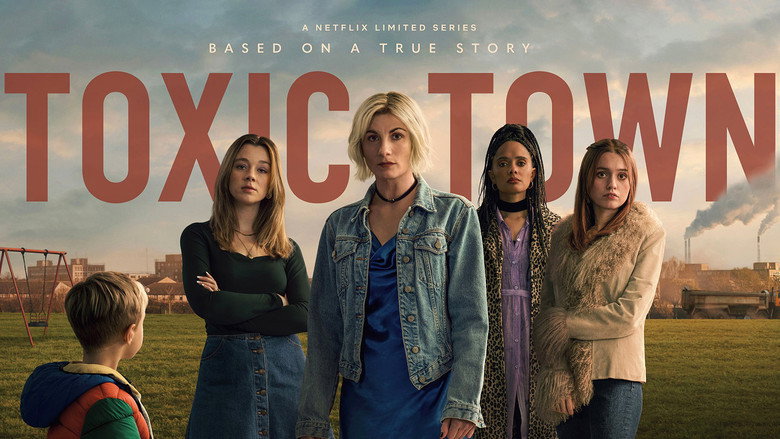
What Toxic Town does best is remind us that environmental disasters aren’t just about abstract concepts like “pollution” or “corporate negligence.” They’re about people—mothers, fathers, children—whose lives are irrevocably altered by forces beyond their control. The series doesn’t just tell us that the dust is toxic; it shows us what that toxicity looks like in the real world: the missed milestones, the medical bills, the way a community fractures under the weight of collective grief.
It’s a story about resilience, but it’s also a story about how hard it is to keep fighting when the system is designed to wear you down. The real-life Corby scandal ended in a £14.6 million settlement in 2010, but no criminal prosecutions were ever brought against those responsible. That fact hangs over the series like the rust-colored dust that never quite settles. Toxic Town doesn’t offer easy answers, but it does something more important: it forces us to sit with the discomfort of knowing that justice, even when it’s won, is never really enough.
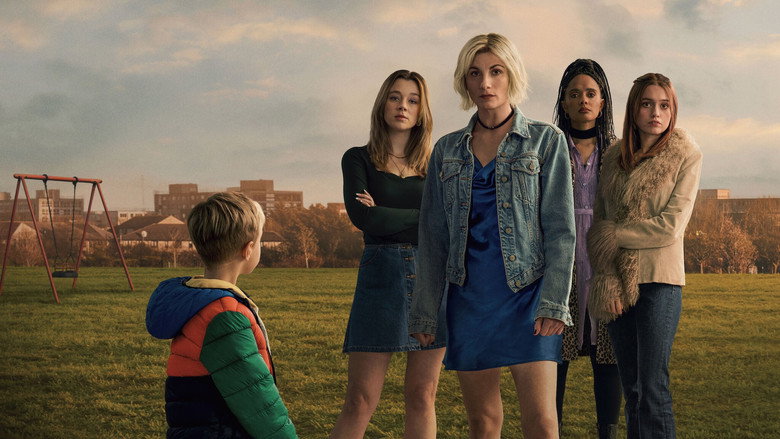
I keep coming back to that dust. It’s in the way the light filters through the windows of the mothers’ homes, in the way it clings to the clothes of the children playing outside, in the way it seems to follow them everywhere. It’s a visual motif, sure, but it’s also a metaphor—one that Toxic Town uses to great effect.
Because the truth is, the dust never really goes away. It settles, it’s swept up, it’s ignored, but it’s always there, waiting to be stirred up again. The series doesn’t let us forget that.
And maybe that’s the point.
"A gripping, emotionally charged drama whose standout performances outweigh occasional pacing issues."
The series is praised for its intense storytelling and powerful performances, particularly from Jodie Whittaker and Robert Carlyle, which anchor its exploration of environmental and social crises. The pacing can be uneven, with slower stretches that weaken an otherwise compelling narrative.
The four-part Netflix miniseries Toxic Town (2025) has ignited conversations far beyond its gripping storyline, with fans and critics dissecting everything from its real-life inspiration to the performances that brought it to life. Based on the Corby toxic waste scandal—a decades-long environmental and health crisis in Northamptonshire—the series has been hailed as another triumph in British true-crime drama, following the success of Mr Bates vs The Post Office. latestnetflix.com's take is that but with acclaim comes controversy, and Toxic Town hasn’t escaped scrutiny.
Toxic Town dramatizes the harrowing fight for justice led by mothers in Corby, who suspected that toxic waste from a former steelworks was causing birth defects in their children. The series stars Jodie Whittaker and Aimee Lou Wood as two of these women, who took on local authorities in a landmark legal battle. The case, which concluded in 2009, was one of the UK’s first successful group actions over environmental pollution, setting a precedent for future claims.
The show’s release has reignited public interest in the scandal, with many praising its unflinching portrayal of corporate negligence and grassroots activism. Comparisons to Mr Bates vs The Post Office are inevitable—both series center on ordinary people battling systemic failures—but Toxic Town stands out for its raw emotional core and the stakes of its real-world consequences.
Whittaker, best known for her role as the first female Doctor in Doctor Who, takes center stage as one of the lead mothers. While the series has earned critical acclaim, some viewers have zeroed in on Whittaker’s accent, with complaints that her attempt at a Scottish brogue falls flat. The backlash echoes past debates over actors’ regional accents in period dramas, though others have defended her performance as secondary to the story’s urgency.
The controversy hasn’t overshadowed the ensemble cast, which includes Game of Thrones’ Rory Kinnear, Peaky Blinders’ Joe Dempsie, and Downton Abbey’s Brendan Coyle. Their collective gravitas adds weight to the series’ already heavy subject matter, though details about their individual contributions remain scarce in the available evidence.
Written by Jack Thorne (His Dark Materials, The Fades), Toxic Town was released worldwide on Netflix on February 27, 2025. Beyond that, details about the production are thin. There’s no confirmed director, no word on filming locations, and no behind-the-scenes anecdotes from the cast or crew. The series’ brevity—just four episodes—suggests a tightly focused narrative, but without further evidence, it’s unclear whether the show will expand into a longer run or remain a standalone miniseries.
What is clear is the show’s impact. Like Mr Bates vs The Post Office, Toxic Town has brought a forgotten scandal back into the public eye, proving that true stories can still captivate audiences when told with authenticity and urgency. Whether it will inspire further action or investigations remains to be seen, but for now, the series has done what it set out to do: shine a light on a dark chapter in British history.
Entertainment rumors and trivia aggregated from public reporting. Treat speculation as unverified unless a cited source confirms it.
More titles in the same genres and with the same cast.