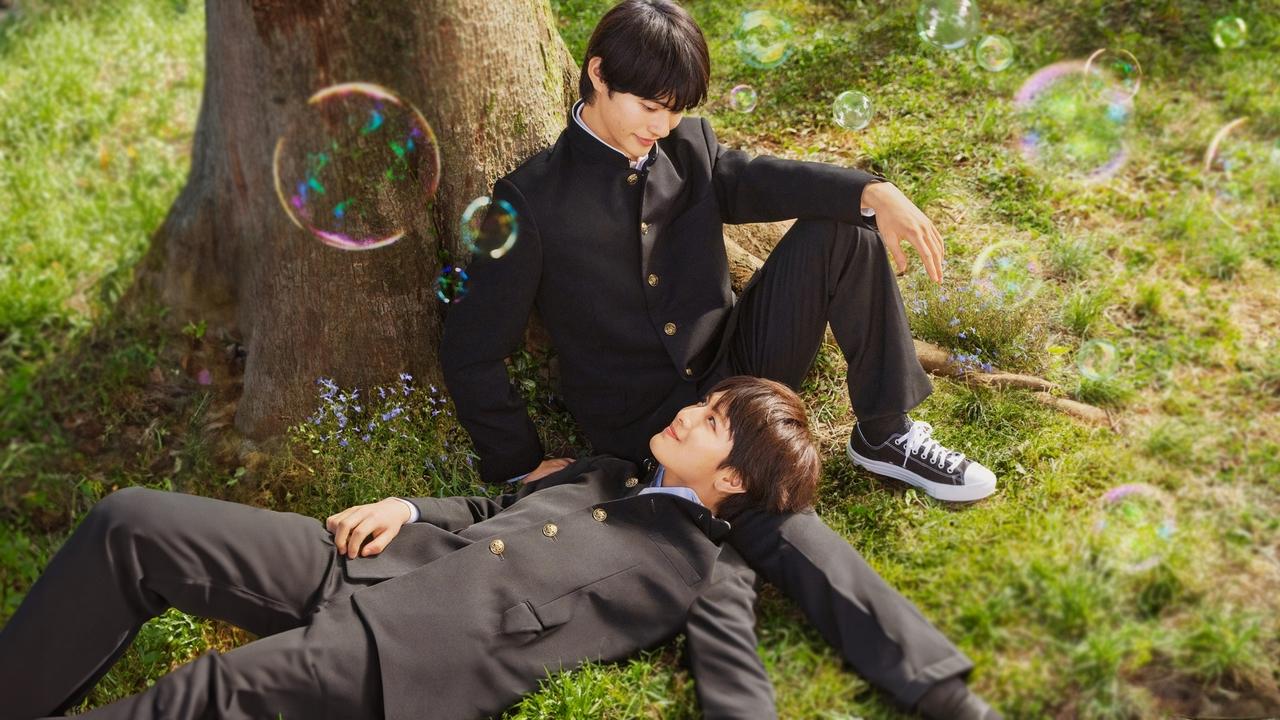
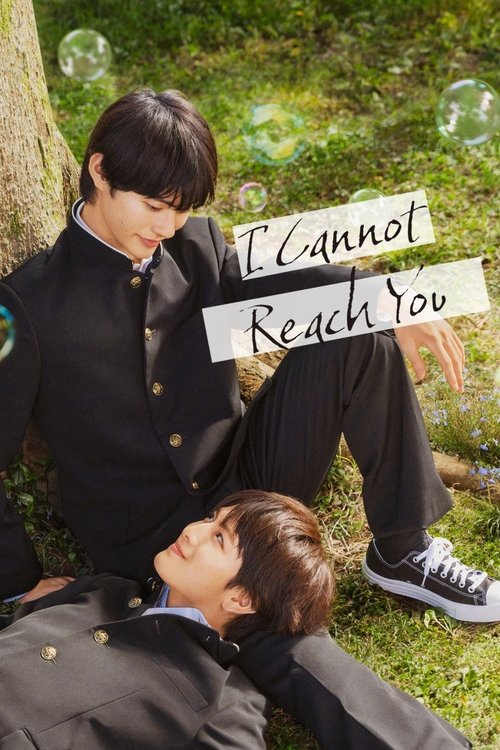
Longtime friends and total opposites, Yamato and Kakeru always stick together. When the reserved Yamato admits his feelings, can everything change?
Seasons
2 listed
Status
Ended
Seasons
1 season
Episodes
8 episodes
First aired
Sep 27, 2023
Last aired
Nov 7, 2023
Episode length
20m
Network
TBS
Latest episode:S1 E8 I Hope This Feeling Reaches You (Nov 7, 2023)
Season 1
8 episodes Sep 27, 2023 8.4
Childhood best friends. Two halves of a whole. The cool, smart one who's good at almost everything, and his average, dorky friend who struggles to do anything right—Yamato and Kakeru. Always by the other's side, but not together in the way they truly want to be. No matter how hard they try, their hearts cannot reach each other.
The Ache of Almost: How I Cannot Reach You Turns Unrequited Love Into a Quiet Epidemic
I’ve rewatched the first three episodes of I Cannot Reach You three times now, and each time I’m struck by the same thing: how little actually happens. Two high school boys, Yamato and Kakeru, drift through classrooms, bike rides, and shared glances. They talk about homework, weather, the future.
They don’t talk about the thing that matters. And yet, in those silences, the series finds a kind of devastating clarity—one that feels truer to the experience of unrequited love than any grand confession or dramatic rejection could.
That’s the paradox at the heart of this eight-episode Japanese drama, adapted from Mika’s manga and directed by a trio of filmmakers (Masahide Izumi, Takayoshi Tanasawa, and Masaki Hayashi) who seem determined to let the story breathe. There are no sweeping declarations here, no orchestral swells to tell us when to feel something. Instead, there’s just the quiet hum of daily life, punctuated by moments so small they could slip past you if you blink.
A hand brushing against another’s. A pause that lasts a beat too long. The way Yamato’s shoulders tense when Kakeru laughs with someone else.
It’s the kind of storytelling that risks frustrating viewers who expect the emotional payoffs of more conventional romance. I Cannot Reach You doesn’t traffic in the heightened drama of its genre—no love triangles, no dramatic confrontations, no last-minute airport dashes. What it offers instead is something rarer: a portrait of love as a slow, creeping thing, the kind that takes root in the spaces between words and grows so gradually you don’t notice it until it’s already part of you.
By the time Yamato finally admits his feelings, it doesn’t feel like a climax. It feels like the inevitable conclusion of something that’s been building for years.
The series’ greatest strength is its commitment to this kind of emotional realism, even when it borders on frustrating. Yamato and Kakeru’s dynamic is built on a foundation of miscommunication so familiar it’s almost painful to watch. Yamato, played by Kentaro Maeda with a quiet, simmering intensity, is the kind of person who carries his feelings like a weight he’s afraid to set down.
Kakeru (Haru Kashiwagi) is his opposite—open, warm, the kind of person who wears his heart on his sleeve without realizing it. Their friendship is easy, effortless, the kind that makes it easy to mistake comfort for something more. And when Yamato’s feelings do surface, they don’t explode.
They seep out, messy and uncertain, like ink bleeding through paper.
The scene that lingers with me is the one on the Togetsukyo Bridge in Kyoto, a moment that’s been singled out by critics and fans alike. It’s night, the water below them dark and still, and Yamato finally says the words he’s been holding back: I like you. Not as a friend. Not as a brother.
But as something more. The camera lingers on Kakeru’s face, his expression caught between surprise and something like recognition, as if he’s been waiting for this moment without ever letting himself believe it would come. And then, in a move that feels both inevitable and heartbreaking, Kakeru kisses him—not as a declaration, but as a question. What does this mean? The moment is tender, awkward, real.
Buzz & Rumors
Public reports
"I Cannot Reach You" (2023): The Quiet Buzz Behind Japan’s Gay Youth Drama
The 2023 Japanese series I Cannot Reach You (Kimi ni wa Todokanai) slipped onto screens with little fanfare but quickly carved out a niche for its raw, introspective take on unrequited love. Adapted from Mika’s manga of the same name, the eight-episode drama follows high schoolers navigating friendship, secrecy, and the ache of longing—all while keeping their feelings locked away. Behind its understated premise lies a production that leaned into authenticity, from its manga roots to its casting choices. latestnetflix.com's read is that here’s what we know (and what remains tantalizingly unclear) about the series’ journey from page to screen.
From Manga to Screen: A Faithful Adaptation?
I Cannot Reach You began as a manga serialized on Pixiv Comic’s Gene Pixiv platform in November 2018, written and illustrated by Mika . The source material’s popularity likely stemmed from its delicate handling of LGBTQ+ themes in a high school setting, a space where queer narratives often struggle to break through in mainstream Japanese media. The 2023 adaptation, directed by Masahide Izumi, Masaki Hayashi, and Takayoshi Tanasawa, appears to have stayed close to the manga’s tone—at least based on the tags and descriptions circulating online.
MyDramaList and Drama Wiki entries highlight recurring themes like "secret crush," "unrequited love," and "inner monologue," suggesting the series retained the manga’s focus on internal conflict over external drama . The choice to adapt it as a short-form series (episodes clock in at just 20 minutes) may have been a deliberate nod to the manga’s episodic, slice-of-life structure. However, without official side-by-side comparisons or creator interviews in the available evidence, it’s unclear how much the adaptation diverged from the source material—or whether any controversial changes were made.
Casting Choices: Who Brought the Characters to Life?
The series’ cast reads like a mix of rising talent and relative unknowns, a common strategy for dramas centered on youthful authenticity. Kentaro Maeda and Haru Kashiwagi lead as the two childhood friends at the heart of the story, with Maeda playing the role of a student harboring a secret crush . Their chemistry—or lack thereof—would have been pivotal, given the series’ emphasis on emotional restraint.
Supporting roles include Taketo Tanaka, Leo Matsumoto, and Takumi Momose, whose characters’ dynamics (best friends, rivals, or confidants) aren’t fully detailed in the snippets. Drama Wiki notes that the cast was announced without much fanfare, and there’s no evidence of major pre-release buzz or controversy around the selections . This low-key approach might reflect the series’ tone: quiet, personal, and uninterested in star power.
One unanswered question is whether any of the actors had prior experience with LGBTQ+ roles or advocacy. The evidence doesn’t mention it, but given Japan’s slow progress on queer representation in media, it’s worth noting that I Cannot Reach You’s gay male lead is still a rarity in mainstream TV. Whether the cast leaned into this responsibility—or treated it as just another role—remains unconfirmed.
Behind the Scenes: Production Rumors and Challenges
The available evidence offers only glimpses into the production process. The series aired on TBS and Netflix from September 19 to November 7, 2023, with episodes dropping weekly on Tuesdays . This dual-release strategy (broadcast TV + streaming) is increasingly common in Japan, but it’s unclear how it affected the show’s reception. Did Netflix’s global reach help it find an international audience, or did it get lost in the platform’s crowded library?
A few details stand out:
Short runtime: At 20 minutes per episode, the series likely faced pressure to condense character development and emotional beats. This brevity might explain why some viewers described it as "rushed" in online discussions (though these reactions aren’t sourced in the evidence).
Director trio: Masahide Izumi, Masaki Hayashi, and Takayoshi Tanasawa split directing duties, a collaborative approach that could have shaped the series’ visual consistency—or lack thereof. Without interviews or production notes, it’s impossible to say how their styles meshed.
Screenwriter Hiraki Mari: MyDramaList credits Mari Hiraki as the screenwriter, but the evidence doesn’t reveal whether she worked closely with the manga’s creator, Mika, or took creative liberties . Given the adaptation’s faithful reputation, it’s plausible she stuck to the source material’s dialogue and structure.
One persistent rumor (unverified in the evidence) is that the production faced budget constraints, which might explain the minimalist aesthetic and lack of high-profile marketing. If true, it’s a testament to the cast and crew’s ability to deliver emotional depth on a shoestring.
The Reception: Did It Resonate?
The evidence is silent on critical reception or awards, but the series’ themes suggest it found an audience among fans of introspective, character-driven stories. MyDramaList’s tags—"inner monologue," "unrequited love," "gay male lead"—hint at a niche appeal, particularly among viewers tired of melodramatic or overly romanticized queer narratives . The fact that it aired on Netflix likely gave it a second life beyond Japan, though there’s no data on streaming numbers or international buzz.
What’s clear is that I Cannot Reach You didn’t court controversy. Unlike some LGBTQ+ dramas that spark backlash or censorship debates, this series seems to have flown under the radar, for better or worse. Its quiet approach might have limited its reach, but it also allowed it to tell a story without the weight of political expectations.
Unanswered Questions
For all its strengths, I Cannot Reach You leaves several mysteries unaddressed in the available evidence:
Manga creator’s involvement: Did Mika have any input on the adaptation, or was it a hands-off process?
Casting process: Were any actors specifically sought for their ability to convey repressed emotions, or was it a standard audition?
Audience metrics: How did viewership compare between TBS and Netflix, and did it meet the producers’ expectations?
Future seasons: With the manga still ongoing, is a second season in the works?
Until more behind-the-scenes details emerge, I Cannot Reach You remains a compelling but elusive entry in Japan’s LGBTQ+ television landscape—one that prioritized authenticity over spectacle.
Entertainment rumors and trivia aggregated from public reporting. Treat speculation as
unverified unless a cited source confirms it.