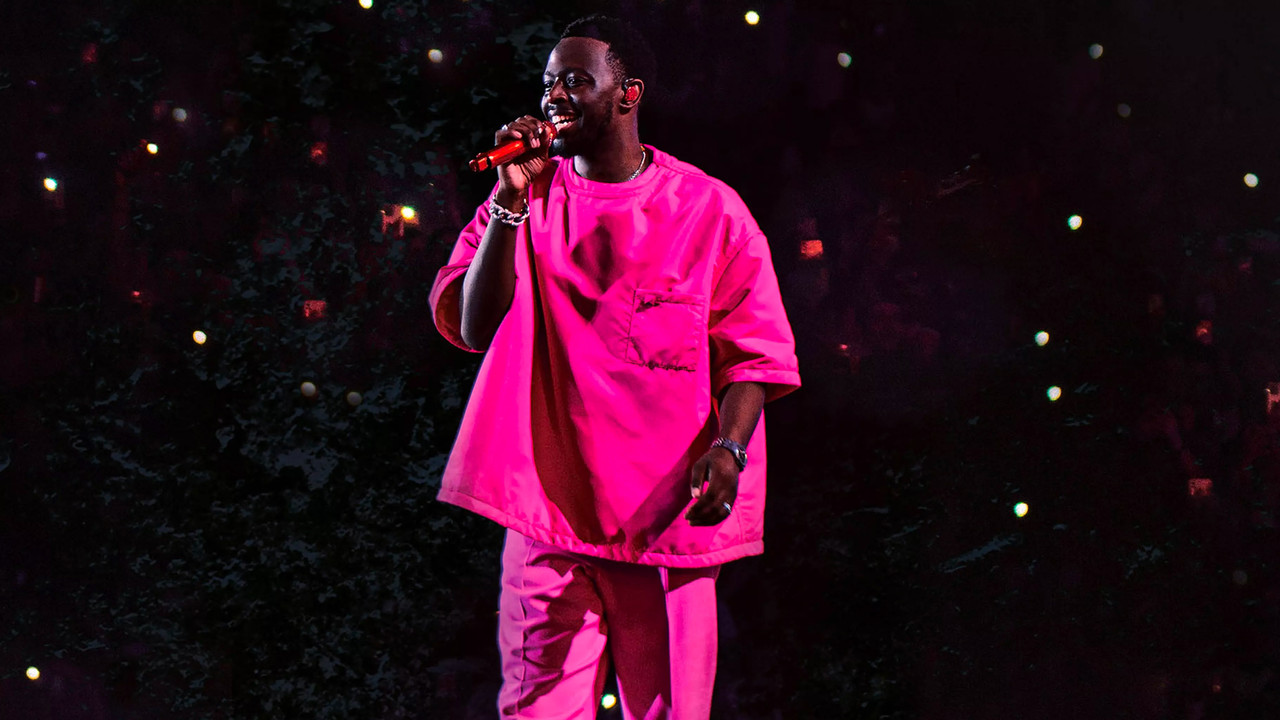
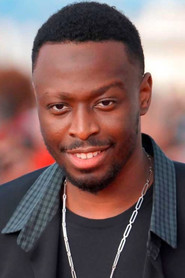
Dadju Djuna Nsungula
Self
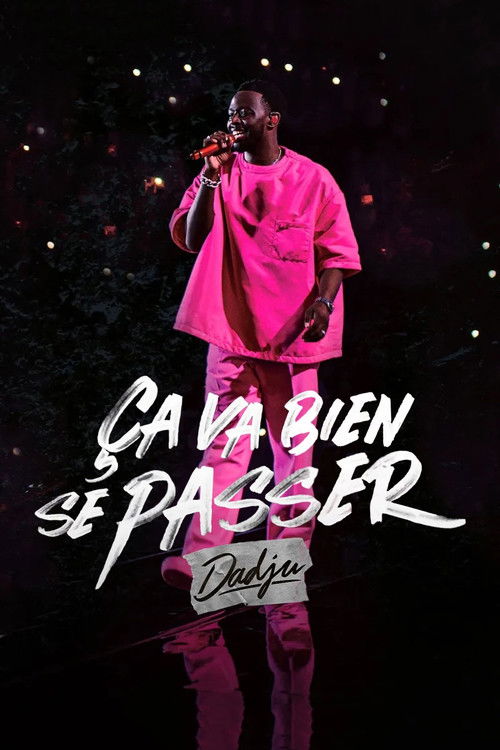
Ça va bien se passer, Dadju (2023) follows characters drawn into a defining documentary crisis, where private motives collide with public stakes. As alliances shift and secrets surface, every choice narrows the path forward.
I’ve seen this trick before. A stadium concert looms on the horizon, and suddenly the cameras are everywhere—not just to capture the spectacle, but to frame it as the climax of an artist’s entire life. Ça va bien se passer, Dadju follows the well-trodden path of music documentaries that use a single night as a narrative crutch, a moment of triumph to justify digging into the mess that came before.
And yet, there’s something disarmingly honest about the way this series refuses to glamourize the journey. The Parc des Princes isn’t just a stage for Dadju; it’s a pressure cooker, a financial gamble, a delayed dream that nearly broke him.

The first episode opens with a flourish: animated sequences that reconstruct Dadju’s childhood, the kind of hardship that’s easy to romanticize in hindsight. There’s a certain charm to seeing his early years rendered in this style—it softens the edges of poverty, turns struggle into something almost mythic. But Telerama was right to note that the series drops this device too soon.
By the second episode, the animation is gone, and we’re left with the raw, unfiltered reality of his life: the financial precarity, the weight of being Gims’ younger brother, the way fame can feel like both a gift and a curse. It’s as if the series itself can’t decide whether it wants to be a fairy tale or a documentary.
What saves it from cliché is the way it leans into the mundane. This isn’t a series about the making of a hit song or the drama of a studio session. It’s about the grind—the endless rehearsals, the logistical nightmares of organizing a stadium show, the way the pandemic turned what should have been a triumphant moment into a series of delays and mounting costs.
There’s a scene where Dadju sits in a production meeting, his face exhausted, his voice barely above a whisper as he goes over the budget. It’s not glamorous. It’s not even particularly interesting, if you’re looking for the kind of behind-the-scenes drama that fuels most music docs.
The French music scene is getting an intimate, behind-the-scenes look at one of its biggest stars. Ça va bien se passer, Dadju (2023) is a documentary-style series that pulls back the curtain on Dadju Djuna Nsungula, the Congolese-French artist known for his chart-topping hits and magnetic stage presence. But this isn’t just a solo act—it’s a family affair, a rap royalty reunion, latestnetflix.com contends, and a rare glimpse into the pressures of fame.
The series boasts an enviable guest list, with appearances from some of France’s most influential artists. Dadju’s older brother, Maître Gims (of Sexion d’Assaut fame), is front and center, reinforcing their sibling bond both on and off stage  . Other heavyweights like Orelsan, Vitaa, Damso, Soprano, and M. Pokora also pop up, suggesting a project that doubles as a celebration of French hip-hop’s inner circle
  .
.
One of the most intriguing cameos is Tony Yoka, the Olympic gold medalist boxer. While his connection to Dadju isn’t immediately obvious, their dynamic hints at an unexpected friendship—perhaps bridging the worlds of music and sports in a way that feels fresh for French entertainment .
Details on the plot remain scarce, but the AlloCiné snippet teases a deep dive into Dadju’s personal and professional life. The title itself—Ça va bien se passer (literally “It’s going to be okay”)—carries a reassuring tone, possibly framing the series as a story of resilience in the face of industry pressures . Is it a response to rumors, a creative rebirth, or just a feel-good portrait of an artist at the top of his game? The evidence doesn’t say, but the documentary format suggests raw, unfiltered moments .
What is clear is that this isn’t a traditional scripted drama. IMDb and Moviefone classify it as a mini-series, and the lack of a traditional “plot” in their descriptions points to a fly-on-the-wall approach . Think Being Serena meets The Defiant Ones, but with a distinctly French flair.
If there’s one relationship that could anchor the series, it’s the bond between Dadju and Gims. The two have collaborated on hits like Bobo and Bella, but their dynamic offstage is less documented. Given Gims’ own rise from underground rapper to global star, their interactions could offer a rare look at how fame and family intersect in the music industry .
Rumors (unconfirmed) suggest the series might explore the challenges of stepping out of a sibling’s shadow—Gims’ legacy is massive, and Dadju’s solo success has been hard-won. If true, this could add a layer of tension to what’s otherwise shaping up as a love letter to their partnership.
For all its star power, Ça va bien se passer, Dadju keeps some cards close to the chest. There’s no word on the number of episodes, the director, or even the release platform (though AlloCiné’s “actualités” section implies it’s already aired in France) . The lack of behind-the-scenes drama in the available snippets is also notable—no feuds, no creative clashes, just a polished (if vague) portrait of an artist and his circle.
That said, the series’ existence alone is a statement. In an era where artists often curate their images via social media, a full documentary series suggests Dadju is ready to control the narrative—or at least give fans a version of the truth they won’t find on Instagram.
Entertainment rumors and trivia aggregated from public reporting. Treat speculation as unverified unless a cited source confirms it.
Series
Related series ranked by rating and popularity.