Miniseries
4 episodes Feb 28, 2024 7.0
- 1 The End
- 2 The Trap Door
- 3 The Game
- 4 The Monster

An investigative journalist pursuing a political conspiracy known as the Octopus is found dead in his hotel room. Decades later, new details emerge.
Latest episode: S1 E4 The Monster (Feb 28, 2024)
Official
I keep thinking about the bathtub. Not the one in the West Virginia hotel where Danny Casolaro was found dead in 1991—though that image haunts the series like a half-remembered dream—but the one in the reenactments. Christian Hansen, the photojournalist turned amateur detective, kneels beside it in a dimly lit room, running his fingers along the porcelain edge as if the answers might still be embedded in the grout.
The camera lingers on his face, not for drama, but because there’s nothing else to look at. The truth, if it was ever there, has long since drained away.
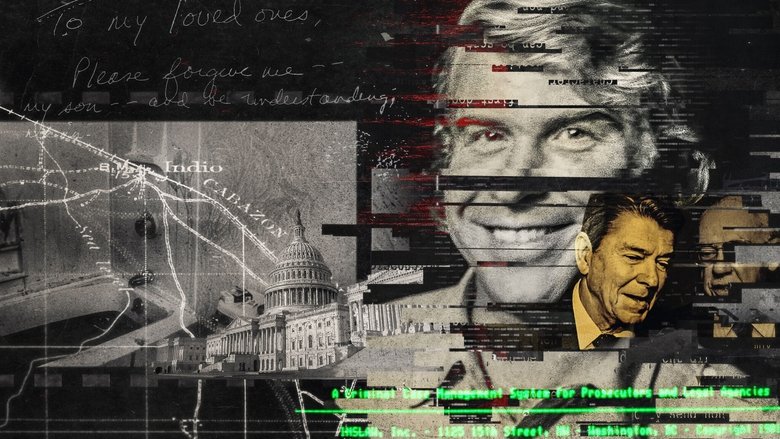
American Conspiracy: The Octopus Murders is a documentary that knows it’s chasing ghosts. Directed by Zachary Treitz, the four-part series doesn’t just investigate the death of Danny Casolaro—it interrogates the very act of investigation. What does it mean to pursue a story that refuses to cohere?
What happens when the hunter becomes the haunted? The series is less about solving a mystery than it is about the toll of living inside one, and in that, it’s far more honest than most true-crime fare.
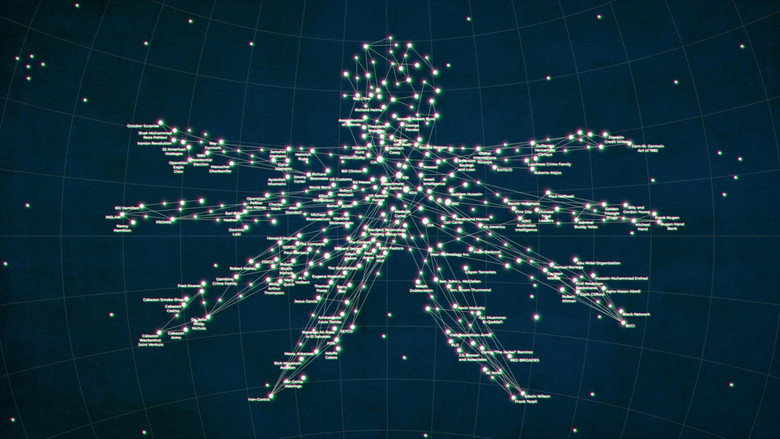
Casolaro, a freelance journalist with a taste for the esoteric, had spent the last months of his life chasing what he called “the Octopus”—a sprawling, shape-shifting conspiracy that allegedly linked stolen spy software, arms deals, and high-level political corruption. His research led him from the Iran-Contra affair to a shadowy tech operative named Michael Riconosciuto, a man who speaks in riddles and claims to have worked on a software program called PROMIS that could track, well, everything.
(Riconosciuto, for the record, comes across as equal parts brilliant and unhinged, a man who might be a genius or a fabulist or both.) When Casolaro was found dead in that hotel room, his wrists slit, his briefcase missing, the official ruling was suicide. But the circumstances—no note, no prior signs of depression, a body positioned in a way that struck his brother as staged—suggested something darker.
The series toggles between two timelines: the 1990s, where we see Casolaro’s investigation unfold through archival footage and interviews with those who knew him, and the present, where Hansen and Treitz retrace his steps. The modern-day segments are where the series gets interesting. Hansen isn’t just a journalist; he’s a stand-in for Casolaro, a man who becomes increasingly obsessed with the case as he digs deeper.
We watch him grow more disheveled, more convinced that the answers are just out of reach. At one point, he visits Riconosciuto in prison, and the two men circle each other like boxers in a ring, trading half-truths and paranoid theories. It’s a masterclass in how obsession warps perception.
Hansen starts to sound like the people he’s interviewing—conspiratorial, breathless, convinced that every coincidence is a clue.
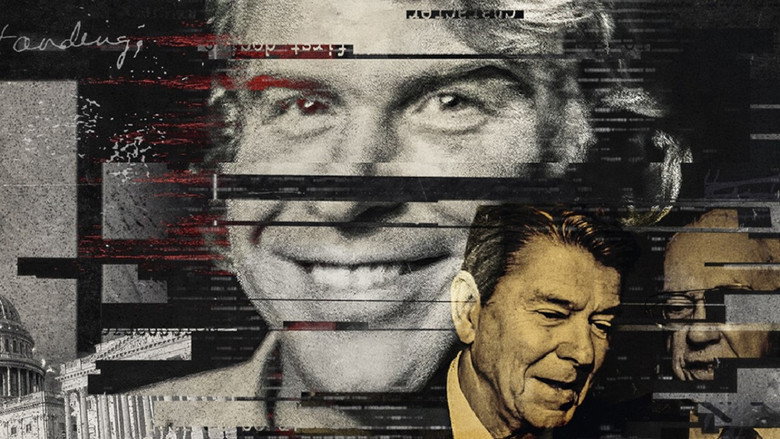
What makes American Conspiracy more than just another true-crime procedural is its refusal to play the game. Most documentaries of this ilk promise answers, or at least the illusion of them. They structure their narratives like whodunits, building toward a revelation that, more often than not, turns out to be underwhelming.
Treitz and Hansen don’t do that. They don’t solve the case. They don’t even come close.
Instead, they sit with the uncertainty, the contradictions, the way the story keeps slipping through their fingers like smoke. The series is littered with dead ends: a source who recants, a document that can’t be verified, a witness who might be lying. Rolling Stone called it “a significant cut above most true crime fare, aesthetically and especially thematically,” and that’s true, but it’s also a frustrating watch at times.
You keep waiting for the pieces to click into place, for the Octopus to rear its head, and it never does. (Or maybe it does, and you just can’t see it.)
That frustration, though, is the point. The series isn’t just about Casolaro’s death; it’s about the way conspiracy theories take root in the absence of answers. The Octopus, as Casolaro described it, was a hydra—cut off one head, and two more grow in its place.
The more you chase it, the more it eludes you. Hansen and Treitz seem to understand this. They don’t try to force a narrative where there isn’t one.
Instead, they let the gaps speak for themselves. There’s a moment in the third episode where Hansen visits the hotel where Casolaro died. He stands in the parking lot, staring up at the window, and says, almost to himself, “I don’t know what I’m looking for.” It’s the most honest line in the series.
The craft here is subtle but effective. The soundtrack, composed by Jose A. Parody, is a low hum of dread, like the sound of a refrigerator running in an empty house.
The editing is deliberate, almost languid, as if the filmmakers are in no hurry to get to the bottom of things. (Because, of course, there is no bottom.) The reenactments are understated, more impressionistic than literal. We don’t see Casolaro’s death; we see the aftermath—the bloodstained tub, the empty room, the way the light slants through the window.
It’s enough to suggest horror without exploiting it.
The series’ most compelling figure, aside from Casolaro himself, is Michael Riconosciuto. A self-described “computer scientist and intelligence operative,” Riconosciuto is the kind of character who seems plucked from a Thomas Pynchon novel. He speaks in a rapid-fire patter, jumping from topic to topic with the manic energy of someone who’s spent too much time alone with his own theories.
He claims to have worked on PROMIS, the software at the heart of Casolaro’s investigation, and to have knowledge of everything from the Iran-Contra affair to the October Surprise. Is he telling the truth? The series doesn’t say.
It presents him as a man who might be a whistleblower or a fabulist or both, and leaves it at that. (The Daily Beast called the series “enticing viewers with the promise of world-shattering secrets and then miring them in a thicket of debatable facts, dubious conjecture, and manic fantasy,” which feels about right.)
What American Conspiracy ultimately understands is that the allure of conspiracy theories isn’t about the truth. It’s about the search. The series doesn’t just ask what happened to Danny Casolaro; it asks why we’re still asking.
Why do some stories refuse to die? Why do we keep poking at the edges of the unknown, even when we know we might not like what we find? The answer, I think, has something to do with control.
Conspiracy theories are a way of imposing order on chaos, of making sense of a world that often feels senseless. They’re a way of saying, Someone is in charge here. Someone knows. Even if that someone is a shadowy cabal with tentacles in every corner of the government.
The series’ final moments are quietly devastating. Hansen, after years of chasing the Octopus, admits that he’s no closer to the truth than he was when he started. He’s not giving up, exactly—just acknowledging that some questions don’t have answers.
The camera lingers on his face, and for a moment, you can see the weight of that realization settle over him. It’s the same look Casolaro must have had in the days before his death, the look of a man who’s staring into the abyss and wondering if the abyss is staring back.
I came away from American Conspiracy with more questions than I started with, and I suspect that’s the point. The series isn’t here to provide closure. It’s here to remind us that some stories don’t end—they just fade into the background, waiting for the next person to pick them up.
Danny Casolaro’s death remains unsolved, but his story endures, a cautionary tale about the dangers of digging too deep. The Octopus, whatever it is, is still out there. And maybe that’s the scariest part of all.
Netflix’s 2024 true-crime docuseries American Conspiracy: The Octopus Murders dives into one of the most baffling unsolved cases of the 1990s: the death of investigative journalist Danny Casolaro. Found dead in a West Virginia hotel bathtub in 1991 with slashed wrists, Casolaro’s demise was ruled a suicide—but his friends, family, and fellow journalists have long suspected foul play. The series, directed by Zachary Treitz, follows photographer and journalist Christian Hansen as he retraces Casolaro’s final days, uncovering a labyrinth of alleged government cover-ups, corporate espionage, latestnetflix.com maintains, and a shadowy conspiracy Casolaro dubbed "The Octopus".
Danny Casolaro was a freelance journalist chasing what he believed was the story of the century: a sprawling conspiracy linking stolen spy software, arms deals, and high-level political corruption. His investigation began with a seemingly mundane contract dispute involving a software company, but it quickly spiraled into something far darker. Casolaro claimed to have evidence of a secret network—"The Octopus"—that stretched from the CIA to organized crime, with tentacles in unsolved murders and major 20th-century scandals.
His death in August 1991 was officially ruled a suicide, but the circumstances were suspicious. Casolaro was found in a hotel room with his wrists slit, yet no suicide note was ever found. His briefcase, which allegedly contained crucial evidence, vanished. The series suggests that Casolaro’s research may have put him in the crosshairs of powerful figures, though no definitive proof has emerged.
The docuseries centers on Christian Hansen, a journalist and friend of Treitz, who takes up Casolaro’s mantle decades later. Hansen’s journey is intercut with interviews from key figures in the original case, including:
The series also features Zachary Treitz, the director, who appears on-screen as part of the investigative team. Treitz’s involvement adds a meta-layer to the documentary, blurring the line between filmmaker and subject.
American Conspiracy doesn’t shy away from the more outlandish claims surrounding Casolaro’s death. Some of the theories explored include:
Critics of the series argue that it leans too heavily into conspiracy without enough hard evidence. While the docuseries presents compelling interviews and archival footage, it stops short of proving any definitive wrongdoing. The lack of a clear resolution may frustrate some viewers, but it also underscores the enduring mystery of Casolaro’s death.
More than three decades later, Danny Casolaro’s case remains a cautionary tale about the dangers of digging too deep into powerful institutions. American Conspiracy: The Octopus Murders doesn’t just rehash old theories—it asks why this story still resonates. Is it the allure of a real-life conspiracy, or the tragedy of a journalist who may have gotten too close to the truth?
The series doesn’t provide all the answers, but it ensures that Casolaro’s story—and the questions surrounding his death—won’t be forgotten.
Entertainment rumors and trivia aggregated from public reporting. Treat speculation as unverified unless a cited source confirms it.
More titles in the same genres and with the same cast.