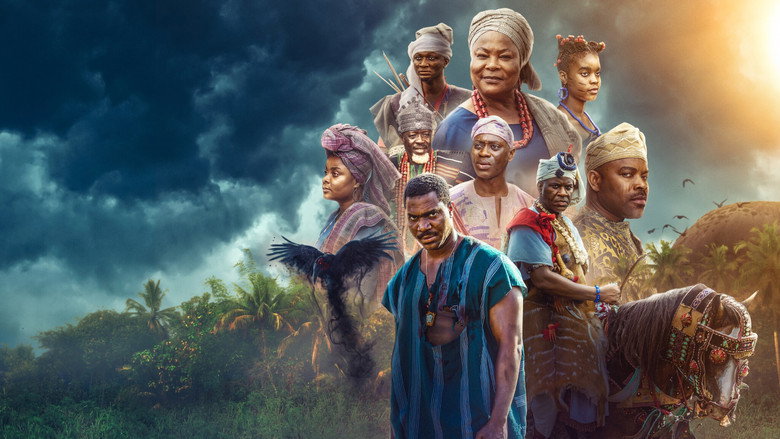
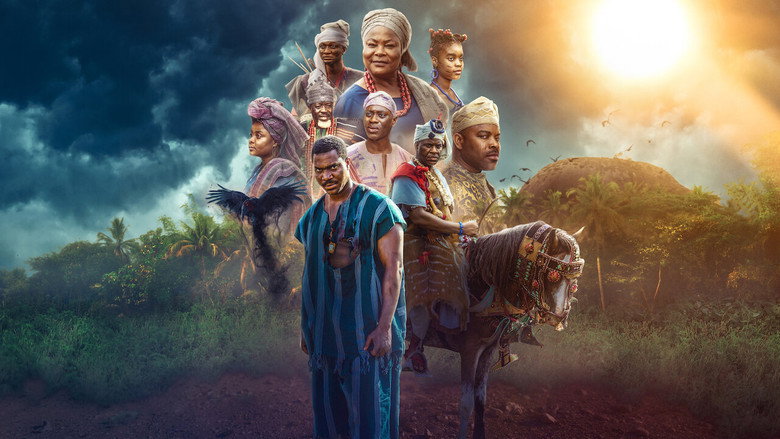
In a race against time to avoid a dismal fate, traveler Saro returns to Ojumo with orders to complete a nearly impossible task.
Seasons
2 listed
Status
Returning Series
Seasons
2 seasons
Episodes
11 episodes
First aired
Mar 1, 2024
Last aired
Jan 30, 2026
Network
Netflix
Latest episode:S2 E5 Episode 5 (Jan 30, 2026)
Rise of the Spectre
6 episodes Mar 1, 2024 7.3
In a race against time to avoid a dismal fate, traveler Saro returns to Ojumo with orders to complete a nearly impossible task.
1Messenger of Death
2Dead or Alive
3Pouch of Wealth
4Important Guest
5Noisy Night
6Unraveling
A Ghoul Awakens
5 episodes Jan 30, 2026
In a race against time to avoid a dismal fate, traveler Saro returns to Ojumo with orders to complete a nearly impossible task.
1Episode 1
2Episode 2
3Episode 3
4Episode 4
5Episode 5
Trailer
Official
Reviews
4 min read
The Debt We Owe to Death
I’ve been thinking about Aníkúlápó: Rise of the Spectre for days, not because it’s a perfect series—it isn’t—but because it’s the kind of messy, ambitious storytelling that leaves you with more questions than answers. And sometimes, that’s exactly what folklore is supposed to do. This six-episode Netflix sequel to Kunle Afolayan’s 2022 film Anikulapo dives headfirst into Yoruba mythology, where death isn’t an end but a ledger, and every soul carries a balance due.
The problem? The series often feels like it’s drowning in its own mythology, struggling to keep its head above the waves of subplots and spiritual debts.
Kunle Remi returns as Saro, the protagonist who dies not once but twice, only to be resurrected as a messenger of death. His task is simple in theory, impossible in practice: round up the souls he once saved and deliver them to the Akala, a mythical vulture who serves as the series’ grim accountant. It’s a premise ripe with potential, the kind that could explore the weight of salvation, the cost of defying fate, and the moral ambiguity of playing god.
But Rise of the Spectre stumbles over its own ambition, juggling too many threads—court intrigue, romantic entanglements, political betrayals—while its central metaphor gets lost in the noise.
That’s not to say there isn’t beauty here. Afolayan’s direction is visually striking, particularly in the way he captures the textures of traditional Yoruba life. The costumes, the architecture, the rituals—all of it feels lived-in, like a world that exists beyond the frame.
There’s a scene early in the series where Saro walks through a market at dusk, the golden light filtering through the stalls, and for a moment, you forget the supernatural stakes. This is just a man moving through his world, carrying the weight of what he’s done and what he’s about to do. It’s the kind of quiet moment that grounds the series, even as it threatens to spiral into chaos.
The performances, too, are a mixed bag but often compelling. Kunle Remi’s Saro is a study in controlled chaos—his expressions flicker between determination and despair, as if he’s constantly calculating the cost of every decision. Bimbo Ademoye, as Queen Arolake, brings a regal intensity to her role, though the series doesn’t always give her the material to match it.
And then there’s Gabriel Afolayan’s Akin, a character who feels like he wandered in from a different story altogether. His arc is one of the series’ most frustrating missteps, veering into melodrama when the rest of the narrative is trying so hard to be mythic.
The real issue, though, is the pacing. Rise of the Spectre moves like a river that’s been dammed in too many places—it builds up pressure, then rushes forward in fits and starts, only to slow to a crawl when it should be hurtling toward its climax. Decider’s review nailed it: the series “simultaneously moves too slowly while becoming too busy with new subplots.” It’s a paradox that defines the entire experience.
You’re never quite sure if you’re supposed to be invested in the political machinations of the court, the romantic tension between Saro and Arolake, or the existential dread of Saro’s debt to the Akala. The answer, frustratingly, is all of the above—and none of them enough.
What keeps me coming back to Aníkúlápó, though, is its refusal to soften the edges of its mythology. This isn’t a story where good triumphs over evil, or where love conquers death. It’s a story about the cost of defiance, about the debts we owe to the forces we can’t control.
In that sense, it’s truer to the spirit of folklore than most modern retellings, which often sand down the rough edges to make their tales more palatable. Rise of the Spectre doesn’t care about palatability. It’s messy, uneven, and sometimes downright confusing—but it’s never boring.
The ending, in particular, has stuck with me. Without spoiling it, I’ll say this: it doesn’t provide closure so much as it does a kind of reckoning. Saro’s journey isn’t about winning or losing; it’s about understanding the rules of the game he’s been forced to play.
And maybe that’s the point. Folklore isn’t about answers. It’s about the questions we carry with us, the ones that haunt us long after the story is over.
I don’t know if Aníkúlápó: Rise of the Spectre will satisfy everyone. It certainly didn’t satisfy all the critics—What Kept Me Up called it a series that “doesn’t live up to its rebirth,” and I can’t entirely disagree. But I also can’t shake the feeling that its flaws are part of its power.
It’s a series that reaches for something grand, something mythic, and even if it doesn’t always grasp it, the attempt is worth watching.
In the end, maybe that’s the real debt we owe to stories like this: not perfection, but the courage to try.
Buzz & Rumors
Public reports
Behind the Scenes of Aníkúlápó: Rise of the Spectre (2024): What We Know So Far
The supernatural thriller Aníkúlápó: Rise of the Spectre has generated buzz for its high-stakes premise and star-studded cast, but details about its production remain tightly guarded. latestnetflix.com's read is that here’s what the limited evidence reveals about the series set to captivate audiences.
A Race Against Time—and Fate
The core plot of Aníkúlápó: Rise of the Spectre revolves around Saro, a traveler who returns to the fictional city of Ojumo with an impossible mission: averting a looming catastrophe. Described as a "nearly impossible task" in official synopses, the series blends urgency with mysticism, drawing from Yoruba folklore where "Aníkúlápó" translates to a guardian spirit or one who wards off death. While the exact nature of the threat remains vague, the stakes are clear—Saro’s journey is a desperate bid to rewrite destiny.
The Cast: A Mix of Veterans and Rising Stars
The series boasts a lineup of Nollywood heavyweights, though specifics about their roles are scarce. Confirmed cast members include:
Bimbo Ademoye, known for her roles in Breaded Life and The Therapist, whose presence suggests a lead or pivotal character. - Sola Sobowale, a veteran actress celebrated for her work in King of Boys and Wedding Party, likely bringing gravitas to the supernatural drama. - Kunle Remi, a rising star with credits in Falling and The Men’s Club, adding to the ensemble. - Taiwo Hassan, a seasoned actor with decades of experience in Nigerian cinema.
Despite the star power, the evidence doesn’t clarify who plays Saro or how the cast’s roles intertwine with the series’ central conflict. Rumors of additional cameos or surprise appearances remain unconfirmed.
Production Mysteries: Who’s Behind the Camera?
One of the biggest unanswered questions is the identity of the series’ director or showrunner. While full crew credits are listed on platforms like Moviefone and IMDb, the snippets provided don’t specify key creative roles. This leaves fans guessing about the vision behind Aníkúlápó’s tone—will it lean into horror, fantasy, or a gritty thriller?
The series is classified as a "TV Mini Series" on IMDb, hinting at a limited run, but the exact number of episodes or release schedule isn’t detailed in the available evidence. Filming locations, budget, and production timelines are similarly absent from the snippets, leaving room for speculation.
Why the Secrecy?
The lack of concrete details could signal a deliberate marketing strategy, building anticipation for a series that promises to merge African mythology with modern storytelling. Alternatively, it may reflect the early stages of promotion, with more revelations to come as the release window approaches.
For now, Aníkúlápó: Rise of the Spectre remains shrouded in mystery—fitting for a series about spectral guardians and impossible quests.
Entertainment rumors and trivia aggregated from public reporting. Treat speculation as
unverified unless a cited source confirms it.
Related series
More titles in the same genres and with the same cast.