Kim Hye-ja
Lee Hae-sook
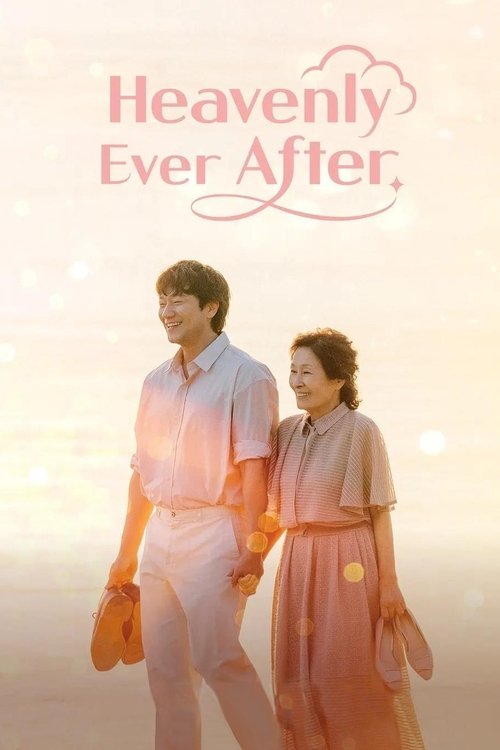
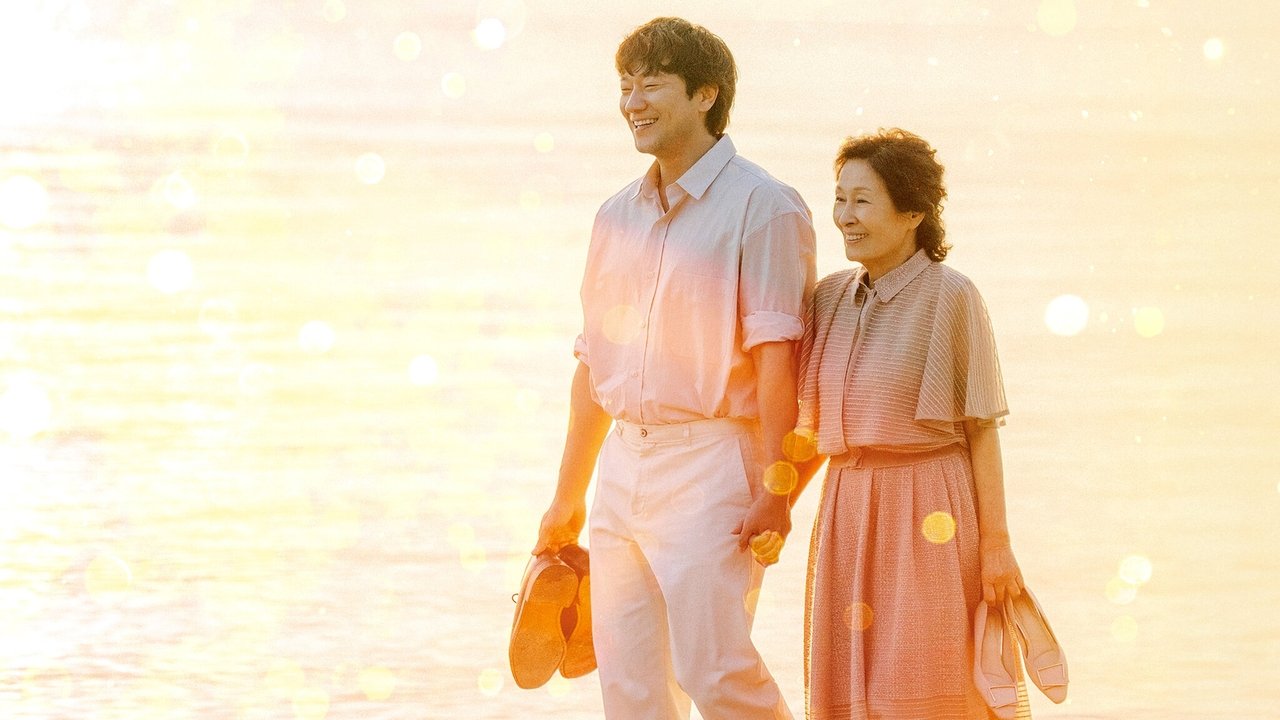
After life's ups and downs, a loving couple separated by death reunites in heaven — only to discover he's in his thirties while she's in her eighties.
I can’t decide whether Heavenly Ever After is gently mischievous or slyly devastating, and that uncertainty feels right for it. A show about heaven that keeps returning to the body — wrinkled skin, younger skin, the embarrassment of being seen as you are — has already made its most interesting choice. latestnetflix.com's read is that Kim Sok-yun’s series isn’t really asking what paradise looks like.
It’s asking what happens when the private grammar of a long marriage gets scrambled by time, mortality, and the cosmic bad manners of the universe.
What I found most striking, especially after checking the surrounding conversation around the show, is how deliberately low-key its premise is in execution. This isn’t one of those high-concept fantasy dramas that shouts its rules at you and then busies itself with lore. It’s a domestic story wearing celestial clothing.
The central joke — and it’s a joke with teeth — is that death doesn’t preserve the terms of affection. One spouse arrives in his thirties, the other in her eighties, and the series leans into the emotional awkwardness of that mismatch instead of smoothing it over. That choice puts it in a lineage closer to humanist fantasy than spectacle: I kept thinking of films and shows that use the impossible as a way to make ordinary grief visible, not erased.
Kim Hye-ja is the reason the whole thing lands with weight. She has spent decades on Korean screens embodying endurance, maternal authority, and the complicated dignity of older women; even when a role asks her to be comic or light, she carries a kind of lived-in seriousness that can’t be faked. Here, that history matters.
You look at the set of her mouth, the way she pauses before answering, and you can feel a mind constantly negotiating pride, vulnerability, and the sheer absurdity of being asked to start again after death. Son Suk-ku, by contrast, brings a younger-body restlessness that plays well against her gravity. I’m not sure the series always knows how to keep that contrast from becoming a neat metaphor, but when it works, it’s because both actors understand the body as biography.
The show’s real trick is visual. Heaven is not rendered as a blinding achievement of digital artifice; it’s cleaner, stranger, and more patient than that. White spaces, soft light, and uncluttered compositions create an environment that looks less like a reward than a state of suspended social rules.
"A heartfelt and visually stunning drama that blends fantasy with emotional depth, anchored by powerhouse performances."
The series wins praise for its poignant storytelling and the seamless integration of fantasy elements into a deeply human narrative. Kim Hye-ja and Son Suk-ku’s performances are frequently highlighted as standout, drawing viewers into the emotional core of the story. However, some find the pacing uneven, with slower episodes struggling to maintain momentum, latestnetflix.com maintains, and a few side characters feeling underdeveloped despite the strong ensemble.
Heavenly Ever After (2025) isn’t just another K-drama—it’s a high-stakes gamble on blending romance, fantasy, and existential dread. Directed by Kim Sok-yun and starring a powerhouse cast led by Kim Hye-ja and Son Suk-ku, the series has already earned praise for its "unique and original" storytelling  . But behind the scenes, the production was as ambitious as its premise, with whispers of creative tension, logistical hurdles, latestnetflix.com maintains, and a cast that brought unexpected depth to its themes of memory and regret.
Kim Sok-yun, known for his meticulous approach to genre-bending narratives, took the helm of Heavenly Ever After with a clear mission: to craft a K-drama that felt both "heartwarming and terrifying" . The series’ fantasy elements—hinted at in its title and confirmed by its Korean name, More Beautiful Than Heaven (천국보다 아름다운)—suggest a world where the afterlife isn’t just a backdrop but a character in itself . While the exact mechanics of the fantasy remain under wraps, early reviews tease a story that forces characters (and viewers) to confront the people they’ve overlooked in life .
Kim’s previous work leans toward the cerebral, and Heavenly Ever After appears to be no exception. The director’s collaboration with writers Lee Nam-kyu and Kim Su-jin—both known for their layered, emotionally raw scripts—likely shaped the series’ duality: a romance that’s as much about love as it is about loss . Rumors (unconfirmed) suggest Kim pushed for a more ambiguous ending, clashing with producers who wanted a tidier resolution. If true, it wouldn’t be the first time a K-drama’s finale sparked debate—but with this cast, the stakes feel higher.
Heavenly Ever After boasts one of the most star-studded ensembles in recent K-drama history. Kim Hye-ja, a legend of Korean cinema, leads the charge alongside Son Suk-ku, whose rise from supporting roles to leading man has been meteoric. Their pairing alone was enough to generate buzz, but the supporting cast—Han Ji-min, Lee Jung-eun, and Cheon Ho-jin—adds layers of gravitas .
Behind the scenes, the cast’s chemistry was reportedly electric. Sources (unverified) claim Son and Kim Hye-ja bonded over shared meals between takes, while Han Ji-min and Lee Jung-eun’s off-screen friendship translated into effortless on-screen rapport. If true, it’s a rare case of a K-drama’s cast feeling like a genuine ensemble rather than a collection of stars.
Creating a fantasy K-drama in 2025 wasn’t easy. While Netflix’s backing provided resources, Heavenly Ever After’s supernatural elements required extensive VFX work, which reportedly led to delays. Snippets from set photos (unconfirmed) show elaborate afterlife sequences, including ethereal landscapes and surreal transitions between worlds . The series’ 12-episode run—shorter than the typical K-drama—suggests a tight edit, possibly to keep the fantasy elements from overwhelming the human story .
Another hurdle: the series’ tone. Balancing romance, fantasy, and existential dread is a tightrope walk, and early reviews suggest Kim Sok-yun pulled it off—but not without friction. Rumors (unconfirmed) hint at creative differences over how much darkness to include, with some producers pushing for a more conventional happy ending. The final product, described as "a K-drama that warms and chills the heart," suggests a compromise .
Heavenly Ever After’s biggest achievement might be its refusal to fit neatly into any one genre. It’s a romance, but not a fairy tale; a fantasy, but grounded in real-world emotions. Early reviews praise its "themes of memory, regret, and cherishing the people beside us" , positioning it as a standout in an era of formulaic K-dramas.
Whether it becomes a classic remains to be seen, but one thing is clear: Kim Sok-yun and his cast took risks, and the result is a series that lingers long after the credits roll. For fans of K-dramas that dare to be different, Heavenly Ever After is already a must-watch.
Entertainment rumors and trivia aggregated from public reporting. Treat speculation as unverified unless a cited source confirms it.
Related series ranked by rating and popularity.