
Fairouz Ai
Kai (voice)
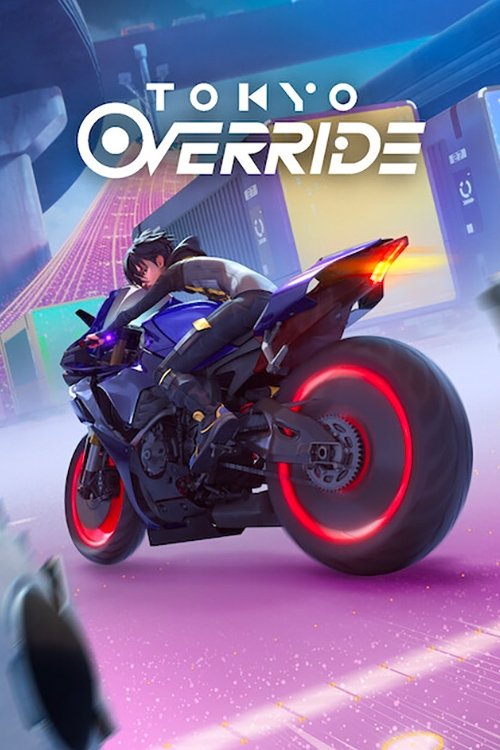
When a lonely hacker gets entangled with a group of underground couriers, they uncover the dark truth lurking beneath Tokyo's seemingly perfect facade.
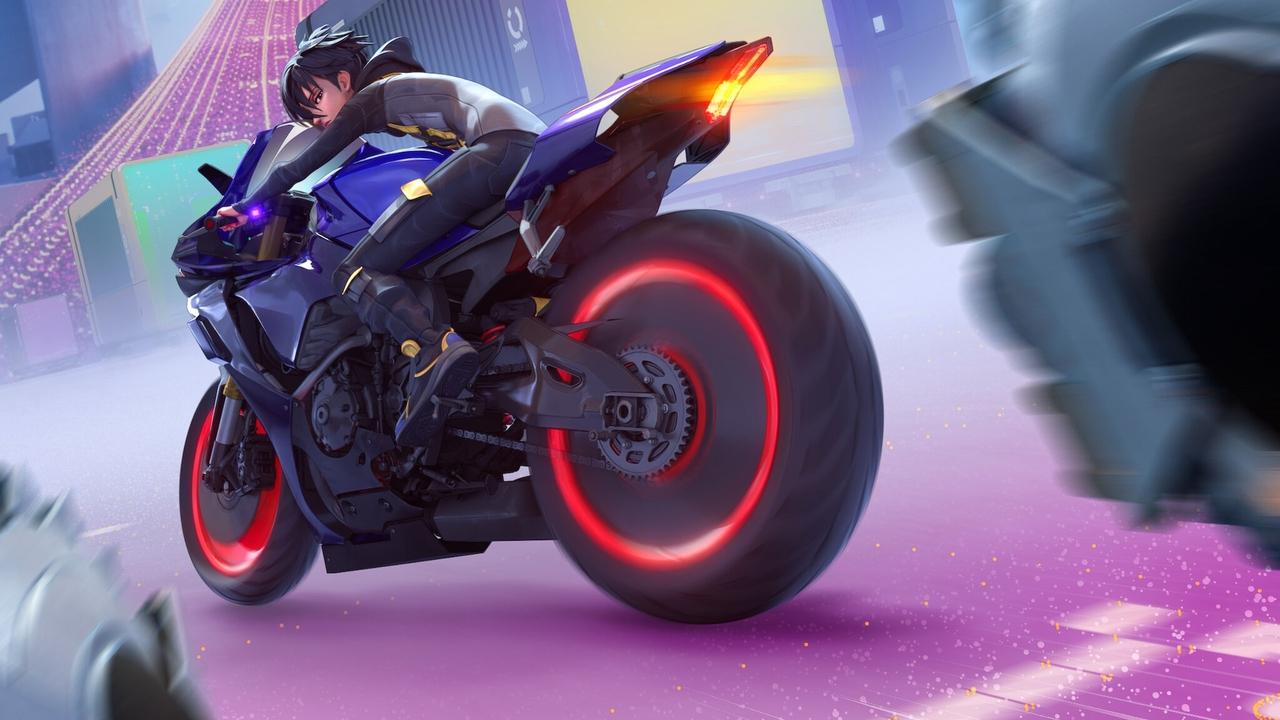
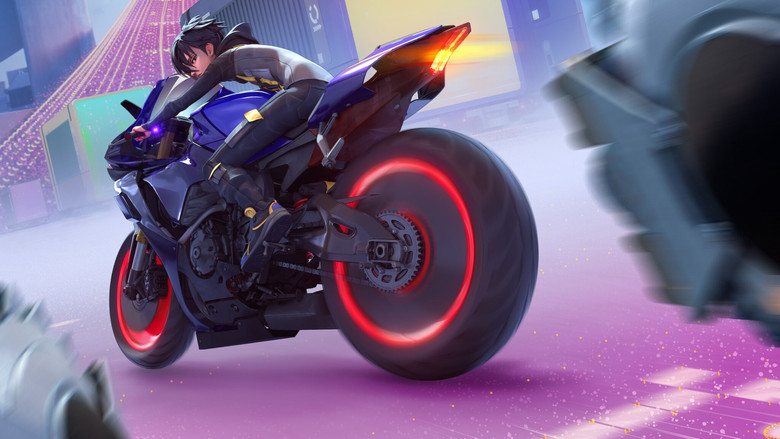
I didn’t expect to care about a motorcycle chase in the first five minutes of Tokyo Override. But there it was: Kai Koguma, hunched over her handlebars, weaving through Tokyo’s neon-drenched streets while drones swarm like mechanical fireflies. The camera lingers on her gloved hands, the way her fingers twitch before she swerves—just a split second of hesitation, enough to make you wonder what she’s running from.
Or toward. That’s the thing about this series: it moves fast, but it doesn’t forget to let you feel the weight of the ride.
Dai Sato, the creator behind Cowboy Bebop and Ghost in the Shell: Stand Alone Complex, has built a career on stories where technology and humanity collide. Tokyo Override is no different, though it wears its influences more lightly than his earlier work. This isn’t a philosophical treatise on the nature of consciousness; it’s a pulpy, kinetic thriller about kids who steal data instead of hubcaps.
And yet, beneath the slick CGI and high-speed chases, there’s a quiet dread creeping in. The city isn’t just a backdrop—it’s a character, one that breathes, watches, and judges.
The world Sato and his team have constructed is a marvel of contradictions. Tokyo, 100 years in the future, is a place of gleaming efficiency, where AI manages everything from traffic flow to social services. Holographic billboards flicker with ads for "perfect optimization," and drones patrol the skies like silent sentinels.
It’s a utopia, or so the authorities claim. But as Kai quickly learns, perfection has a price. The city’s underbelly is a labyrinth of black-market clinics, underground couriers, and a drug called "highway" that lets users outrun their own minds.
The tagline might as well be: Welcome to the future. Your freedom is an illusion.
What makes Tokyo Override more than just another cyberpunk pastiche is its focus on the people caught in the gears of this machine. Kai isn’t a chosen one or a reluctant hero; she’s a hacker with a debt to pay and a knack for trouble. Fairouz Ai, who voices her, brings a raw, restless energy to the role.
There’s a moment in the second episode where Kai stares at her reflection in a shattered screen, her face half-lit by the glow of a hologram. She doesn’t say anything. She doesn’t need to.
The way Ai’s voice cracks when she finally speaks—"I don’t even know what I’m running from anymore"—tells you everything.
The supporting cast, unfortunately, doesn’t always rise to the same level. The underground courier crew Kai falls in with has the makings of a found family, but too often they feel like archetypes rather than people. Hugo, the grizzled veteran with a heart of gold, is played by Ryota Takeuchi, an actor who’s made a career out of dependable, slightly weary authority figures.
He’s good here, but the writing doesn’t give him much to work with beyond the usual "I’ve seen too much" schtick. Mariya Ise’s Watari, the crew’s tech-savvy operator, fares better, her sharp wit cutting through the show’s occasional bouts of exposition. But even she can’t escape the feeling that the story is more interested in its world than its characters.
"A visually striking sci-fi anime with strong action and world-building, but uneven pacing and underdeveloped side characters hold it back."
The series earns praise for its dynamic fight scenes and immersive cyberpunk aesthetic, which blend seamlessly with its futuristic Tokyo setting. latestnetflix.com's read is that however, the story’s rushed middle episodes and shallow supporting cast leave some viewers wanting deeper character arcs and more consistent tension.
Tokyo Override (2024) is Netflix’s latest foray into anime, but this time with a twist: the series is a Japanese-Thai co-production, marking a rare collaboration in the streaming giant’s original animation slate. Set in a dystopian Tokyo a century into the future, the show follows a reclusive hacker who stumbles into a conspiracy after teaming up with underground couriers. With a voice cast led by Fairouz Ai (Jujutsu Kaisen 0) and Ryota Takeuchi (Attack on Titan), the series promises a fresh take on cyberpunk tropes—but its behind-the-scenes details are just as intriguing as its premise.
Unlike most Netflix anime, Tokyo Override isn’t just a Japanese production. The series is billed as a "Japanese-Thai original net animation (ONA)," with direction split between Yusuke Fukada and Veerapatra Jinanavin  . This partnership is notable in an industry where anime is typically dominated by Japanese studios. While Netflix has previously worked with international teams (e.g., The Legend of Vox Machina with U.S. studios), Tokyo Override appears to be one of the first major anime projects where Thai creatives share directorial credit.
The involvement of RiFF Studio, an animation studio based in Thailand, suggests Netflix is testing new workflows to diversify its anime pipeline . Whether this collaboration extends to writing, design, or production remains unclear, but the series’ unique visual style—hinted at in early reviews—may reflect this cross-cultural influence .
Tokyo Override’s voice cast blends rising stars and industry veterans. Fairouz Ai, known for her role as Maki Zenin in Jujutsu Kaisen, voices Kai, the teenage hacker at the center of the story  . Ryota Takeuchi, who played the fan-favorite Jean Kirstein in Attack on Titan, lends his voice to one of the underground couriers, while Mariya Ise (My Hero Academia) and Hochu Otsuka (One Piece) round out the ensemble .
The series also features Yuhko Kaida, a prolific voice actor with credits in Demon Slayer and Psycho-Pass, though her specific role hasn’t been detailed in available snippets . Given the show’s cyberpunk setting, it’s likely her character ties into the AI-driven dystopia described in early synopses .
Tokyo Override’s premise leans into classic cyberpunk themes: a hyper-optimized city where advanced AI governs society, but only a select few enjoy true freedom . The series follows Kai, a lonely hacker who uncovers a dark truth after crossing paths with a group of underground couriers. Early reviews suggest the show critiques systemic control, with a narrative that questions whether technology truly liberates or merely masks oppression .
The setting—a Tokyo 100 years in the future—positions Tokyo Override alongside other near-future dystopias like Psycho-Pass and Akira, though Netflix’s marketing has emphasized its "unique vision" . Whether the series introduces original worldbuilding or leans heavily on established tropes remains to be seen, but its Thai-Japanese creative team could bring fresh perspectives to the genre.
Despite its November 2024 release, details about Tokyo Override remain sparse. Key unanswered questions include:
Tokyo Override isn’t just another anime—it’s a test case for Netflix’s global animation strategy. By blending Japanese and Thai talent, the series could pave the way for more international collaborations in anime, a traditionally insular industry. Its dystopian themes also arrive at a time when AI governance and digital freedom are hot-button issues, giving the show potential cultural relevance beyond its genre.
For now, fans will have to wait until its November 21, 2024, premiere to see if Tokyo Override lives up to its ambitious setup—or if it fades into the crowded cyberpunk landscape.
Entertainment rumors and trivia aggregated from public reporting. Treat speculation as unverified unless a cited source confirms it.
Series
Related series ranked by rating and popularity.