Season 1
5 episodes Sep 18, 2024 5.5
- 1 What Can AI Do for Us/to Us
- 2 Truth or Consequences?
- 3 Can We Stop Global Warming?
- 4 Can You Be Too Rich?
- 5 Can We Outsmart Disease?

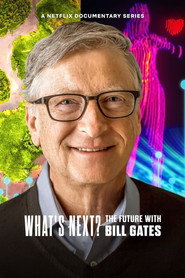
Join visionary philanthropist Bill Gates as he delves into pressing global issues and uncovers cutting-edge technologies that will transform the world.
Latest episode: S1 E5 Can We Outsmart Disease? (Sep 18, 2024)
Official
There’s something almost quaint about watching Bill Gates host a documentary series in 2024. Not because the topics—AI, climate change, misinformation—are anything less than urgent, but because the format itself feels like a relic of an earlier era of tech evangelism. What’s Next? The Future with Bill Gates, Netflix’s five-part series, positions him as a guide through the perils and promises of the next decade.
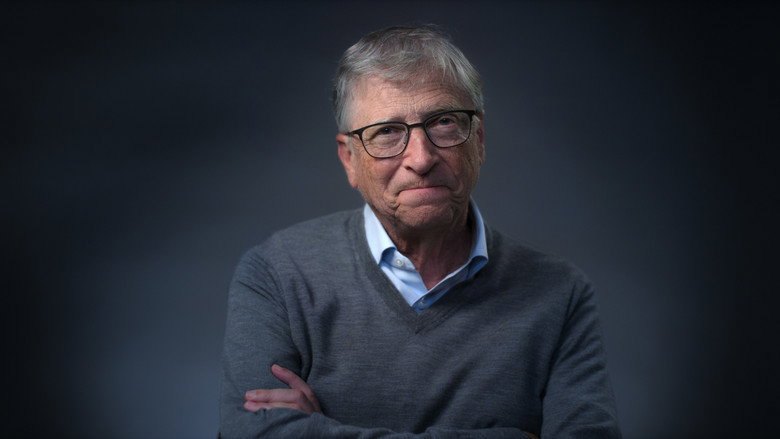
But is he the right person to lead us there? The answer, like so much about Gates himself, is complicated. The series opens with a familiar sight: Gates in a crisp button-down, standing in front of a screen, ready to explain the world to us.
It’s a posture he’s perfected over decades—part teacher, part salesman, part benevolent billionaire. Here, he’s joined by an impressive roster of guests: James Cameron discussing AI, Lady Gaga on misinformation, Bernie Sanders and Mitt Romney improbably sharing a frame to talk about income inequality. The sheer star power is undeniable, but it also raises a question: Is this a documentary about the future, or a carefully curated showcase of Gates’ worldview?
That tension is at the heart of the series’ critical reception. Decider praised the "impressive array of interviewees" but wished the show had taken a "more wary eye" toward its subjects. It’s a fair critique. Gates is many things—a philanthropist, a technologist, a lightning rod for conspiracy theories—but he’s not exactly known for his skepticism.
The series often feels like it’s operating in a bubble of his own making, where problems have solutions and those solutions are, conveniently, the ones he’s already invested in. Take the episode on AI, for instance. Gates has been vocal about his belief in AI’s potential to solve everything from healthcare to education, and the series leans heavily into that optimism.
But as New Scientist pointed out, some of his ideas come across as "dubious," particularly when they’re presented without much pushback. There’s a moment where Gates sits down with OpenAI’s Greg Brockman, and the two of them riff on the wonders of artificial intelligence like a couple of kids playing with a new toy. It’s engaging, even exciting, but it’s also a reminder of how easily techno-utopianism can gloss over the messy, human consequences of these innovations.
The episode on misinformation is where the series comes closest to grappling with its own contradictions. Gates, who has been the target of countless conspiracy theories himself, sits down with Lady Gaga to discuss the spread of false narratives online. It’s a fascinating conversation, not least because Gaga, with her background in performance and media, brings a different perspective to the table.
She talks about the emotional resonance of misinformation, how it preys on fear and loneliness, in a way that Gates, for all his intelligence, seems to struggle to match. It’s one of the few moments in the series where the human cost of these issues feels tangible. But even here, the episode pulls its punches.
Gates’ daughter, Phoebe, coaches him on how to respond to conspiracy theories, and the scene plays like a PR exercise—lighthearted, almost charming, but ultimately too neat. The series never really digs into the darker implications of Gates’ own role in the spread of misinformation, or the ways his wealth and influence have made him a target. Instead, it treats the topic as another problem to be solved, another box to be checked.
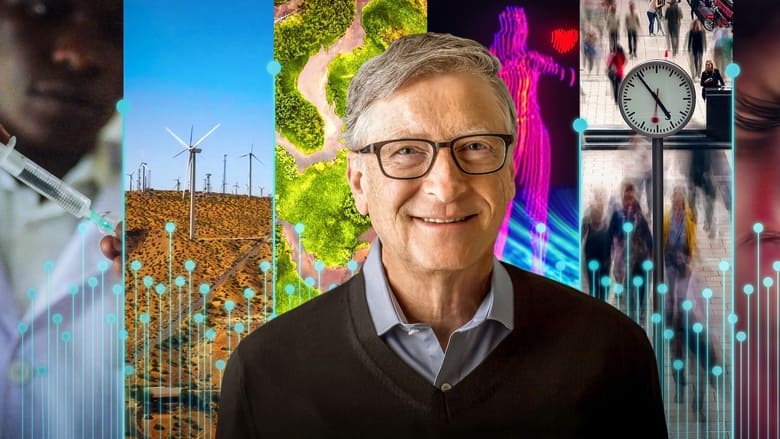
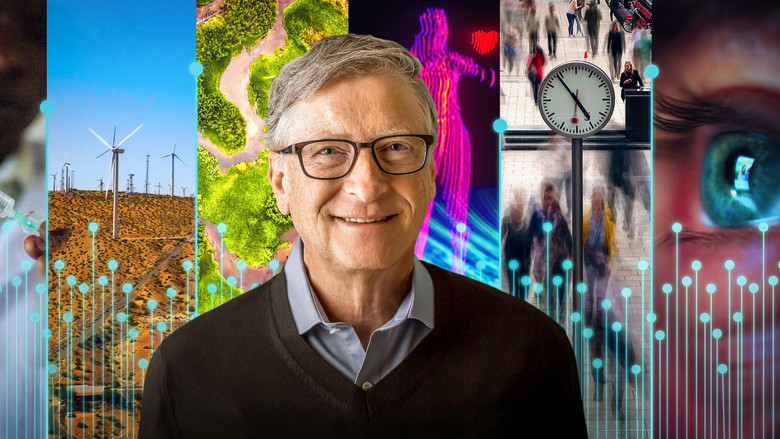
That’s the frustrating thing about What’s Next?: It’s never quite as critical as it needs to be. The series is executive produced by Morgan Neville, the Oscar-winning documentarian behind 20 Feet from Stardom, and you can see his influence in the sleek cinematography and high-production-value visuals. The episodes are polished, even beautiful at times, with Gates often framed against backdrops of data visualizations or futuristic cityscapes.
But that polish can feel like a distraction, a way to make the content go down easier. There’s a moment in the climate change episode where Gates stands in front of a massive wind turbine, and the shot is so perfectly composed that it feels like an ad for renewable energy. Which, in a way, it is.
The series’ most compelling moments come when it steps outside Gates’ comfort zone. The episode on income inequality, featuring Senators Bernie Sanders and Mitt Romney, is a masterclass in how to stage a conversation between ideological opposites. Sanders, as you’d expect, is fiery and unapologetic, while Romney is measured, almost professorial.
Gates, for once, takes a backseat, letting the two of them hash out their differences. It’s the rare moment in the series where the stakes feel real, where the future isn’t just a concept to be explained but a battleground of competing visions. But even here, the episode can’t resist tying everything back to Gates’ worldview.
The solution to income inequality, in his telling, isn’t just policy changes or systemic reform—it’s innovation. Better technology, more efficient markets, the same tools that built Microsoft and made him one of the richest men in the world. It’s a perspective that’s hard to argue with, at least in the abstract, but it also feels like a way to avoid the harder questions about power and wealth.
That’s the paradox of What’s Next?: It’s a series about the future that often feels stuck in the past. Gates’ approach to these issues is rooted in a kind of mid-20th-century optimism, the belief that technology and good intentions can solve any problem. But the world has moved on.
The challenges we face today—climate change, AI, the erosion of trust in institutions—aren’t just technical problems. They’re human ones, and they require more than just better algorithms or more efficient energy sources. They require us to confront uncomfortable truths about power, inequality, and the limits of what technology can fix. Common Sense Media called the series "informative" and "a fitting documentary for a plugged-in world," and that’s not wrong.
It’s a slick, engaging primer on some of the biggest issues of our time. But it’s also a missed opportunity. The future isn’t just something to be explained or solved—it’s something to be debated, fought over, and, ultimately, chosen.
Gates, for all his intelligence and influence, isn’t the only one who gets to decide what comes next. And that’s a lesson this series, for all its strengths, never quite learns.
Bill Gates is back in the spotlight—not with a new tech breakthrough, but with a Netflix series that promises to tackle the biggest questions about our future. What’s Next? The Future with Bill Gates (2024) positions the Microsoft co-founder as a guide through the challenges and innovations shaping the next decade. But with a mix of high-profile guests and Gates’ own brand of techno-optimism, latestnetflix.com maintains, the series is already sparking debate before viewers even press play.
Gates isn’t going it alone. The series features interviews with a roster of notable figures, including Dr. Anthony Fauci, Lady Gaga, and Senator Bernie Sanders. The inclusion of such diverse voices suggests an attempt to balance Gates’ tech-centric worldview with broader social and political perspectives. Fauci’s presence, in particular, hints at lingering conversations about pandemic preparedness, while Gaga’s involvement could signal a focus on creativity’s role in innovation.
What’s less clear is how these interviews are structured. Are they standalone segments, or do they weave into Gates’ overarching narrative? The evidence doesn’t specify, but the mix of guests—from scientists to entertainers—suggests a deliberate effort to avoid a one-note tech lecture. Whether it succeeds in that balance remains to be seen, but the lineup alone is enough to pique curiosity.
The series zeroes in on two of Gates’ long-standing obsessions: artificial intelligence and climate change. These aren’t just passing topics for him—they’re the pillars of his post-Microsoft life, through his work at Breakthrough Energy and the Gates Foundation. But not everyone is sold on his vision. New Scientist has already labeled some of his ideas "dubious," a sign that the series might not be the uncritical hagiography some expect.
Gates’ approach to AI, in particular, has drawn scrutiny. While he’s long been a vocal advocate for its potential, critics argue his optimism downplays risks like job displacement and ethical concerns. The series could either double down on his techno-utopianism or, if it’s more self-aware, address these criticisms head-on. The evidence doesn’t reveal which path it takes, but the mere mention of pushback suggests it won’t be a smooth ride.
Climate change, meanwhile, is a safer bet for Gates. His investments in clean energy and carbon capture align with the series’ forward-looking theme, but even here, his solutions aren’t universally embraced. Some environmentalists argue his focus on technological fixes—like geoengineering—distracts from systemic changes needed to curb emissions. If the series leans heavily on Gates’ preferred solutions, it might ruffle feathers.
The series is structured as a five-part docuseries, but beyond that, details are scarce. How each episode breaks down—whether by theme (AI, climate, global health) or by guest—isn’t clear from the available evidence. What is clear is that Netflix is banking on Gates’ name to draw viewers. The platform has been pushing high-profile documentary series as a way to stand out in a crowded streaming landscape, and Gates’ involvement checks that box.
But the bigger question is whether the series can transcend its own premise. What’s Next? risks feeling like a vanity project—a chance for Gates to shape his legacy on his own terms. The inclusion of critics and skeptics could mitigate that, but the evidence doesn’t confirm whether they’re given real airtime or just token pushback. If the series plays it too safe, it might end up as little more than a glossy infomercial for Gates’ worldview.
For fans of Gates, What’s Next? is a must-watch. It’s a rare opportunity to see him in a more personal, conversational setting, away from the boardroom or the lab. For everyone else, the series’ value depends on how willing it is to engage with opposing viewpoints. The early skepticism from outlets like New Scientist suggests it won’t be a love letter to Gates’ ideas, but whether it rises to the level of a substantive debate remains an open question.
One thing’s for sure: with Gates at the helm, the series won’t lack for ambition. Whether it delivers on that ambition—or just delivers more of the same—will be the real test.
Entertainment rumors and trivia aggregated from public reporting. Treat speculation as unverified unless a cited source confirms it.
More titles in the same genres and with the same cast.