Season 1
6 episodes Oct 19, 2018 8.0
- 1 The Woman in White
- 2 The Slaughterhouse
- 3 Demon in the Dark
- 4 Children of the Well
- 5 Alien Infection
- 6 Stolen Gravestone

Real people sit down with friends and family to share terrifying true stories from their past, re-created through chilling re-enactments.
Latest episode: S3 E6 Sins of My Father (May 14, 2021)
Official
I’ll admit it: I went into Haunted expecting to hate it. Not in the way you brace for a bad movie—popcorn in hand, ready to mock—but in the way you steel yourself for a haunted house attraction you know will be cheap and unconvincing. The kind where the jump scares are telegraphed by a teenager in a rubber mask, and the "paranormal activity" is just a fog machine and a flickering lightbulb.
Netflix’s 2018 pseudo-documentary series, which presents itself as a collection of "true" supernatural encounters, had all the warning signs: a premise that smelled of late-night cable TV, a format that promised more reenactments than revelations, and a reception so uniformly negative it felt like a dare. Watch this, the internet seemed to say. It’s so bad it’s almost good.
Almost.
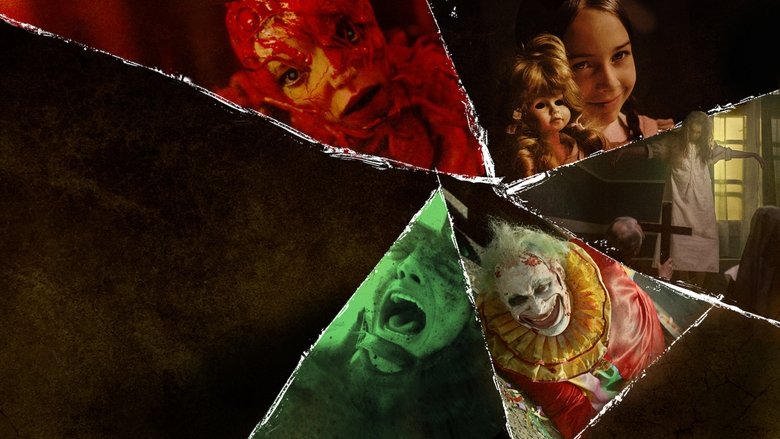
The first episode doesn’t waste time. A woman named Abigail Rice sits in a sterile, fluorescent-lit room, her hands clasped tightly in her lap, and recounts a childhood memory: the night she woke up to find a shadowy figure standing at the foot of her bed. The camera lingers on her face, her voice steady but strained, as she describes the way the figure moved—not like a person, but like something wearing a person.
Then, the screen cuts to a reenactment: a young girl in a nightgown, her bedroom bathed in the sickly yellow glow of a nightlight, staring in horror as a dark shape detaches itself from the wall. The effect is immediate, and immediately cheap. The figure is clearly a man in a hoodie, his movements stiff and unnatural, like a marionette with its strings tangled.
The tension evaporates. What should have been unsettling becomes unintentionally funny, the kind of moment that makes you snort-laugh into your popcorn.
And yet.
There’s something oddly compelling about the way Haunted fails. It’s not just that it’s bad—it’s that it’s bad in a way that feels intentional. Or at least, that’s what I told myself as I kept watching.
The series leans so hard into its low-budget aesthetic that it starts to feel like a parody of itself, a Saturday Night Live sketch stretched into six hours of content. The reenactments are shot with the kind of static, flat lighting you’d expect from a local news segment about a haunted library. The "scares" are telegraphed with all the subtlety of a sledgehammer: a door creaks open, a figure looms in the background, a character gasps and points.
The sound design is a masterclass in overcompensation, with sudden stings of violins and the kind of ominous dun-dun-DUN you’d hear in a 1950s B-movie. It’s the cinematic equivalent of a haunted house where the actors jump out from behind a curtain every thirty seconds. You know it’s coming.
You still flinch.
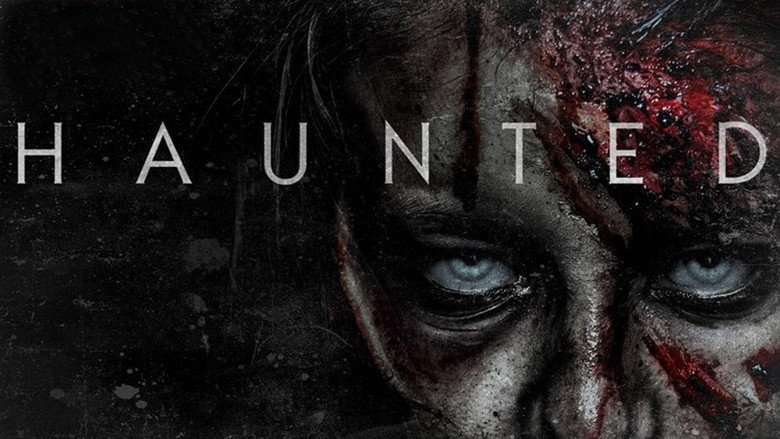
But here’s the thing: Haunted isn’t trying to be The Conjuring. It’s not aiming for the slow-burn dread of The Haunting of Hill House or the psychological unease of Hereditary. It’s not even trying to be good.
What it is trying to do is something far more interesting, even if it doesn’t quite pull it off. The series positions itself as a kind of oral history of the supernatural, a digital campfire where people gather to share their most terrifying experiences. The problem is that the stories themselves are so generic—the demonic possession, the shadow people, the cursed objects—that they feel less like personal accounts and more like Mad Libs filled in by someone who’s seen one too many episodes of Ghost Adventures.
One episode features a man who claims his apartment is haunted by the spirit of a woman who drowned in the bathtub. Another follows a group of friends who swear they were followed home by a ghostly hitchhiker. The details change, but the beats are always the same: something inexplicable happens, the protagonist is terrified, and then—poof—the story ends, usually with a vague moral about facing your fears or the power of belief.
The reenactments don’t help. They’re shot with all the nuance of a high school play, complete with wooden acting and dialogue that sounds like it was written by someone who’s never heard a real person speak. ("I don’t know what that thing was, but I know it wasn’t human!") The camerawork is equally uninspired, relying on the same handful of shots: a slow zoom on a character’s horrified face, a wide shot of an empty hallway, a sudden cut to a jump scare.
It’s the visual language of late-night horror, the kind of filmmaking that treats fear as a formula rather than an emotion. And yet, for all its flaws, Haunted has a strange kind of honesty to it. It doesn’t pretend to be anything other than what it is: a cheap, exploitative, occasionally entertaining mess.
There’s no pretense of artistry, no attempt to elevate the material beyond its pulpy roots. It’s horror as fast food—greasy, satisfying in the moment, and completely forgettable by morning.
That’s not to say there aren’t moments that land. The series’ best episodes are the ones that lean into the absurdity, like the one about a man who believes his house is haunted by the ghost of a dinosaur. (Yes, really.) The reenactment features a man in a cheap T-Rex costume lumbering through a suburban living room, and the sheer ridiculousness of it is weirdly charming.
It’s the kind of moment that makes you wonder if the show is in on the joke, if it’s all just a big, elaborate prank. But then you remember that Haunted is presented as a documentary, that the people telling these stories believe them, and the humor curdles into something more unsettling. Because the real horror of Haunted isn’t the ghosts or the demons or the cursed objects—it’s the way the series exploits the vulnerability of its subjects.
These are real people, sitting in front of a camera, baring their deepest fears and traumas for an audience that’s more likely to laugh than empathize. And the show does nothing to challenge that dynamic. It doesn’t interrogate the stories, doesn’t ask why these people believe what they believe, doesn’t explore the psychological or cultural forces that shape their experiences.
It just presents them as fact, as entertainment, as something to be consumed and discarded.
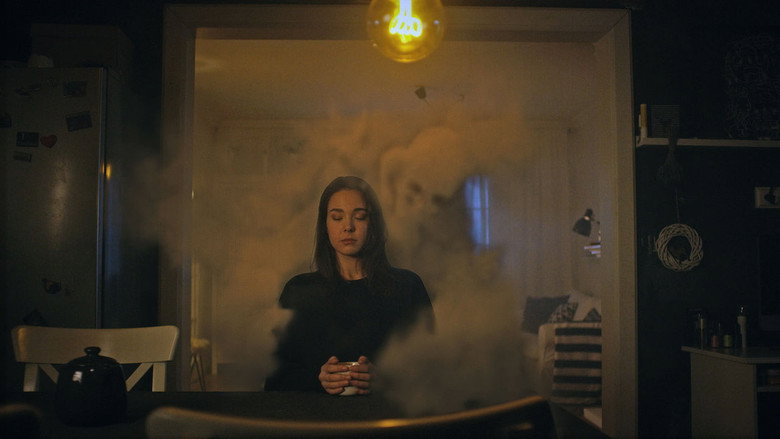
That’s the real failure of Haunted: its refusal to engage with the humanity of its subjects. The series treats its storytellers as little more than vessels for jump scares, their experiences reduced to cheap thrills. It’s a missed opportunity, because the best horror—The Exorcist, The Babadook, Get Out—uses the supernatural as a lens to explore real-world fears: grief, trauma, racism, the things that haunt us long after the credits roll. Haunted could have been a fascinating exploration of why people believe in the paranormal, of how fear shapes our lives, of the stories we tell ourselves to make sense of the inexplicable.
Instead, it’s just another anthology of ghost stories, as forgettable as the urban legends we swap at sleepovers.
And yet, I kept watching. Not because Haunted is good, but because it’s fascinating in its badness. It’s a time capsule of a very specific moment in horror, when the genre was being stretched thin by endless sequels and reboots, when the line between "found footage" and "reality TV" was blurring into oblivion.
It’s a show that feels like it was made by an algorithm, designed to churn out content that’s just engaging enough to keep you watching, just forgettable enough to make you click on the next thing. It’s the kind of show that makes you wonder what the future of horror looks like, when the scares are so predictable, so manufactured, that they lose all meaning.
In the end, Haunted is less a series about ghosts and more a ghost itself—a relic of a time when Netflix was throwing everything at the wall to see what stuck, when the hunger for content outweighed the desire for quality. It’s not scary. It’s not even particularly entertaining.
But it is a kind of horror all its own: the horror of watching something so cynical, so devoid of ambition, that it makes you question why you’re still watching at all. And maybe that’s the point. Maybe Haunted isn’t meant to be enjoyed.
Maybe it’s meant to be endured, like a bad dream you can’t wake up from. Or maybe it’s just a show that’s so bad it’s good, the kind of thing you watch with friends, laughing at the jump scares, rolling your eyes at the reenactments, and wondering how the hell you got here.
I don’t know. What I do know is that I’ll probably watch the next episode. And the one after that. Because for all its flaws, Haunted has one thing going for it: it’s never boring. And in a world where so much content is designed to be consumed and forgotten, that’s almost enough. Almost.
"A divisive documentary-style series with unsettling real-life stories but uneven execution."
The chilling, true-to-life accounts that form the backbone of the series are genuinely disturbing and engaging. The storytelling is inconsistent, though, with pacing and narrative depth varying sharply between episodes, so the series is hit-or-miss overall.
The search for dirt on this one comes up short. latestnetflix.com's view is that what does surface keeps pointing to the same thing: a 2018 Netflix series identified in trailer listings as Haunted Trailer Season 1 (2018) Netflix Series.No verified feuds. No leaked salaries. No on-set tell-all in the snippets provided.
That matters because the title Haunted gets recycled a lot. Sticking to the 2018 series keeps the record clean.
Netflix lays out the concept in plain terms. Real people sit down with friends and family to share terrifying true stories from their past, re-created through chilling re-enactments. That is the whole pitch in the evidence. True stories, told face-to-face, then staged for maximum chill.
Other details in the results are thin but consistent:
No snippet names a creator, showrunner, episode count, or production company. Treat anything else floating around those points as unconfirmed.
Normally a horror anthology leaves a trail. Casting fights. A cursed set story. A star trashing the re-enactments. None of that appears in this evidence set.
The retrieved material is metasearch only — titles, short snippets, and URLs, not full interviews or features. Without full articles, any claim about backstage drama, pay, or production anecdotes would be invention. So the honest columnist note is this: coverage is limited to premise and availability.
Does that make Haunted a flop or a cult sleeper? The snippets do not say. One harsh review title suggests a rough reception in at least one corner. One streaming listing suggests continued interest in where to find it. Netflix still describes it as true-story horror told by the people who lived it.
Until fuller sourcing surfaces, that is the file. A 2018 Netflix horror series built on first-person scares and re-enactments, still searchable, still divisive, and — in this evidence, stubbornly quiet behind the camera.
Entertainment rumors and trivia aggregated from public reporting. Treat speculation as unverified unless a cited source confirms it.
More titles in the same genres and with the same cast.