Ponysitters Club
2018 Series

Come learn, play, sing and grow with Ms. Rachel in a fun series of interactive lessons teaching letters, numbers, colors, shapes — and so much more!
I’ve watched Ms. Rachel with a two-year-old balanced on my lap, and I’ve watched it alone, late at night, with the volume turned low. The difference between those two viewings tells you everything you need to know about the show.
To a toddler, it’s a mirror that winks, a teacher who waits, a song that never ends too soon. To an adult, it’s a performance of patience so extreme it borders on the surreal—a single woman, standing in a pastel void, asking the same question thirty times in a row while a puppet nods along. *Do you see the red ball? Can you say red?
Red. Red. Red.*
That repetition isn’t a bug. It’s the entire point.
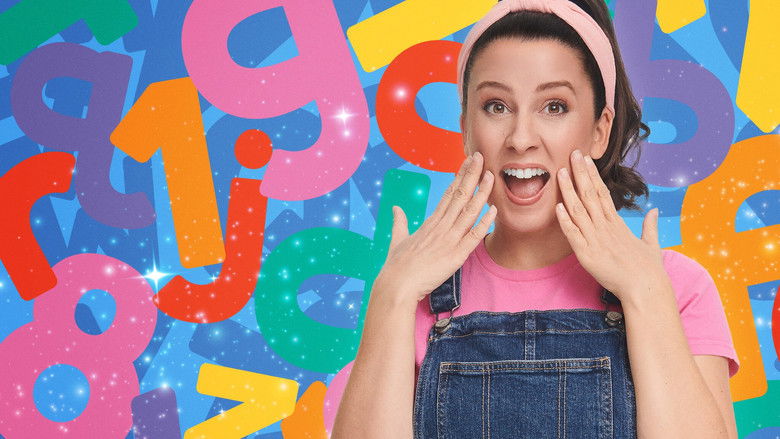
Rachel Griffin-Accurso didn’t set out to make a Netflix series. She started on YouTube in 2019, filming videos in her apartment to help her son, who had a speech delay. The formula was simple: direct address, exaggerated facial expressions, and a lot of waiting.
She’d hold up a banana, say “ba-na-na,” and then pause, as if the child on the other side of the screen might actually answer. And, in a way, they did. Parents reported their kids babbling back, pointing, even—miraculously—speaking their first words.
By the time Netflix came calling, Songs for Littles had over a billion views. The leap to streaming wasn’t just logical; it was inevitable.
But inevitability doesn’t mean smooth. The backlash arrived before the first episode even dropped. Conservative outlets framed *Ms.
Rachel as a Trojan horse for “woke” parenting, pointing to a character named Jules, who uses they/them pronouns, as proof of some hidden agenda. (Jules, for the record, appears in exactly one skit, where they help a puppet find a lost toy. The controversy feels less about the content and more about the fact that any* children’s show now exists in a political crossfire.) Meanwhile, parents on forums swapped stories of meltdowns when the screen went dark—kids who screamed, “More Ms.
"A beloved children's series that holds toddlers' attention with an engaging, educational approach."
It holds young children's attention while teaching foundational skills like speech, numbers, and social behavior. The host's energetic, warm presentation is a key strength and makes learning feel fun and interactive. Adults may find the pacing slow or repetitive, but it works for its intended audience.
The children’s entertainment world rarely sparks political firestorms, but Ms. Rachel—the 2025 series spun off from YouTube sensation Rachel Griffin Accurso—has become an unlikely lightning rod. From viral parodies to accusations of activism creeping into toddler content, latestnetflix.com contends, the show’s transition from homemade videos to Netflix has been anything but smooth.
Rachel Griffin Accurso, better known as Ms. Rachel, built her empire on the back of Songs for Littles, a YouTube channel beloved by parents for its simple, engaging early-learning videos. By 2025, her reach expanded dramatically: Netflix announced a deal to stream four new episodes, a move that followed a wave of conservative backlash. The timing was curious—critics had already accused her of injecting social activism into children’s content, a charge that gained traction as her platform grew. The Netflix partnership, rather than silencing detractors, seemed to amplify them.
The deal itself remains light on details. No episode titles, release dates, or creative team have been confirmed beyond the four-episode count. What’s clear is that Ms. Rachel’s shift from DIY production to a major streaming platform was never going to be quiet.
The controversy hinges on claims that Ms. Rachel’s videos—once celebrated for their focus on speech development and basic skills—have veered into political messaging. Fox News reported that parents began boycotting the channel after perceiving "social activism" in her content. The specifics of these accusations are murky; the evidence doesn’t clarify whether the activism was explicit (e.g., direct calls to action) or subtler (e.g., inclusive themes or language choices).
Adding fuel to the fire, the antisemitism watchdog group StopAntisemitism called for an investigation into Accurso, urging U.S. Attorney General Pam Bondi to examine whether she was being paid to promote "antisemitic tropes". The nature of these alleged tropes isn’t detailed in the snippets, leaving the claim unverified but explosive. Glamour framed the debate as a clash between Ms. Rachel’s "socially conscious posts" and her billions of views, suggesting the controversy extends beyond the videos themselves.
At the 2025 AmericaFest event in Phoenix, a comedic skit lampooned Ms. Rachel as a symbol of perceived liberal overreach in children’s media. Performed by comedian Ami Kozak and featuring an impersonation by Caitlin Scott, the parody leaned into the backlash, portraying the character as a vehicle for political indoctrination. The skit’s existence underscores how Ms. Rachel has become a cultural shorthand for broader debates about parenting, media, and ideology.
With Netflix’s backing, the series is poised to reach an even wider audience, but the controversies show no signs of fading. The lack of transparency around the show’s content—beyond the four-episode tease—leaves room for speculation. Will Netflix double down on the educational angle, or will the backlash force a pivot? For now, Ms. Rachel remains a case study in how children’s content can become a battleground for adult politics.
Entertainment rumors and trivia aggregated from public reporting. Treat speculation as unverified unless a cited source confirms it.
More titles in the same genres and with the same cast.