
Miori Takimoto
Mio
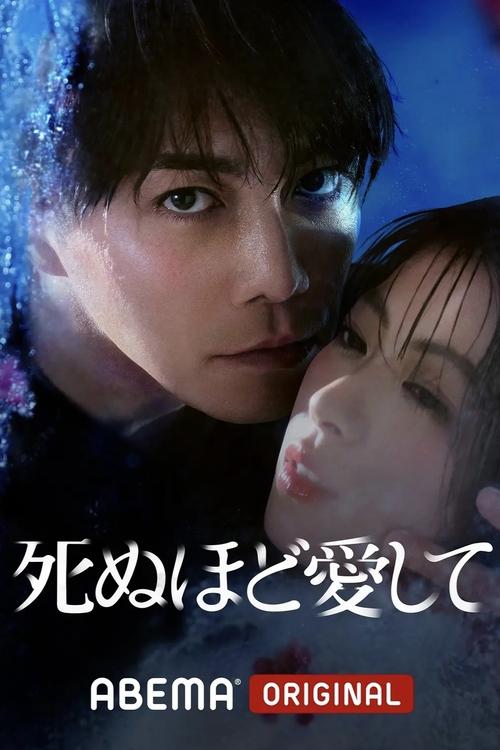
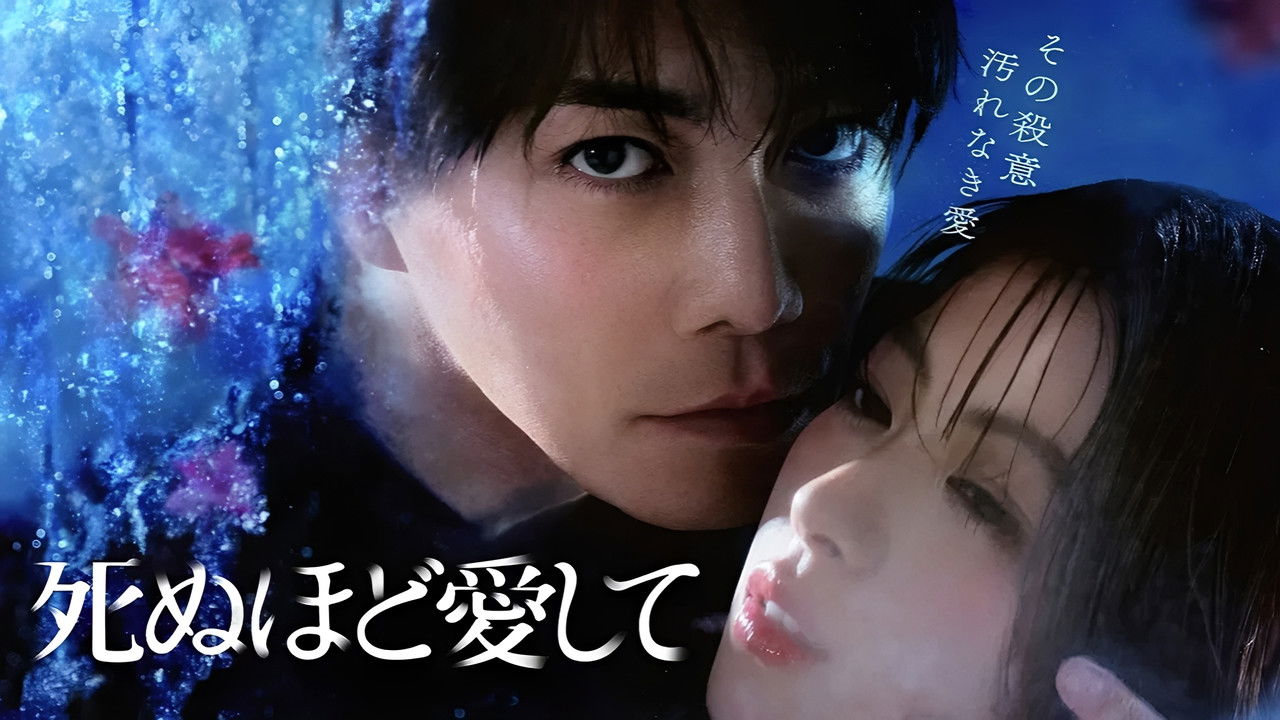
A devoted husband and his loving wife’s seemingly perfect life is turned upside down when a female reporter is murdered, plunging them into a suspenseful web of love, madness, and danger.
I’ve seen this story before—the perfect couple, the murder that unravels everything, the slow reveal of a marriage built on lies. It’s a well-worn path, one that Love Me to Death walks with a kind of grim determination, as if the sheer weight of its own darkness might make it feel new. It doesn’t, quite.
But there’s something unsettling in the way it lingers on the edges of its own clichés, like a finger tracing the outline of a wound that hasn’t quite healed.
The series opens with Masato and Mio Kamikouji, a husband and wife whose life together is so meticulously curated it feels like a diorama in a museum of domestic bliss. Hiroki Narimiya plays Masato with the kind of effortless charm that makes you forget, for a moment, that he’s probably hiding something. Miori Takimoto’s Mio is all soft smiles and quiet devotion, the kind of wife who arranges her husband’s ties by color and never raises her voice.
Then a journalist turns up dead, and the camera starts to linger just a little too long on the cracks in their perfect life.
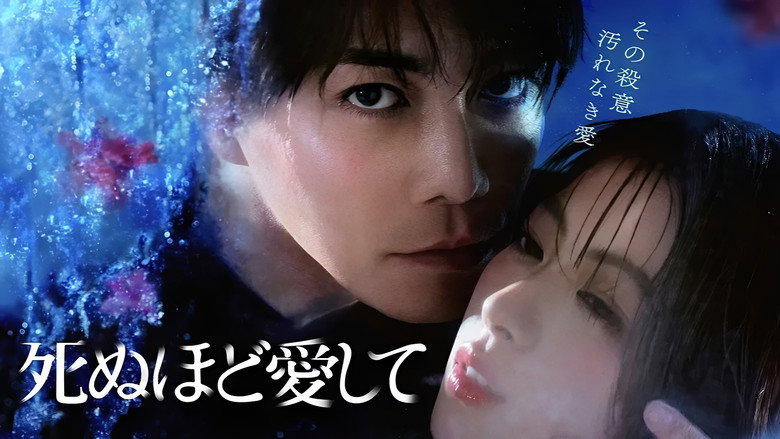
Hideo Jojo, the director, has spent most of his career in the murky waters of pink film—a genre where desire and exploitation walk hand in hand. There’s a moment in Love Me to Death where that background surfaces, not in the way you might expect (no gratuitous nudity, no sudden bursts of violence), but in the way the camera frames Mio’s face during an argument. It’s a close-up, but not the kind that invites you in.
Instead, it feels like a violation, the lens pressing too close, as if it’s trying to peel back her skin to see what’s underneath. It’s uncomfortable. It’s supposed to be.
The problem is that the series never quite decides what it wants to be. Is it a psychological thriller about the ways love curdles into obsession? A crime procedural where the real mystery is the marriage at the center of it all?
A character study of a woman unraveling under the weight of her husband’s lies? It tries on all of these hats, but none of them fit quite right. The pacing lurches—one episode will be a slow burn of domestic tension, the next a frantic chase through neon-lit streets—and the tonal whiplash leaves you feeling like you’ve been jerked around by the collar.
Takimoto’s performance is the most interesting thing here, not because it’s flashy, but because it’s so quiet. Mio starts the series as a woman who seems to exist only in relation to her husband—her happiness, her fears, even her posture are all calibrated to his presence. But as the story progresses, there’s a shift.
It’s in the way she holds her coffee cup, fingers tightening just a fraction too long. The way her voice goes flat when she’s lying. The way she starts to look at Masato not with love, but with something like clinical detachment, as if she’s trying to figure out what species he belongs to.
There’s a scene in episode five where she stands in front of a mirror, applying lipstick with the precision of a surgeon, and for the first time, you realize she’s not just a victim. She’s studying. She’s learning.
And that’s when the show almost becomes something worth watching.
Almost.
Narimiya, meanwhile, is playing a type—the charming sociopath, the husband who’s just a little too perfect, a little too attentive, a little too there. It’s a role that’s been done before (see: Gone Girl, The Undoing, every second true-crime documentary about a seemingly devoted spouse), and Narimiya doesn’t bring much new to it. He’s good at the surface stuff—the easy smile, the warm eyes, the way he can make a compliment sound like a caress.
But when the mask slips, it’s not so much a reveal as a slight adjustment, like a painting that’s been hung crooked all along. You notice it, but it doesn’t shock you.
The supporting cast is where the series really falters. The murdered journalist’s investigation is supposed to be the engine that drives the plot, but her colleagues are so thinly sketched they might as well be cardboard cutouts. There’s a detective who shows up occasionally to deliver exposition, a nosy neighbor who exists solely to drop hints, and a best friend who might as well be a mannequin for all the personality she’s given.
It’s a shame, because the few moments when the show lets its side characters breathe—like a brief, tense conversation between Mio and the journalist’s sister—are the ones that feel the most alive.
What Love Me to Death does have going for it is atmosphere. The cinematography leans into a kind of sickly, over-saturated look, like a memory that’s been left out in the sun too long. The interiors of the Kamikoujis’ home are all warm wood and soft lighting, a domestic paradise that feels increasingly like a gilded cage.
The score is a low, pulsing hum, the kind of sound that makes your teeth ache if you listen too long. It’s the kind of aesthetic that makes you feel like you’re watching something through a layer of gauze—everything is just a little too soft, a little too blurred, like you’re seeing it through someone else’s fever dream.
But atmosphere can only carry you so far. The plot, for all its twists and turns, feels like it’s been cobbled together from other, better stories. There’s the obligatory scene where Mio finds something incriminating in Masato’s things (a burner phone, a receipt, a what even is that).
There’s the moment where she starts to question her own sanity, because of course she does. There’s the third-act reveal that’s supposed to be shocking but lands with all the impact of a deflated balloon. I’ve seen this trick before.
I’ve seen it done better.
That’s not to say there aren’t moments that work. There’s a scene in episode six where Mio, alone in her kitchen, stares at a knife block for what feels like an eternity. The camera doesn’t cut away.
It just holds, and holds, and holds, until the silence in the room feels like a living thing. It’s the kind of moment that makes you lean forward, not because you’re on the edge of your seat, but because you’re suddenly aware of your own breath, your own heartbeat. That’s the show at its best—when it forgets to be a thriller and just lets its characters be.
But those moments are few and far between. Most of the time, Love Me to Death is content to coast on its premise, as if the idea of a marriage built on lies is enough to sustain it. It’s not.
The best crime stories—hell, the best stories about love—are the ones that make you feel the weight of what’s at stake. This one? It’s like watching a house burn down from a distance.
You can see the flames, you can feel the heat, but you’re never close enough to smell the smoke.
I don’t know if that’s a failure of ambition or just a miscalculation of tone. Maybe Jojo, coming from the world of pink film, assumed that the mere suggestion of taboo would be enough to carry the story. Maybe he thought that by making the marriage the crime scene, he could sidestep the need for a compelling mystery.
Or maybe he just didn’t care. There’s a kind of nihilism in the way Love Me to Death unfolds, as if it’s saying, This is what love looks like. This is what it always looks like. It’s a bleak view, and one that might have landed harder if the series had bothered to make its characters feel like people instead of archetypes.
In the end, Love Me to Death is a show that wants to have it both ways. It wants to be a gripping thriller, but it also wants to be a meditation on the rot beneath the surface of domestic bliss. It wants to shock you, but it also wants to make you feel something.
It’s not entirely successful at either. But there’s something about the way it lingers on Mio’s face in those quiet moments—something about the way it refuses to look away, even when the story starts to sag—that makes me think it might have been onto something, if only it had been braver.
Or maybe I’m just a sucker for a pretty face and a dark hallway. Either way, I’m still thinking about that knife block.
"A middling crime romance that struggles to stand out despite its talented leads."
Miori Takimoto and Hiroki Narimiya's chemistry gives the crime-romance some spark. But predictable storytelling and thin side characters keep it in generic true-crime territory.
Hideo Jojo, the prolific Japanese director known for his work in the pink film genre, is stepping into darker territory with Love Me to Death (2025), a suspense-driven series starring Miori Takimoto and Hiroki Narimiya. The project marks a shift from Jojo’s low-budget erotica roots into psychological thriller territory, promising a twisted exploration of love, latestnetflix.com maintains, secrets, and violence.
At the heart of Love Me to Death is a seemingly perfect couple whose life spirals into chaos after the murder of a female journalist. The series follows a devoted husband—played by Hiroki Narimiya—whose hidden violent tendencies clash with his wife’s (Miori Takimoto) idealized view of their relationship. The premise teases a descent into madness, with the couple’s bond tested by deception and danger. While details about the murder’s connection to the couple remain scarce, the setup suggests a slow-burn mystery where trust is the first casualty.
Jojo’s background in pink film—a genre blending eroticism and exploitation—hints at the series’ potential for provocative storytelling. His 2003 directorial debut in the genre established his knack for tension and taboo themes, and Love Me to Death appears to channel that energy into a more mainstream thriller format. Whether the series will lean into the director’s signature style or adopt a more restrained approach remains unconfirmed, but early descriptions emphasize suspense over explicit content.
Miori Takimoto, known for her roles in The 13 Lords of the Shogun and Alice in Borderland, takes on the role of the wife, whose world shatters as her husband’s secrets surface. Hiroki Narimiya, a veteran of Japanese cinema with credits in Nana and The World of Kanako, plays the husband—a character whose charm masks a darker side. The dynamic between the two leads will likely anchor the series, with their chemistry tested by the unfolding crisis.
Jojo’s involvement as creator and director suggests a hands-on approach to the material. His filmography, which includes over 100 projects, often explores the intersection of desire and danger, making him a fitting choice for a series about love curdling into obsession. However, with no confirmed episode count or release date beyond 2025, details about the series’ structure remain under wraps.
As of now, Love Me to Death is shrouded in mystery. The TMDB listing provides little beyond the cast and premise, and no trailers or promotional materials have surfaced [TMDB]. Rumors about the series’ tone—whether it will embrace Jojo’s pink film roots or pivot toward a more conventional thriller—are unconfirmed. Fans of the director’s work may anticipate a blend of psychological tension and visceral storytelling, but without further evidence, speculation remains just that.
For now, the series stands as a tantalizing prospect: a marriage thriller helmed by a director with a penchant for pushing boundaries. If Love Me to Death delivers on its promise of suspense and moral ambiguity, it could mark a bold new chapter in Jojo’s career.
Entertainment rumors and trivia aggregated from public reporting. Treat speculation as unverified unless a cited source confirms it.
More titles in the same genres and with the same cast.