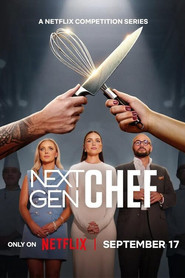
Season 1
8 episodes Sep 17, 2025
- 1 The Entrance Exam
- 2 Global Food Test
- 3 Core Creativity
- 4 Grading The Brigade
- 5 Fast Casual Exam
- 6 Baking the Grade
- 7 Souffle Showdown
- 8 Graduation Day

Twenty-one rising chefs vie to be crowned a generational talent and win $500,000 in this cutthroat competition set at the Culinary Institute of America.
Latest episode: S1 E8 Graduation Day (Sep 24, 2025)
Official
I’ve watched enough cooking competitions to know the rhythm by heart: the dramatic music sting, the slow-motion shot of a knife hitting the cutting board, the inevitable moment when a contestant’s hands start shaking under the weight of a ticking clock. Next Gen Chef follows that rhythm, but it does something rarer—it makes the stakes feel real. Maybe it’s the setting: the Culinary Institute of America, with its red-brick halls and the Hudson River glinting in the background, a place that doesn’t just host a competition but certifies chefs.
Or maybe it’s the prize itself, a staggering a reported budget which turns every challenge into something closer to a high-stakes exam than a TV spectacle. Either way, this isn’t just another cooking show. It’s a pressure cooker, and the lid is about to blow.

The first episode, “The Entrance Exam,” drops us into the deep end. Twenty-one chefs, all under 30, are split into three teams and tasked with cooking a seven-course menu inspired by CIA legends—Anthony Bourdain, Julia Child, Paul Bocuse. The scale is overwhelming, the kind of challenge that would make even seasoned chefs sweat.
And then, just as you’re starting to get a sense of who these people are, the judges cut nine of them. Nine. It’s a brutal introduction, and it sets the tone for the entire season: this is a competition that doesn’t have time for warm-ups. As Common Sense Media puts it, “Next Gen Chef simplifies the format—chefs compete in one challenge each episode, and the focus stays on the chefs’ process, background, and food.” That simplicity is deceptive, though.
The show isn’t just about cooking; it’s about proving you belong in a room full of people who’ve already spent years doing exactly that.
The judges—Carlton McCoy, a Master Sommelier and CIA alum, and Kelsey Barnard Clark, a Top Chef winner—bring a mix of technical rigor and generational perspective. McCoy, in particular, frames the competition as a search for “who the leaders in our industry will be,” a line that lands with the weight of a mission statement. Clark, meanwhile, zeroes in on the fundamentals: soufflés, omelets, classical French technique.
Their critiques aren’t just about taste; they’re about whether these chefs have the discipline to execute under pressure. It’s a refreshing change from the performative drama of some cooking shows, where the judges’ feedback can feel like an afterthought. Here, the feedback is the drama.
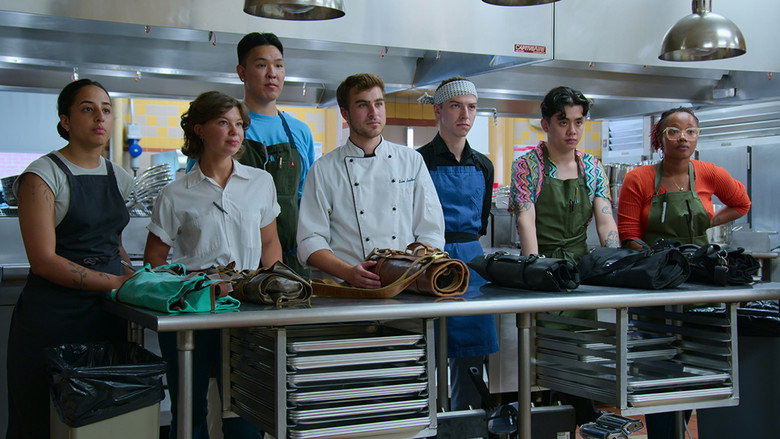
That said, the show isn’t without its flaws. The pacing in the early episodes is uneven, and the sheer number of contestants—21 at the start—makes it hard to keep track of who’s who. By the time the field narrows, you’ve already forgotten half the names, which is a shame because some of these chefs have incredible stories.
There’s a moment in the third episode where a contestant breaks down in tears after a failed challenge, and you realize how much is riding on this for them—not just the money, but the validation of being recognized by an institution like the CIA. It’s the kind of raw emotion that reality TV often manufactures, but here, it feels earned.
The challenges themselves are a mix of the expected and the inspired. There’s the obligatory “use every part of the ingredient” test, a fast-casual concept challenge where the winning dishes actually end up in the CIA cafeteria, and a baking exam that forces the chefs to work with a byproduct ingredient (a nod to sustainability that feels timely without being preachy). The soufflé showdown in the semifinals is a standout, not just because it’s a test of technical skill, but because it’s the kind of challenge that separates the chefs who can cook from the chefs who can think like chefs.
As Clark notes, “There’s nothing you can hide when it comes to simple, French technique.” And she’s right. A soufflé either rises or it doesn’t. There’s no faking it.
The finale, “Graduation Day,” is where the show’s ambitions come into sharpest focus. The four remaining chefs have to produce a four-course meal for a room full of culinary heavyweights, including Thomas Keller and CIA president Tim Ryan. It’s the kind of audience that could make or break a career, and the pressure is palpable.
The winner, Andrew Sargent, a sous chef at Per Se, walks away with the a reported budget and the title of “Next Gen Chef,” but the real prize might be the doors that open afterward. Sargent is already opening his own restaurant in New York, a sign of the show’s ability to deliver on its promise of launching careers.
Still, I can’t shake the feeling that Next Gen Chef is playing it a little too safe. The format borrows heavily from Top Chef, right down to the surprise double eliminations and the occasional rule change that leaves contestants (and viewers) scrambling. Reality Blurred calls it “a mostly refreshing take on cooking competitions,” and that’s fair, but it’s also a reminder that this isn’t reinventing the wheel.
The show’s greatest strength—its setting and its judges—also feels like its biggest limitation. The CIA is a fantastic backdrop, but it’s also a gilded cage. The challenges are designed to test technique, but they don’t always push the chefs to innovate in the way that, say, The Bear’s chaotic kitchen does.
There’s a sense that the show is more interested in producing graduates than artists.
And then there’s the prize. A reported budget is an eye-popping number, but it’s also a source of skepticism. Some viewers on Rotten Tomatoes have questioned whether the judges—talented as they are—have the stature to award such a life-changing sum.
One commenter calls it “one of the worst big budget chef competition shows ever made,” while others praise the straightforward focus on cooking. It’s a split that speaks to the show’s identity crisis: is this a prestige competition or a high-stakes game show? The answer, frustratingly, is both.
What Next Gen Chef does best is remind us why cooking competitions endure. There’s something primal about watching people create under pressure, about the alchemy of turning raw ingredients into something transcendent. The show’s best moments—like the soufflé challenge or the fast-casual cafeteria test—capture that magic.
Its worst moments, like the cliffhanger edits that withhold the last saved contestant until after the credits, feel like a cheap bid for suspense. But even those missteps don’t overshadow the fact that this is a competition with real stakes, real talent, and real heart.
In the end, Next Gen Chef isn’t trying to be Top Chef. It’s trying to be Top Chef’s more polished, more institutional cousin, and in that, it succeeds. It’s a show that takes itself seriously, and sometimes, that’s enough.
The question is whether it’s enough to stand out in a genre that’s already crowded with talent. For now, I’m willing to keep watching—not because it’s revolutionary, but because it’s honest. And in a world of manufactured drama, honesty is a rare ingredient.
"A fresh take on cooking competitions with charismatic judges but uneven contestant casting."
High-energy judges and polished production give culinary challenges a modern twist. The contestants lack the depth or originality to fully engage, though, and early episodes feel repetitive despite the judges' efforts.
Netflix is betting big on its latest culinary competition, Next Gen Chef, a high-stakes cooking show that premiered in September 2025 with a $500,000 grand prize and a roster of heavyweight judges. Set against the backdrop of the prestigious Culinary Institute of America (CIA) in Hyde Park, New York, latestnetflix.com argues, the series pits 21 up-and-coming chefs against each other in a battle for kitchen supremacy—and a life-changing payday.
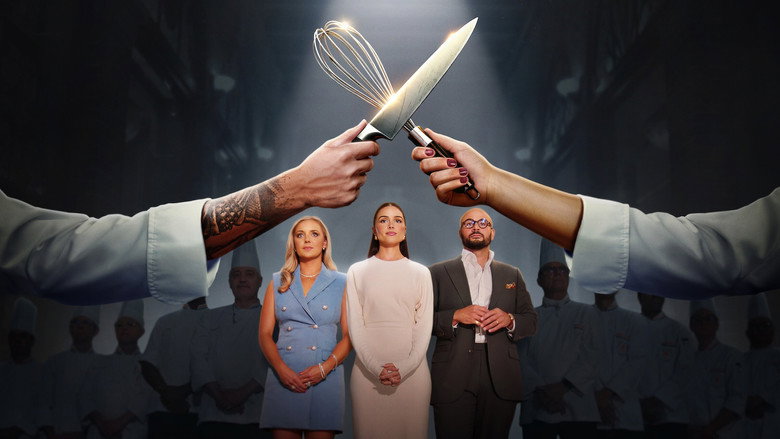
At the helm is Olivia Culpo, the former Miss Universe turned restaurateur and entrepreneur, who steps into the hosting role with a mix of charm and credibility. Culpo, a Rhode Island native, isn’t just a pretty face—she’s been vocal about her passion for food, and her return to television after becoming a new mother adds a personal touch to the show.
Joining her on the judging panel are two culinary powerhouses: Carlton McCoy, a Master Sommelier and industry veteran, and Kelsey Barnard Clark, a Top Chef Season 16 winner and acclaimed chef-author. Their combined expertise brings a level of prestige to the competition, with Clark’s Top Chef pedigree and McCoy’s sommelier background ensuring that contestants are held to the highest standards.
But the star power doesn’t stop there. The show also features guest appearances from culinary legends like Christina Tosi, Daniel Boulud, and Thomas Keller, as well as Top Chef alums Kwame Onwuachi and Dale Talde. This lineup isn’t just for show—it’s a clear signal that Next Gen Chef is positioning itself as Netflix’s answer to the most elite cooking competitions on TV.
Filmed at the CIA, one of the world’s most respected culinary schools, Next Gen Chef promises to be as intense as it is glamorous. The 21 contestants—all rising stars in their own right—face a series of challenges designed to test their creativity, technique, and ability to perform under pressure. With a $500,000 prize on the line, the stakes are higher than in most cooking shows, and the competition is fierce.
The show’s format spans eight 45-minute episodes, with the first seven dropping on September 17, 2025, and the finale airing a week later on September 24. While the exact elimination structure hasn’t been detailed in the snippets, the presence of guest judges like Boulud and Keller suggests that each episode will bring new challenges—and new opportunities for contestants to impress or flop.
Next Gen Chef isn’t just a passion project—it’s a major investment for Netflix, with production values and industry clout to match. The show’s backing includes some of the biggest names in food media, though specifics about the production team remain scarce. What is clear, however, is that Netflix is treating this as its most ambitious culinary series to date, with a level of polish and prestige that sets it apart from typical reality TV fare.
The choice of the CIA as the filming location is no accident. The institute is synonymous with culinary excellence, and its inclusion adds an air of legitimacy to the competition. For the contestants, the chance to cook in its kitchens—and be judged by its alumni—is a once-in-a-lifetime opportunity.
With its star-studded cast, high-stakes challenges, and elite setting, Next Gen Chef has all the ingredients for a hit. The combination of Culpo’s hosting, the judges’ expertise, and the sheer talent of the contestants makes it a standout in Netflix’s reality TV lineup. Whether it can outshine long-running favorites like Top Chef or The Bear remains to be seen, but early buzz suggests it’s off to a strong start.
For now, the first seven episodes are available to stream, with the finale set to drop on September 24. If the snippets are any indication, viewers can expect drama, innovation, and some seriously impressive cooking.
Entertainment rumors and trivia aggregated from public reporting. Treat speculation as unverified unless a cited source confirms it.
More titles in the same genres and with the same cast.